Access Holdings faces N656bn capital gap in Nigeria's new bank rules
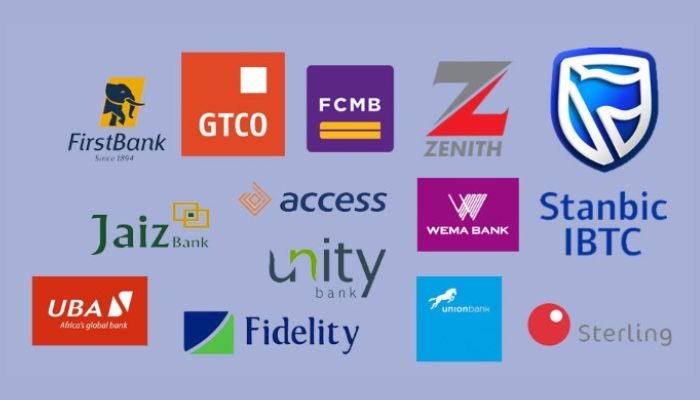
Five Nigerian bank holding companies must raise a combined N971.8bn under proposed central bank rules, with Access Holdings facing a dilution burden equal to nearly half its market value.
Five Nigerian bank holding companies face a combined N971.764 billion equity raise to meet the Central Bank of Nigeria’s proposed capital requirements, according to Renaissance Capital Africa. The draft rules mandate higher paid-up capital at the holding company level to cover group-wide exposures and subsidiaries. Access Holdings accounts for roughly two-thirds of the total burden.
The proposed framework would create a sharply uneven impact across the sector. Access Holdings requires N656.037 billion, equivalent to 49.6 percent of its current market capitalisation. By contrast, First HoldCo needs N135.033 billion (4.4 percent of its market cap), FCMB needs N112.836 billion (16.3 percent), GTCO needs N56.019 billion (1.2 percent), and Stanbic IBTC requires just N11.839 billion (0.5 percent).
The increases are driven by a requirement to lift holding company capital coverage ratios to 1.2 times across the affected banks. While the paid-up capital of the underlying subsidiaries generally remains unchanged, the parent companies must hold significantly more equity to satisfy the new buffer. For Access Holdings, this means holding company paid-up capital would jump from N616.021 billion to N1.272 trillion.
GTCO presents a notable exception to the stable subsidiary capital trend. Under the post-guidelines estimates, the paid-up capital of its Nigerian bank would actually decline from N504.037 billion to N350 billion as it shifts to a national licence. Consequently, the total paid-up capital across all GTCO subsidiaries would fall from N633.119 billion to N479.082 billion.
The exact capital burden remains contingent on how regulators implement the draft guidelines. Renaissance Capital bases its estimates on the assumption that the CBN will permit banks to recall excess capital released when downgrading from international to national banking licences. This capital would need to be redeployed across the wider group rather than being stranded within the Nigerian banking subsidiary.
The looming requirements underscore that the central bank's recent recapitalisation, which raised N4 trillion to N5 trillion, is not the final word on capital adequacy. "Our oversight on banks does not stop at the fact that you have raised capital," Governor Olayemi Cardoso said at a BusinessDay forum in Lagos. "No, it’s going to be continuous because we need a strong, resilient banking sector to be able to take us to where we want to go."