Intuit's twice-scrapped AI architecture reveals agentic limits

Intuit's decision to twice rebuild its AI agent architecture in four months underscores the hidden operational costs and technical fragility still plaguing enterprise agentic AI deployments.
Intuit scrapped its internal AI agent architecture twice within a four-month window. The company abandoned a central orchestration layer in favor of a skills-based system after natural language handoffs between agents compounded errors.
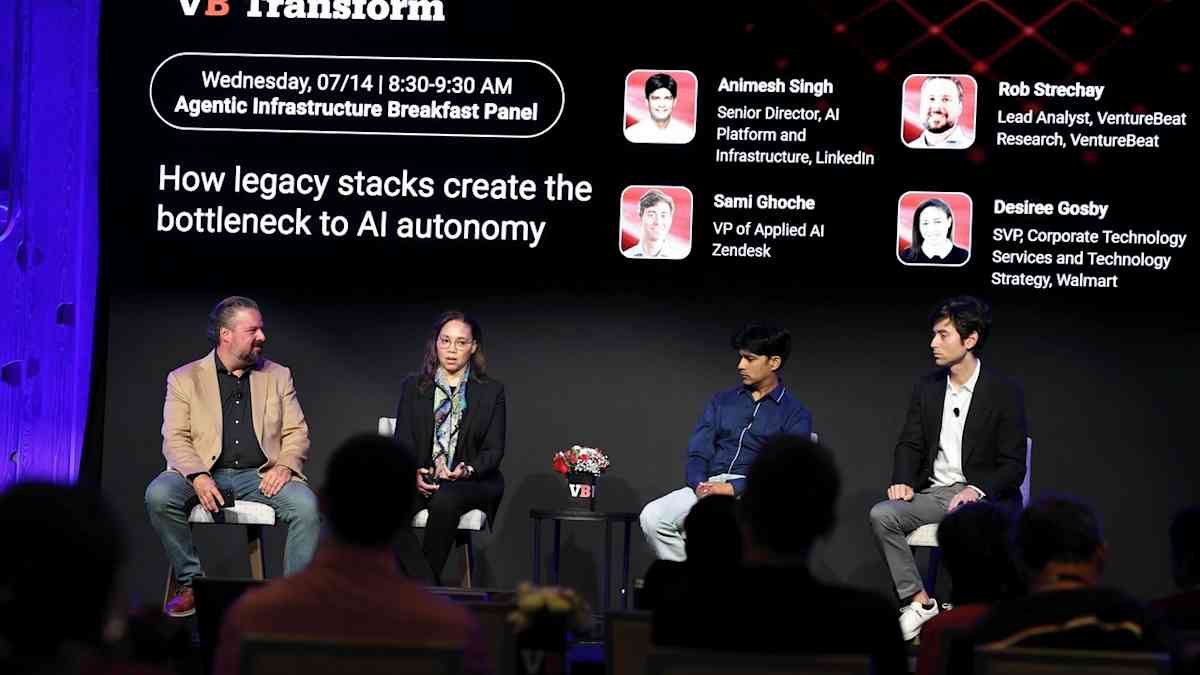
The rapid pivot, detailed by Intuit AI VP Nhung Ho at VB Transform 2026, offers a rare look at the technical friction still plaguing enterprise agentic AI deployments. Investors pricing in near-term AI-driven margin expansion often underestimate the operational costs of moving these systems from prototype to reliable production.
Intuit initially routed tasks through a central orchestrator to spare users from managing specialist agents, but that system held for roughly three months before structural failures emerged. Agents passed outcomes in natural language, causing downstream models to lose vital context. "If you have 10 agents and they all are passing to each other, every time that pass happens, error compounds," Ho said.
Diagnosing the flaw was straightforward; executing a 60-day production rebuild was not. The primary hurdle was organizational rather than technical. Hundreds of engineers who had built the retired agents had to be convinced to dismantle their work into modular tools. Ho secured buy-in by arguing standalone agents solved narrow problems, whereas shared tools scaled across the customer base, shifting engineering focus from building agents to running continuous evaluations. Leadership approved the rewrite only after a live-customer demo proved the new architecture outperformed the old.
The resulting platform introduces stricter controls suitable for a financial services company. A new feature currently in early testing with 1% of Intuit's users allows an AI conversation to seamlessly pull in a human support agent, the user's accountant, or an Intuit bookkeeper with full conversational context. Every automated action taken on a customer's financial data requires explicit permission and is recorded in a reversible audit log.
The overhaul transformed Intuit's feedback loop, shifting from sparse, bimodal input to harvesting behavioral data from nearly 100% of interactions. Customers offer blunt assessments, telling the system, "You suck. I hate this. This is not right." However, Ho noted they are willing to give the system grace and correct its mistakes, creating a high-volume data stream that no manual review process could match.