World Cup Bets Push Prediction Market Volumes Past $25 Billion
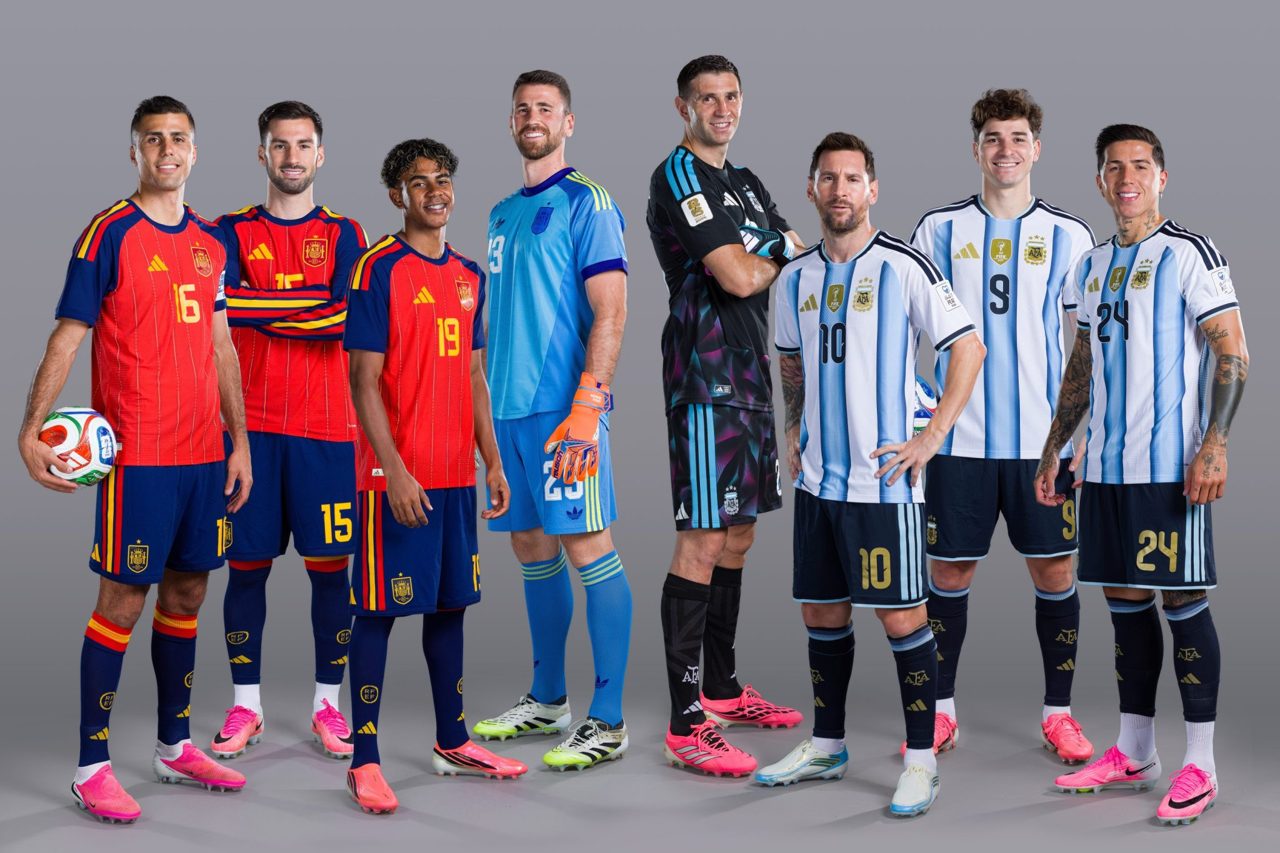
The Argentina-Spain World Cup final has driven prediction market volumes past $25 billion, signaling a major step in the mainstream adoption of event-based trading platforms.
Prediction markets Kalshi and Polymarket have recorded record-breaking trading volumes ahead of Sunday's World Cup final between Argentina and Spain. Overall trading across World Cup contracts has surpassed $25 billion, dwarfing the roughly $2 billion traded on the NBA finals and $1 billion on the Super Bowl.
The specific contract for the Argentina-Spain matchup has become the largest single market in Kalshi’s history, surpassing $1.27 billion in volume since going live on Wednesday. As of mid-day Friday, the platform's pricing assigned Spain a 61% probability of defeating Lionel Messi's squad.
Polymarket is experiencing a parallel surge. Its Argentina-Spain contract reached nearly $3 million in volume, while its broader World Cup Winner market has generated $4 billion in cumulative volume since July 2025. That figure makes it the largest single market in Polymarket’s history, overtaking the 2024 U.S. presidential election. The platform recorded nearly $11 billion in global monthly notional volume in June, driven largely by the tournament, with over 64,000 users visiting the final's match page three days ahead of kickoff.
Mainstream Trading Shift
For investors and market professionals, this volume signals a structural shift in how retail capital engages with real-world events. Prediction platforms are no longer niche political betting shops; they are functioning as highly liquid, accessible derivatives markets where users trade binary outcomes directly from their phones. The World Cup is accelerating this transition, integrating these contracts into the standard toolkit for event-driven speculation alongside traditional sportsbooks.
However, the tournament also exposes the limitations of these markets as reliable forecasting mechanisms. Unlike interest rate decisions or elections, where traders can process economic data or polling aggregates, soccer lacks deterministic fundamental inputs.
This constraint was apparent during the semifinals. In both the France-Spain and Argentina-England matches, Kalshi's initial pricing gave roughly a 10% edge to the team that ultimately lost. Polymarket mirrored this mispricing. While earlier rounds like Spain versus Belgium saw accurate favorite identification, the semifinal volatility highlights the speculative risk. For the financial industry, the World Cup proves prediction markets can command massive liquidity, but their pricing efficiency remains uniquely vulnerable to on-field randomness.