DP World and AD Ports Drive Gulf States Africa Investment as Saudi Deals Follow
Gulf states Africa investment surged into ports, mining and farmland by 2026, with UAE logistics and Saudi deals reshaping trade corridors for investors. The post DP World and AD Ports Drive Gulf States Africa Investment as Saudi Deals Follow appeared first on The Rio Times .
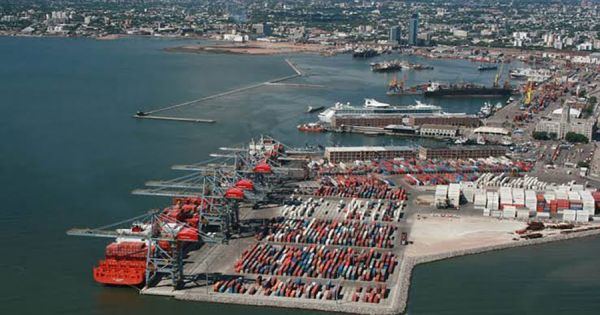
, The stakes. Gulf states are now the main external funders of African port expansion, with UAE operators controlling terminals from Senegal to Tanzania and Angola., The money. AD Ports Group will invest AED 2.45 billion (US$667 million) in port infrastructure in 2026 alone, while DP World set a US$3 billion capex budget., The projects. DP World is building the Ndayane Port in Senegal and the Banana deep-sea port in the Democratic Republic of Congo, both aimed at capturing cargo from growing African economies., The corridor. A new Jebel Ali to Berbera service links the UAE directly to the Horn of Africa, extending Gulf reach toward the Red Sea and Addis Ababa., The trend. Long concessions are replacing one-off aid deals, giving Gulf firms operational control over African terminals for 20 to 30 years.
Gulf states are no longer just buying stakes in African assets. They are moving into the operational centre of ports, logistics and land, betting on holding key chokepoints for decades. For foreign investors, the message from 2026 is clear: African trade routes increasingly run through Abu Dhabi and Dubai.
AD Ports Group took over management and development of the Luanda multipurpose terminal in Angola under a 20-year concession signed in April 2024.
The Emirati operator plans to invest around US$250 million through 2026 in modernising the terminal and building Noatum Unicargas Logistics, its Angolan joint venture.
Depending on demand, total investment could reach US$380 million over the life of the concession, with an option to extend for another 10 years.
Long-term control is the point. The concession gives AD Ports an 81 percent ownership stake in the company running Luanda’s existing multipurpose terminal.
On 12 February 2026, AD Ports Group joined Africa Ports Development’s 30-year concession to design, build and operate a dry bulk terminal at the Port of Douala.
AD Ports and two other UAE investors own 60 percent of the operating company, giving AD Ports an effective economic interest of 51 percent.
The phase-one investment by AD Ports is expected at around AED 320 million, equivalent to EUR 73.4 million.
The terminal will have two berths, roughly 450 metres of quay wall and annual handling capacity of about 4 million tonnes of dry bulk cargo.
Construction runs from 2026 to 2028 in partnership with the Port Authority of Douala, Cameroon’s main maritime gateway.
AD Ports had already announced more than US$800 million in planned investments in Egypt, the Republic of Congo, Tanzania and Angola in the three years to April 2025.
The group has begun container feeder services in West and East Africa and operates an inland logistics business in Angola.
In the wider region, AD Ports is advancing port projects in Safaga on Egypt’s Red Sea coast, alongside projects in Pakistan and Syria.
The 2025 annual report published on 30 March 2026 confirms the company will focus on upgrading terminals in the UAE, Safaga, Karachi and Latakia.
At home, AD Ports set 2026 capex of AED 2.45 billion, or about US$667 million, with more than 75 percent of 2026 to 2030 capex going to infrastructure assets.
DP World reported 2025 revenue of US$24.4 billion, up 22 percent, with adjusted EBITDA of US$6.4 billion and a 26.3 percent margin.
Total gross throughput rose 5.8 percent to 93.4 million TEU, while port capacity increased to 109 million TEU.
The company’s 2026 capex budget is about US$3.0 billion, mainly for Jebel Ali, Drydocks World, Tuna Tekra in India, London Gateway, Ndayane in Senegal and Jeddah.
DP World invested US$719 million in logistics, parks and economic zones in 2025, focusing on Sub-Saharan Africa, India, the Gulf Cooperation Council and Europe.
The Ndayane Port in Senegal is designed for 1.2 million TEU per year and involves an initial investment of US$830 million.
DP World is building the Banana deep-sea port in the Democratic Republic of Congo, designed to handle 450,000 TEU per year.
The project sits at the mouth of the Congo River, the main artery for the DRC’s mineral exports.
DP World already operates terminals in Dakar, Dar es Salaam, Algiers and Djen Djen, giving it coverage of key Atlantic and Indian Ocean gateways.
The company announced a US$2.5 billion investment plan for 2025, with major infrastructure projects across India, Africa, South America and Europe.
Africa is central to that plan, with new capacity aimed at capturing cargo growth rather than simply replacing older terminals.
DP World launched a new Jebel Ali to Berbera service in October 2025, linking its flagship Dubai hub to the Somaliland port on the Gulf of Aden.
The corridor connects the UAE to the Horn of Africa and extends DP World’s reach toward Ethiopia ‘s highland logistics network.
Berbera serves as an alternative route for Ethiopian imports and exports, reducing dependence on Djibouti.
The new service strengthens the Red Sea and Horn of Africa leg of DP World’s African network.
For Gulf strategists, controlling the Berbera route means holding one more valve on trade into East Africa.
The push focuses on minerals needed for batteries, copper wiring and the energy transition, sectors where African reserves are among the world’s richest.
Saudi deals have moved quietly through sovereign and semi-sovereign vehicles rather than headline-grabbing government purchases.
By pairing mining investments with Red Sea port access, Saudi Arabia is positioning itself as both buyer and logistics partner for African minerals.
The mining fund strategy mirrors the UAE port model: locking in access through equity and infrastructure rather than short-term trade deals.
Qatar has expanded its role as mediator in African conflicts, using diplomacy to build goodwill with governments and armed groups.