Burundi Inflation Falls to 8.7%, 15 Months After Peak
Burundi's annual inflation dropped to 8.7% in July 2026, a sharp fall from the 45.5% peak in April 2025. The decline reflects tighter budget policy and a better harvest, though the parallel exchange rate still distorts prices. The post Burundi Inflation Falls to 8.7%, 15 Months After Peak appeared first on The Rio Times .
, What happened: Annual inflation in Burundi fell to 8.7% in July 2026, from 45.5% in April 2025., How big it is: The 2025 average was 34%, up from 20.2% in 2024; 2026 forecasts range from 14.5% to 22.1%., The catch: The parallel exchange rate was about double the official rate in April 2026, so prices feel higher., Who it hits: Households still face high food and fuel costs, with reserves covering only 1.4 months of imports., What comes next: No IMF programme is active; the June 2026 Article IV was surveillance only., The number that matters: The gap between official and parallel exchange rates was about 100% in April 2026.
Burundi inflation fell to 8.7% in July 2026, down from a 45.5% peak fifteen months earlier.
Consumer prices in Burundi rose 8.7% in July 2026 compared with a year earlier, according to the national statistics institute, INSBU. That is down from 45.5% in April 2025 and 10.8% in March 2026.
The drop is real, but it does not mean prices are stable. The 2025 average inflation was 34%, up from 20.2% in 2024, and forecasts for 2026 range from 14.5% to 22.1%.
The IMF said on 18 May 2026 that stricter budget discipline and less central bank financing drove the slowdown. The World Bank credits curtailed monetary financing and a good harvest.
Gold and coffee exports eased forex pressure, narrowing the deficit. They did not cut inflation directly; AfDB cites budget deficit monetization.
The official exchange rate is about 3,000 Burundian francs to the dollar. But the parallel rate was above 7,500 before October 2025 and fell to 5,300-5,500 in mid-October 2025.
The IMF put the gap at about 100% in late April 2026. Many goods use the parallel rate, so felt inflation may exceed the official figure.
Gold exports rose from about 400 kilograms in 2024 to 1.2 tonnes in 2025, according to the IMF. Coffee receipts also rose, from 78.9 billion to 230.2 billion Burundian francs, and gold from 93.2 billion to 408.9 billion.
But those figures are in a currency that has lost 87.7% against the dollar since 2015. The World Bank notes that traditional exports like coffee and tea have declined over the long term.
The economy grew 4.1% in 2024. For 2025, the AfDB estimates 4.6% growth, the IMF 4.2%, and the World Bank 4.0%.
The IMF projects 3.9% for 2026. So growth is not accelerating; it is slowing, and the country remains one of the poorest in the world.
The current account deficit is projected to narrow in 2026. The AfDB says 6.3% of GDP, the IMF says 6%, and the World Bank says 8.6%.
The IMF credits higher gold exports for the improvement. The World Bank sees a smaller improvement, from 9.3% in 2025.
Foreign reserves cover only 1.4 months of imports, according to the French Treasury. The IMF expects reserves to rise to about US$500 million, or 2.8 months, over the medium term.
Burundi is at high risk of debt distress. Public debt is about 42% of GDP on the IMF’s measure, and 67.1% on the World Bank’s.
Burundi has no active IMF programme. The US$271 million extended credit facility approved in July 2023 expired automatically in January 2025 with no reviews completed.
The June 2026 Article IV consultation was surveillance only, with no money and no conditions. So when the IMF speaks, it is advice, not a programme.
Fuel and foreign currency shortages persisted through 2025, even as inflation fell. Queues at petrol stations are common.
Landlocked Burundi imports all its fuel, making supply chains costly. The gap between official statistics and daily life is wide, and the parallel rate explains part of it.
President Évariste Ndayishimiye has led Burundi since 2020. He named himself the ruling party’s candidate for the 2027 election in April 2026.
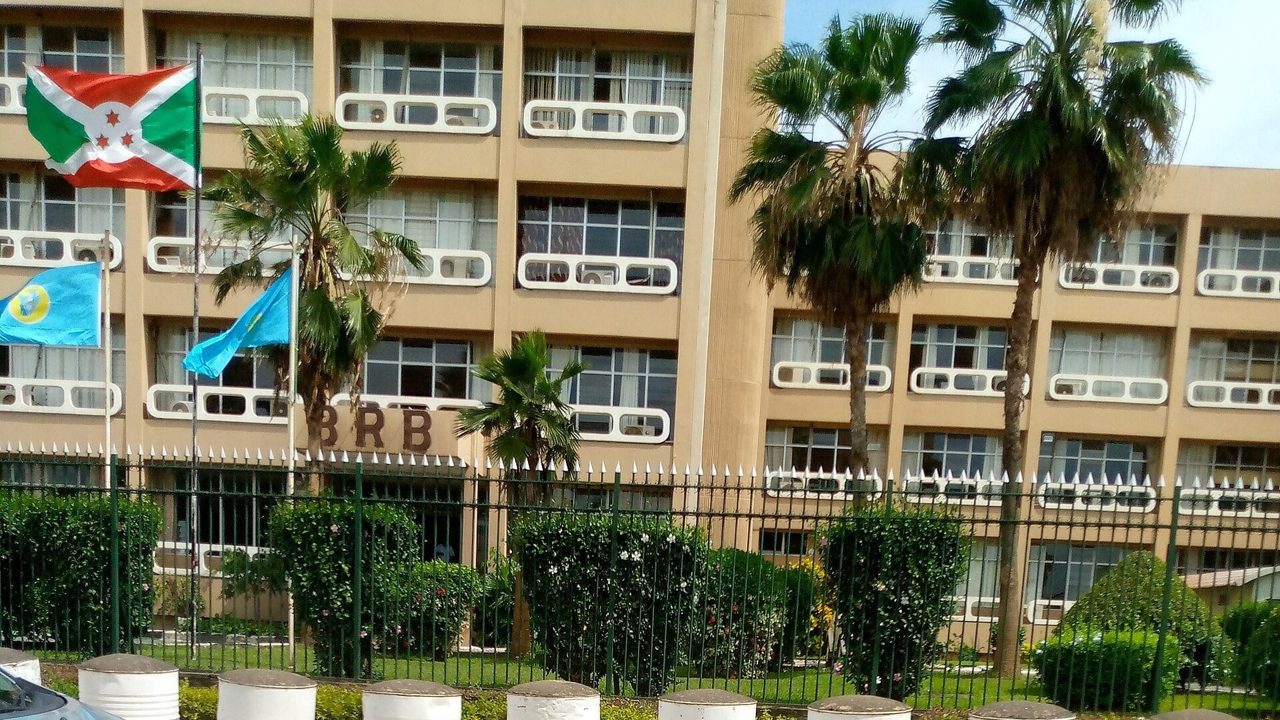
The central bank is the Bank of the Republic of Burundi, or BRB. Its governor, Édouard Normand Bigendako, took office in October 2023.
His predecessor was removed and arrested on corruption charges. The BRB sets monetary policy and publishes monthly and quarterly reports.
The IMF’s mission chief for Burundi, Alexandre Chailloux, spoke on 18 May 2026. He said the current account deficit would narrow to 6% of GDP in 2026, helped by gold exports.
He also said reserves should rise to about US$500 million over time. That equals 2.8 months of imports, but it is a target, not today’s figure.
The World Bank sees a smaller improvement in the current account. It projects an 8.6% deficit for 2026, after 9.3% in 2025.
The official exchange rate is about 3,000 Burundian francs to the dollar. But many goods are priced at the parallel rate, which was far higher.
The IMF says the gap between official and parallel rates was about 100% in late April 2026. That gap means official inflation may feel lower than reality.
The parallel rate has narrowed since late 2025, but it still exists. Watch it as a sign of real price pressure.
In January 2026, the government launched a Macroeconomic Stabilization Plan. The IMF credits this plan for the drop in inflation.
The plan focuses on budget discipline and less central bank financing of the deficit. It also aims to boost foreign exchange reserves.
Success is not guaranteed. The IMF warns that reforms must continue for the outlook to stay positive.
Watch INSBU’s monthly inflation prints. July’s 8.7% nears the EAC’s 8% target.
Watch the parallel exchange rate. A narrower gap may stabilize prices.
Inflation in Burundi fell to 8.7% in July 2026, from 45.5% in April 2025. The 2025 average was 34%, and 2026 forecasts range from 14.5% to 22.1%.