Groups file lawsuit against British-Israeli oil project off coast of Malvinas Islands
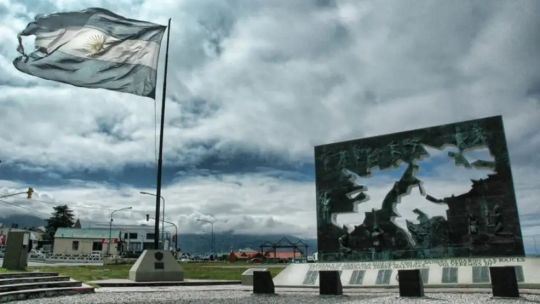
Groups representing war veterans and environmental activists file lawsuit with domestic courts seeking to block massive oil project off the coast of the Malvinas Islands. Leer más
Groups representing war veterans and environmental activists on Tuesday announced a lawsuit to halt the controversial British-Israeli ‘Sea Lion’ oil project off the northern coast of the disputed Malvinas (Falkland) Islands.
Promoted by British firm Rockhopper Exploration and Israel's Navitas Petroleum, the project "aims to establish large-scale oil exploitation on the Argentine continental shelf, 220 kilometres from the Malvinas," according to the plaintiffs' press release.
The lawsuit seeks to ensure that the companies "refrain from starting and/or continuing the works, preparatory activities, financing, and any other relevant intervention linked to the enterprise, as well as from initiating the extraction and exploitation of hydrocarbons," environmental lawyer Enrique Viale said in a statement.
The plaintiffs, identified as La Asociación Argentina de Abogados/as Ambientalistas (AAdeAA) and the Centro de Ex Combatientes Islas Malvinas La Plata (CECIM), argue the project violates a United Nations resolution stating that unilateral actions must be avoided while a territorial or sovereignty dispute is ongoing.
Although the work is being carried out in an area under British control, the lawyers maintain that a decision by Argentina’s local courts could affect its progress.
According to the firms involved, drilling is set to begin in early 2027, with first oil production scheduled for 2028.
The lawsuit argues the companies are pushing ahead with the development of the project without having carried out an environmental impact assessment procedure before the Argentine authorities or obtained the authorisations required by national legislation.
It was filed with the Federal Court of Río Grande, which Argentina says has jurisdiction over Tierra del Fuego, Antarctica and the South Atlantic Islands.
The legal challenge was filed one day after US President Donald Trump told reporters on Monday that he would not rule out reviewing Washington's traditionally neutral position on the South Atlantic archipelago, which is claimed by Argentina.
"I always review every position. That's just one of many,” said Trump in response to questioning from journalists.
Argentina’s President Javier Milei welcomed Trump's comments, posting to X on Tuesday that he will speak on the "SACRED issue for Argentines: the Malvinas cause" in a televised nationwide address on Thursday night.
"What cause more important and strategic for the vital interests of the nation could there be than the Malvinas cause?" he added.
Earlier Tuesday, he had told the El Observador radio station that "yesterday [Monday] something very significant happened regarding the most important and sacred cause we Argentines have."
The Malvinas question remains painful and of high sensitivity in Argentina, following a diplomatic and historical claim that has persisted since Argentine forces unsuccessfully attempted to seize control of the islands in 1982.
That conflict ended with Argentina’s surrender after 74 days of fighting. The conflict left 649 Argentines, 255 Britons, and three islanders dead.
Tensions over the territory have also surfaced in pop culture; after the World Cup semi-final against England in July, some Argentine footballers held up a banner saying "Las Malvinas are Argentine" after defeating their long-time rivals.
Following the display, a spokesperson for the British prime minister's Downing Street office responded that "the World Cup might not be ours, but the Falkland Islands definitely are."
Last year, Argentina’s Foreign Ministry condemned the decision to move ahead with the Sea Lion project, saying it was being carried out without the authorisation of its national authorities and arguing that the unilateral exploitation of natural resources in an area subject to a sovereignty dispute runs contrary to previous UN resolutions.
The companies, for their part, say approval was granted by the island authorities. Navitas, which operates Sea Lion, holds a 65 percent stake in the project, with the remainder held by Rockhopper.