Eleven Nifty 500 Equities Break Below Long-Term Technical Support
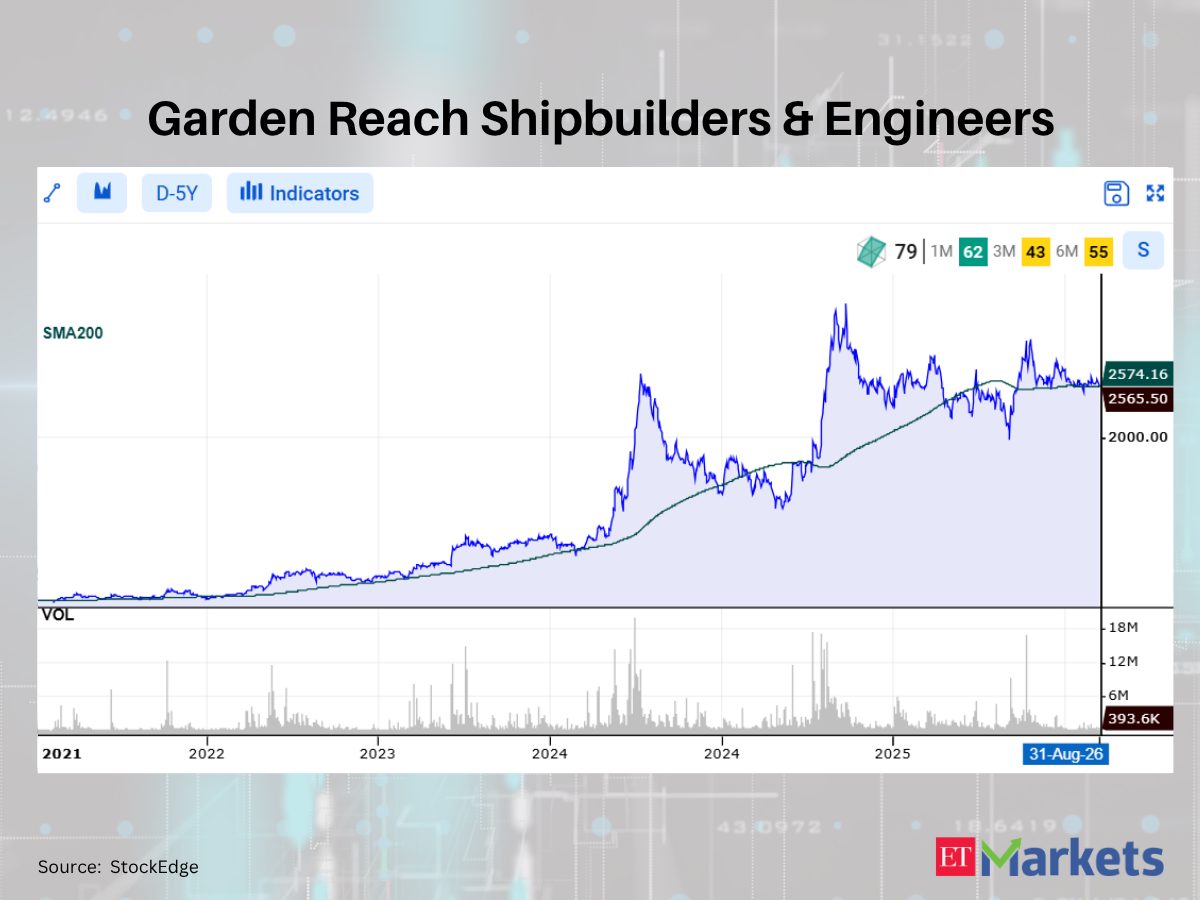
Eleven Nifty 500 constituents breached their 200-day moving averages on August 31, signaling potential long-term momentum shifts that technical traders monitor for portfolio adjustments.
Eleven constituents of India’s Nifty 500 index closed below their 200-day moving averages on August 31, according to technical scan data. This breach marks a notable technical deterioration for these specific equities within the broader Indian market.
The 200-day moving average is widely monitored by market participants as a definitive gauge of a stock’s long-term trend. When a security’s last traded price falls beneath this threshold, analysts typically interpret it as a negative signal indicating weakening momentum.
The scan data reveals a consistent pattern across the affected stocks, with last traded prices uniformly trailing their respective benchmarks. For instance, one stock recorded a 200 DMA of 34,067.62 rupees against a last traded price of 33,320 rupees. Another showed a 200 DMA of 3,876.01 rupees, with the last traded price slipping to 3,685 rupees.
Additional breakdowns included a stock with a 200 DMA of 2,574.16 rupees closing at 2,565.5 rupees, and another at 1,519.71 rupees against a last traded price of 1,510 rupees. Other data points showed a 200 DMA of 2,294.54 rupees with a last traded price of 2,279.2 rupees, and a 200 DMA of 1,327.01 rupees against 1,301.8 rupees. Even lower-priced equities reflected this trend, with one recording a 200 DMA of 115.09 rupees and a last traded price of 114.23 rupees.
For institutional investors and systematic traders, such technical breakdowns often trigger algorithmic reassessments or portfolio rebalancing. The 200-day moving average serves as a critical long-term support level. Sustained trading below this line can invite further selling pressure from momentum-focused funds that rely on this metric to determine overall direction.
While a single day of weakness does not necessarily dictate a prolonged downtrend for the entire index, the simultaneous breach by these eleven components warrants close monitoring. Market professionals will watch whether these stocks can reclaim their moving averages in the coming sessions. Failure to do so may see the breakdown accelerate into a more pronounced corrective phase.