Lekki Gardens oversubscribes ₦11.45bn paper as Nigerian developers fold
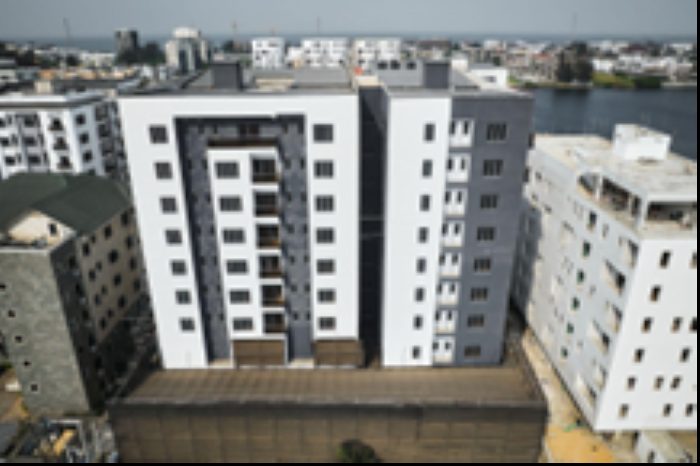
Amid a wave of shutdowns across Nigeria's housing market, Lekki Gardens raised fresh debt at oversubscription, signalling that investors are backing the rare developer still delivering at scale.
Lekki Gardens has oversubscribed the latest ₦11.45 billion tranche of its ₦25 billion commercial paper programme, approved by Nigeria's Securities and Exchange Commission. The Series 2 issuance drew more demand than available, a notable result in a real estate sector where many developers have stopped building entirely.
The debt raise points to growing institutional confidence in a company that has delivered more than 19,000 homes across 14 completed projects in Lagos, Abuja, Rivers and Ogun states. Twelve developments are under construction, with over 1,400 units already sold and 750 customers awaiting handover.
For fixed-income investors, the question is why one developer commands premium demand while peers fail or disappear. Currency swings, surging cement prices, dollar-denominated material costs and tightening contractor terms have hollowed out Nigeria's residential construction industry since 2019. Developers who were active five years ago have largely exited, leaving buyers with unpaid deposits and unfinished sites.
Lekki Gardens has survived by absorbing infrastructure costs that competitors defer to the state. The company has built more than 50 kilometres of roads and drainage across its project sites.
The approach traces back fifteen years to founder Richard Nyong, who at age thirty committed most of the company's cash to a one-kilometre access road in Ajah before any construction began. The 200-home estate that followed sold out in three months rather than the projected three years.
That early bet on physical infrastructure as a sales driver has scaled into a repeat-purchase business. Of the 19,000 customers served, 15,000 have bought a second or subsequent property. In a market defined by delivery failures, that retention rate functions as its own credit signal.
Governance and capital structure
The company has assembled a board with financial, engineering, legal and public sector backgrounds, and an executive team claiming more than a century of combined experience across operations, finance, compliance and law. Institutional capital has followed the delivery record rather than forward projections.
Dr Richard Nyong, who remains central to the company's direction, frames the approach in terms of risk allocation. "A housing purchase is the single largest financial decision most people will ever make. It has to be fair and the customer must never get the wrong end of it," he said.
For market participants watching Nigeria's property sector consolidate, the commercial paper oversubscription is the clearest signal yet that capital is flowing to the handful of operators who can still execute. The broader industry contraction may be accelerating, but it is also clarifying which balance sheets the market considers viable.
I prefer this response
Response 2
Navigating the complexities of Nigeria's real estate landscape in 2026
Skip
I prefer this response