Netflix Decouples Viewing Growth From Revenue to Support Advertising Push
Netflix reported a modest 2 percent increase in first-half viewing hours while content costs rise, prompting management to reframe audience engagement as a driver for its expanding advertising business rather than a standalone metric.
Netflix reported a 2 percent growth in viewing hours for the first half of 2026, adding 1.5 billion hours compared to a 1.5 percent increase a year earlier. However, the company’s content expenses are projected to rise approximately 10 percent this year, creating a widening gap between programming costs and raw audience growth.
To bridge this gap, management is actively shifting how investors measure the platform's value. Co-CEO Greg Peters stated that there is no linear relationship between view hours and revenue and profit, because all hours are not created equal.
Peters highlighted live programming as a prime example of high-value, low-volume content. While live events will consume 5 percent of the content budget and generate only 1 percent of viewing hours, they drove six of the company’s ten largest sign-up days over the past five years.
Addressing investor concerns about audience retention, Co-CEO Ted Sarandos pushed back against narratives of sharp post-season-one drop-offs. He noted that season-two declines have actually slightly improved this year relative to last year, dismissing external analyses based on limited titles by warning that observers can pick any five data points to tell any story you want.
The Advertising Foundation
The earnings call also marked the first explicit discussion of a potential free, advertising-funded tier. Peters confirmed the company is testing free trials for new customers in several countries, alongside a discounted first-month offer in Japan.
While there is no near-term plan to launch a free service, Peters acknowledged it could make sense in some markets if the company can avoid cannibalizing paid tiers. He emphasized that a large advertising business is an essential enabling factor to make those economics work.
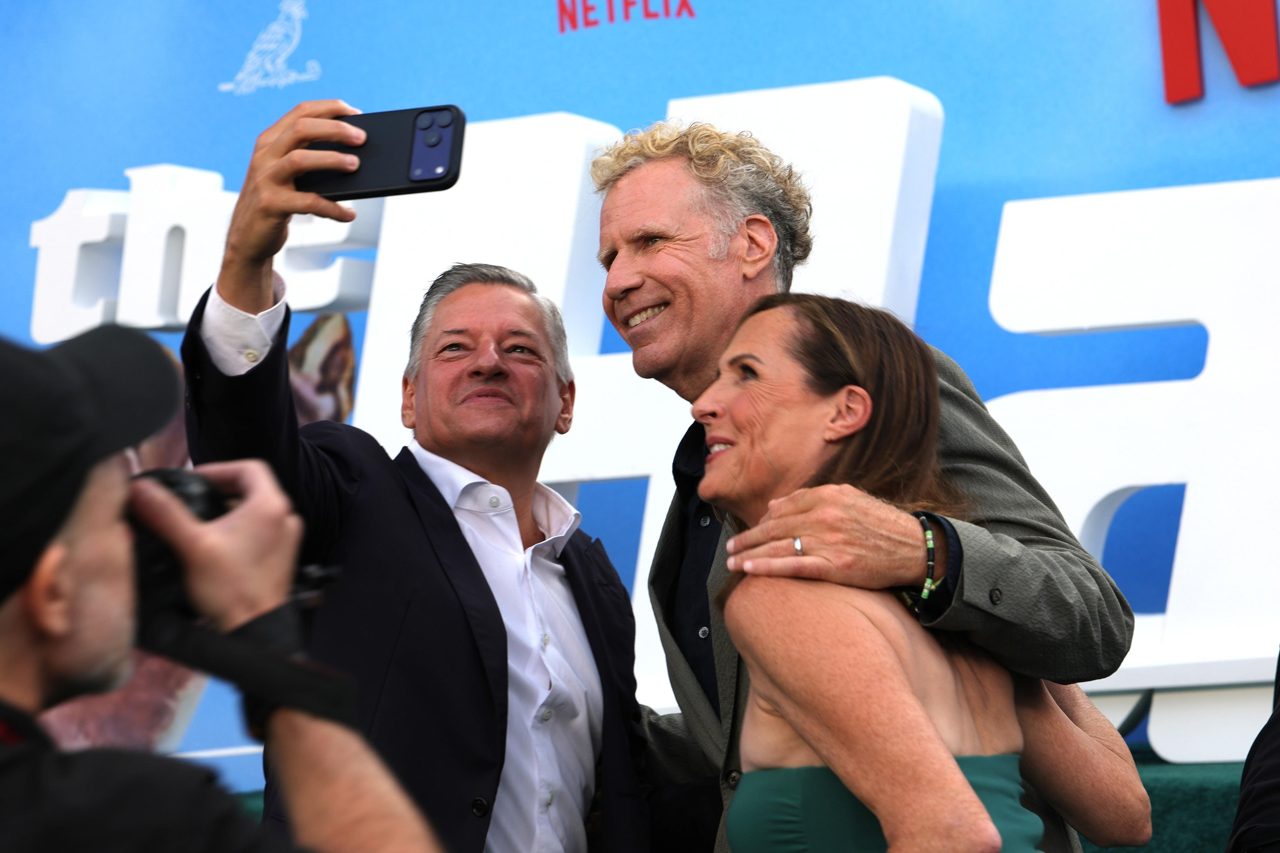
Netflix is actively constructing the inventory required to support this model. The platform is introducing lifestyle programming from Condé Nast, Hearst, and People Inc. next month, alongside video podcasts designed to capture daytime viewing. The company also pointed to Will Ferrell’s new series The Hawk, promoted with a special at the Major League Baseball Home Run Derby, as an example of this diversified strategy.
Cost efficiency is also being driven by generative AI, which has been deployed across roughly 300 titles. Sarandos indicated that any resulting savings will likely be reinvested in more content. He pointed to the documentary American Experiment, which featured 17 minutes of AI-enhanced footage produced twice as fast and at half the cost.
By integrating cheaper, high-frequency content and exploring partnerships like its recent integration with French broadcaster TF1, Netflix is engineering a broader engagement model. Peters noted the early results are promising and the company would certainly consider similar partnerships. For investors, future profitability will depend less on total hours streamed and more on the ability to monetize specific viewer attention through advertising.