Himalayan Glacial Collapse Kills 160 and Intensifies Pressure on Climate Risk Pricing
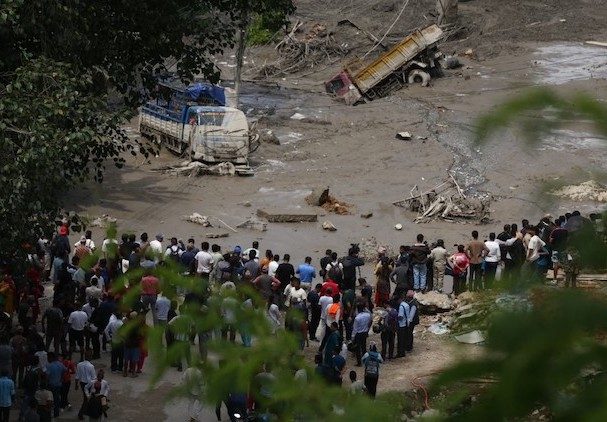
A massive glacial collapse along the Nepal-Tibet border has killed at least 160 people and left hundreds missing, exposing severe physical climate risks to regional infrastructure and tourism while renewing investor focus on the fossil fuel transition.
A glacial collapse and subsequent debris flow struck the Nepal-Tibet border on Wednesday, killing at least 160 people and leaving hundreds missing. The US Geological Survey confirmed on Thursday that the disaster was not an earthquake, as initially reported, but a massive ice and rock avalanche that triggered catastrophic downstream flooding.
The torrent of water and mud devastated towns along the Bhote Koshi and Trishuli rivers, destroying homes, vehicles, and critical infrastructure including a metal bridge. Nepali officials report more than 400 foreign tourists remain missing, including 133 from India, 47 from the United States, 34 from Australia, and 33 from Britain.
Emergency response operations are now underway across the border region. The Nepali military has deployed more than a dozen helicopters to extract survivors from rooftops, while China has dispatched over 570 rescue personnel to aid evacuation zones and restore essential services in Gyirong County, where state media report 265 people are unaccounted for.
Initial seismic readings of a magnitude 5.2 event were reclassified after satellite imagery and seismic wave analysis proved no actual earthquake had occurred. Experts at the Kathmandu-based International Centre for Integrated Mountain Development noted that river water levels surged by up to nine metres in just thirty minutes during the peak of the flood.
Market and Infrastructure Implications
For investors and market professionals, this disaster highlights the accelerating physical risks posed by climate change to emerging market infrastructure and tourism-dependent economies. The sudden destruction of regional transport and hospitality assets serves as a stark reminder of the vulnerability of local economies to extreme, unpredictable weather events.
Nepal’s Foreign Minister Shishir Khanal had initially suggested an earthquake triggered the flash flood in Rasuwa, reflecting the immediate confusion surrounding the event. However, the confirmation of a glacial collapse shifts the focus squarely onto environmental degradation and the fragility of high-altitude ecosystems in the face of rising global temperatures.
Analysts view the catastrophe as further evidence of the global economy’s lagging response to the warming crisis. The event is expected to intensify pressure on policymakers and institutional investors to accelerate capital allocation toward climate adaptation measures and a swifter, more decisive transition away from fossil fuels.