India equity forecasts trimmed as foreign funds shift to cheaper Asian markets
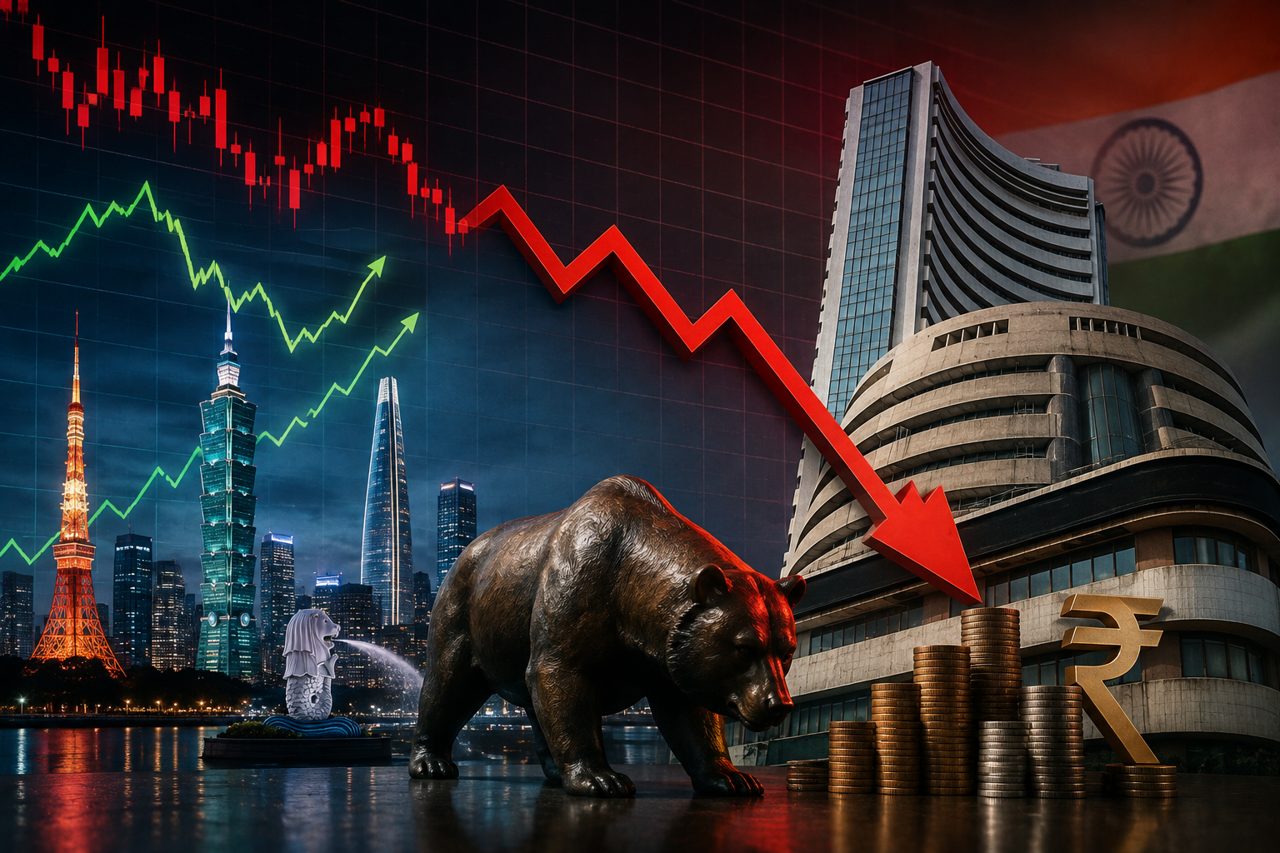
Foreign investors have sold $25.1 billion of Indian shares this year, driving the market toward its weakest annual performance in over a decade and forcing analysts to temper their growth expectations.
Overseas investors have sold approximately 2.4 trillion rupees ($25.1 billion) of Indian equities this year, pushing local shares down more than 7.0 percent. This marks the country's weakest annual market performance in over a decade, standing in stark contrast to solid gains in Japan, South Korea, and Taiwan.
The exodus reflects a broader regional rotation where capital is chasing artificial intelligence exposure and deeper value. Markets in Thailand, Malaysia, and the Philippines have absorbed much of this redirected capital, leaving India at a competitive disadvantage.
Market observers note the structural shift driving this reallocation. "And yes, it's an AI story, and India has lagged because we don't have exposure. India now is at the bottom in Asia from an investment perspective ... So that's telling you what the world is thinking."
Compounding the equity selloff, the Indian rupee has depreciated 6 percent against the US dollar this year, making it one of Asia’s worst-performing currencies. This depreciation actively erodes dollar-denominated returns for foreign portfolios, while crude oil prices hovering near $90 per barrel further deter overseas capital.
"Oil prices and the rupee continue to be immediate risks for Indian markets," said TS Harihar, chief executive and founder of HRBV Client Solutions. These macroeconomic headwinds remain the primary friction points for international allocators.
Despite the outflows, a poll of 28 equity analysts conducted in mid-to-late August maintains a cautiously optimistic long-term trajectory. The Nifty 50 is forecast to rise roughly 5.0 percent from a recent close of 24,334.55 to reach 25,556 by the end of 2026.
The benchmark is subsequently expected to climb to 26,300 by mid-2027 and 27,450 by the end of that year. Similarly, the BSE Sensex is projected to hit 81,608 by the end of 2026, advancing to 89,000 by the close of 2027.
Near-term volatility appears contained according to the majority of strategists. More than 70 percent of polled analysts, representing 20 out of 27 respondents, deem a market correction of 10 percent or more unlikely over the next three months.
This stability is largely underwritten by robust domestic liquidity. Systematic investment plans funneled over 319.61 billion rupees into the market in July alone, a figure more than ten times larger than a decade ago, effectively cushioning the impact of foreign exit.
Local experts remain confident in underlying corporate fundamentals. "Earnings will continue to see an improvement from previous years," said Yogesh Kalinge, associate director of research at A.K. Capital Services, adding that even with baseline earnings growth assumptions for 2027, breaching all-time highs remains achievable.