EY warns full US-China decoupling carries $13.7 trillion price tag
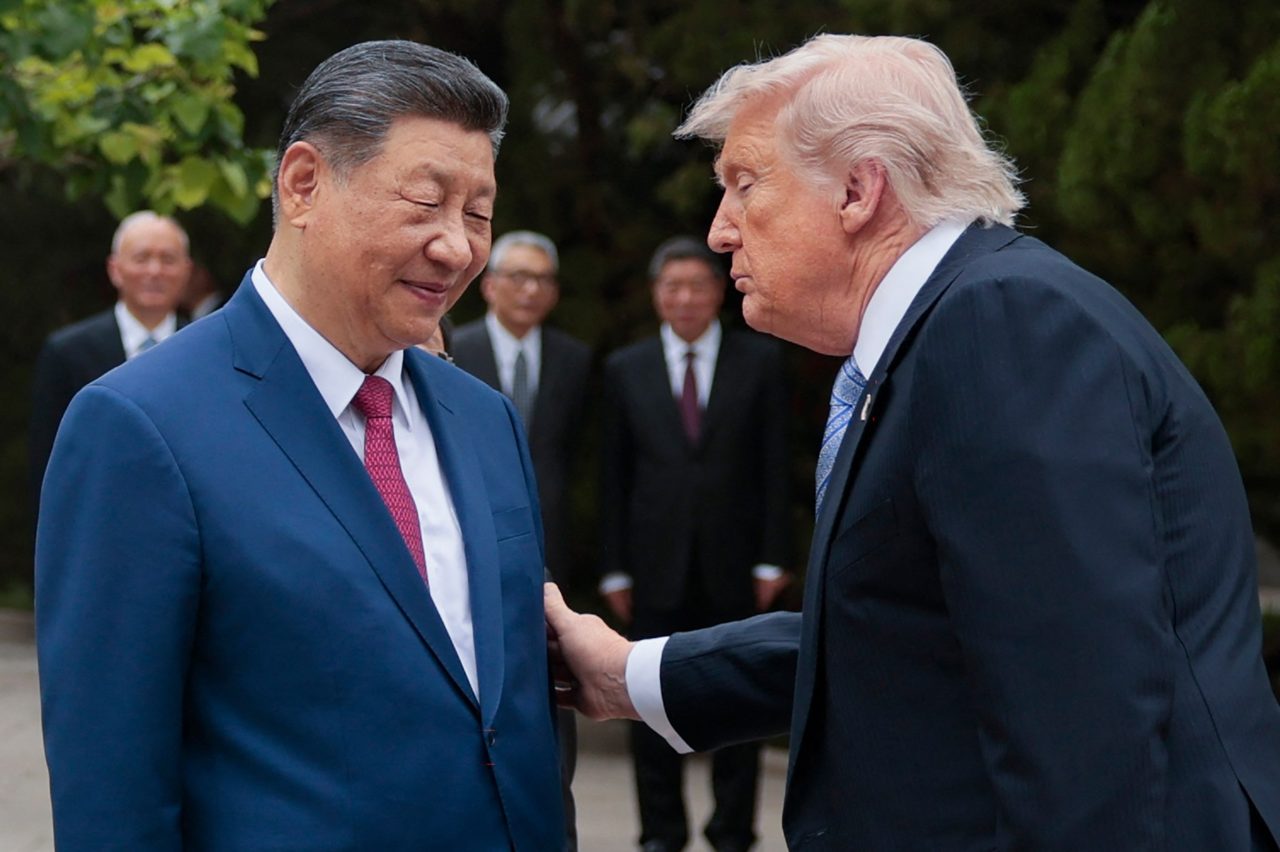
Washington's push to sever supply chains from Beijing would require an unfeasible $13.7 trillion in new investment over 25 years, signaling persistent structural inflation risks for markets.
The US would need to spend $13.7 trillion over the next 25 years to completely sever its supply chains from China, according to a new EY-Parthenon analysis. The figure represents more than half of the $23.6 trillion required collectively by the US, Eurozone, and UK to rewire highly exposed sectors like manufacturing, transportation, and software.
This staggering price tag exposes the deep disconnect between political rhetoric and economic reality. The Trump administration has aggressively targeted Chinese imports with tariffs ranging from 7.5% to 100%, building on previous legislative pushes like the CHIPS Act. Yet the US remains deeply entangled, importing $51.5 billion in smartphones and $14.4 billion in toys from China last year. Beijing's export growth accelerated 27% year-over-year last month, demonstrating the enduring resilience of these trade flows.
Full decoupling is financially unrealistic primarily because of the cost arbitrage. Chinese factory prices for certain components are 20% to 100% cheaper than Western alternatives due to massive scale and supply chain density. Forcing a total split would lock in structurally higher inflation, adding roughly 1% to 2% to consumer prices.
To fund this transition without crushing the economy, the US would need to pass spending packages equivalent to the $891 billion Inflation Reduction Act every single year. In Europe, taxpayer-funded decoupling would require doubling the entire EU budget. “We’re not going to achieve these levels of investments,” said Mats Persson, EY-Parthenon’s UK macro and geostrategy leader.
Instead of total separation, markets should prepare for a prolonged era of fractured trade. The US is better positioned than Europe to navigate this friction thanks to its deep capital markets, the dollar's reserve status, and greater energy independence. However, American executives still face a severe manufacturing skills gap, with an estimated 2.1 million jobs potentially unfilled by 2030. The EU faces an even steeper climb, hampered by the need to coordinate industrial policy across 27 member states against a highly efficient Chinese system.
“You have this dynamic, this dialect between these two forces, which has always been there for many hundreds of years in one way or another, but which is now so pronounced,” Persson said. For investors, the takeaway is that the era of frictionless globalization is over, but a complete Western retreat from China is not coming. “It’s probably going to be a rather messy, non-linear type of globalization.”