TPAO drills record-depth Somalia well targeting Asian oil market
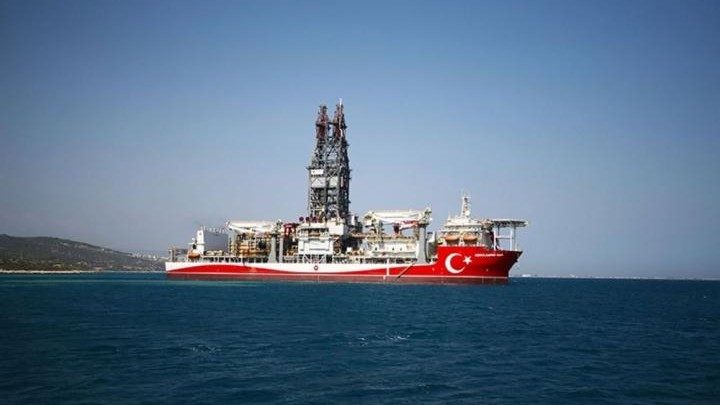
Turkey’s state oil company has begun drilling one of the deepest offshore wells ever attempted off Somalia, a high-stakes gamble that could yield a strategic crude supply route for Asian refiners bypassing the Strait of Hormuz.
TPAO spudded the Curad-1 well in April 2026 in Block 153, located 372 kilometres northeast of Mogadishu. The well targets a total depth of roughly 7,500 metres in 3,500 metres of water, making it one of the deepest offshore exploration attempts in history. Drilling is expected to take up to 288 days using the company's own drillship.
The operation follows TPAO’s acquisition of 4,464 km2 of 3D seismic data across Blocks 142, 152 and 153 between October 2024 and June 2025. Early readings from Blocks 152 and 153 pointed to vast oil reserves. Somalia is shouldering much of the financial risk to secure exploration: under a bilateral agreement, TPAO can recover up to 90% of production after a 5% royalty, with several bonuses and administrative charges waived.
The project marks a strategic departure for TPAO, which typically acts as a minority partner in established international ventures like those in Azerbaijan. In Somalia, it is acting as operator, utilizing its own seismic data, a proprietary ultra-deepwater drillship, and leveraging broader Turkish infrastructure and security engagements in the country. The model mirrors TPAO's Sakarya gas discovery in the Black Sea.
Any discovery will face strict commercial hurdles. A viable oil project would require more than 300 million barrels of recoverable resources to approach breakeven prices of $40 to $45 per barrel via a floating production, storage and offloading vessel. Gas discoveries would be far more difficult to monetise due to Somalia's lack of domestic demand, pipeline infrastructure, or industrial base.
For energy markets, the primary appeal of Somali crude is geographic. Oil produced off the Horn of Africa could reach Asian refiners without transiting the Strait of Hormuz. India, which relies on Russia for roughly 60% of its crude imports, is the natural destination. A development producing 200,000 to 300,000 barrels per day would rival Uganda’s planned Lake Albert output, but with significantly simpler logistics since FPSO exports bypass Uganda's 1,443-kilometre pipeline to Tanzania.
Long-term, Somali crude could also supply the proposed 700,000 barrel-per-day Dangote refinery in Lamu, Kenya, though neither project is expected before the next seven to ten years. The geological and security risks, however, remain extreme. Only eight offshore wells have been drilled in Somali history, with zero commercial discoveries, while the country's licensing map remains fragmented by overlapping claims from legacy concessions and semi-autonomous regional permits.