Trump Cuts South Korea Military Drills to Press for Industrial Investment
Washington is decoupling its security guarantees from its economic relationship with Seoul, signaling to investors that corporate capital commitments are now the primary currency of the bilateral alliance.
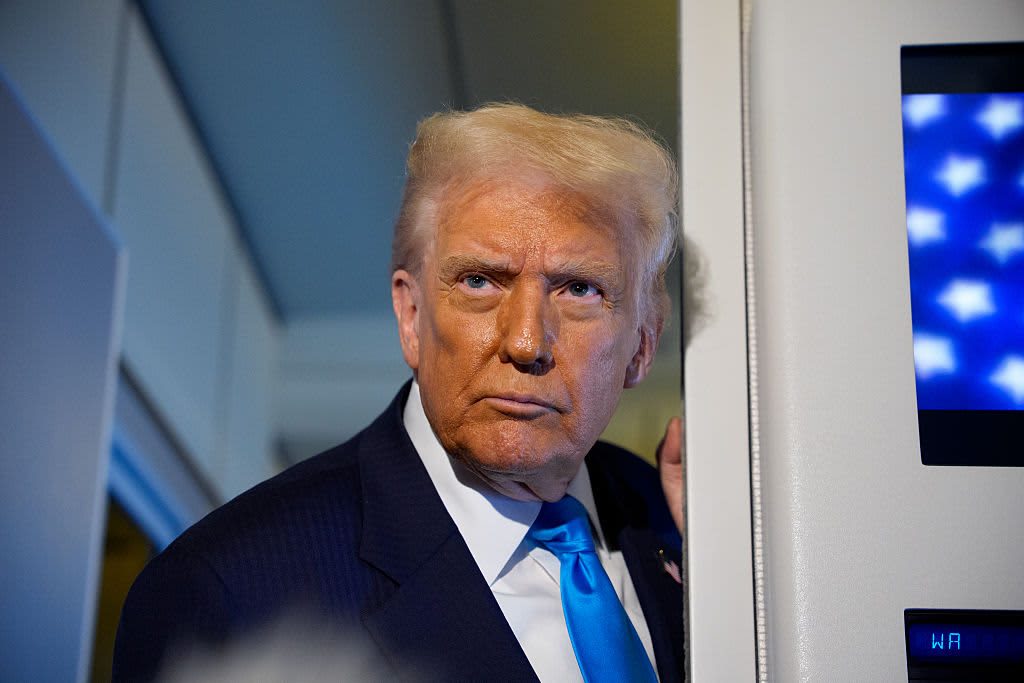
The United States is scaling back annual military exercises with South Korea as Washington pressures Seoul to accelerate its industrial investment pledges. President Donald Trump instructed the Pentagon to reduce the drills, describing them as costly and inappropriate.
This strategic pivot shifts the foundation of the bilateral relationship from traditional security to integrated industrial ecosystems, according to Darcie Draudt‑Véjares, a fellow at the Carnegie Endowment for International Peace. For markets, the transition means that massive corporate capital deployments are now the primary mechanism for maintaining favorable trade terms and tariff structures.
South Korea previously promised $350 billion in U.S. investments to secure lower reciprocal tariffs last year. However, the Trump administration has grown frustrated with the slow deployment of these funds compared to Japan, prompting high-level trade negotiations in Washington.
Korean Trade Minister Kim Jung-kwan recently arrived in the capital to discuss these commitments and tariffs with Commerce Secretary Howard Lutnick. The financial stakes are heavily concentrated in the technology and manufacturing sectors, where Korean firms are capitalizing on U.S. reindustrialization efforts to compete with China.
Korean chipmakers are particularly central to the global artificial intelligence boom, with Nvidia serving as their most important client. SK Hynix, for instance, is constructing a $4 billion advanced packaging facility in Indiana and has allocated an additional $10 billion for new product lines and its U.S. operations.
Despite these deepening commercial ties, experts warn that economic integration does not guarantee military support. Jennifer Kavanagh, director of military analysis at Defense Priorities, noted that semiconductor trade and shipbuilding cooperation can proceed independently of the U.S. military footprint in Asia.
A reduced military presence could free up American economic resources for domestic investment, but it introduces significant geopolitical risk premiums for investors. Bruce Klingner, a former senior Central Intelligence Agency officer, argued that the drill reductions exacerbate allied concerns regarding U.S. reliability.
The shortened exercises failed to placate Pyongyang, which launched more than 10 short-range ballistic missiles toward the East Sea on Thursday. Richard Haass, president emeritus of the Council on Foreign Relations, warned that the decision weakens American leverage and could prompt South Korea to pursue its own nuclear weapons.