Visa builds stablecoin settlement platform for banking clients
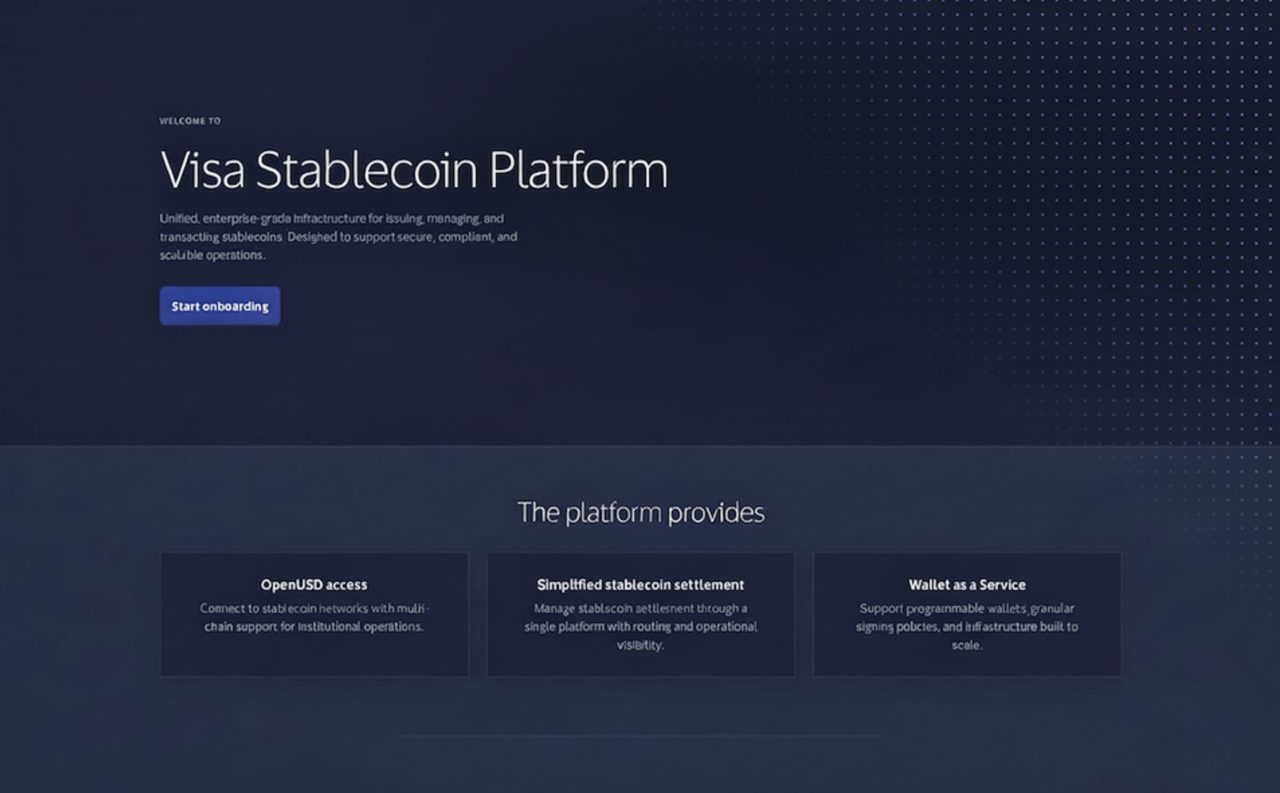
Visa has launched a platform allowing its banking clients to process stablecoin settlements across its network of 200 million merchants, accelerating the payments industry's shift toward blockchain-based treasury infrastructure.
Visa has introduced the Visa Stablecoin Platform, an internal system designed to integrate dollar-backed digital assets into the existing payment and treasury workflows of its 15,000 financial institution clients.
The company already processes several billion dollars in stablecoin settlements against an annual total payment volume of roughly $15 trillion. The new platform will serve as an umbrella for these existing services, aiming to drive wider adoption among its client base.
For the more than 200 million merchants on its network, the financial appeal of stablecoins lies in near-instant settlement at negligible cost. These transactions run on blockchains, providing tamper-proof records of the money movement.
“It’s less about accessing stablecoins and more about how… this interoperate[s] with their treasury settlement, their money movement workflows, [and] their existing bank setups,” said Rubail Birwadker, Visa’s global head of growth.
The platform will initially launch with OUSD, a stablecoin introduced two weeks ago by the Open Standard consortium. Visa is a partner in the consortium, and OUSD will complement the digital dollars Visa already supports, namely Circle’s USDC and Paxos’ USDG.
Visa has been building toward this infrastructure for years. It became the first payments network to settle transactions in USDC in March 2020 and rolled out a dedicated stablecoin settlement program in December.
The rollout underscores a broader competitive race among card networks to capture institutional blockchain payments. American Express and Mastercard have also joined the Open Standard consortium. Last month, Mastercard introduced its own mechanism for banks to settle card transactions using six regulated dollar-backed stablecoins, partnering with platforms like MoonPay and the Paxos Global Dollar network.
“We want to bring them along on this journey… and we’ve been doing that for the better part of half a decade, and this is just the next iteration,” Birwadker said. The strategy reflects a calculation by Visa that masking the technical complexity of blockchain is necessary to convince traditional financial institutions to adopt digital asset settlement.