Nigeria inflation stalls at 16%, outpacing monetary tools
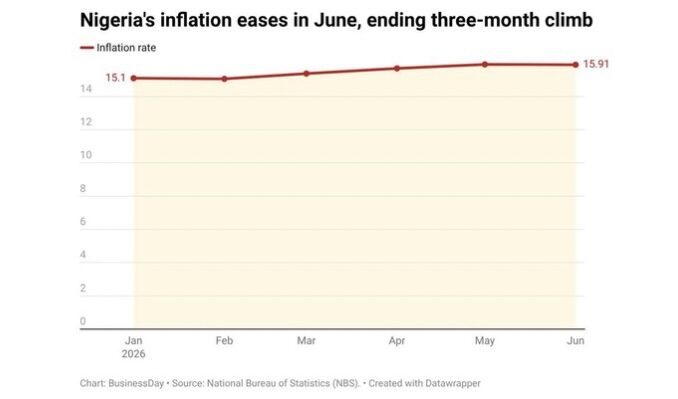
Nigeria's inflation has plateaued at 15.91%, signaling that aggressive interest rate hikes have run their course and structural bottlenecks now dictate the price outlook.
Nigerian headline inflation edged down to 15.91% in June from 15.93% in May, according to the National Bureau of Statistics. The marginal two-basis-point drop confirms that the rapid disinflation following the country's recent macroeconomic shocks has effectively stalled. After reaching a low of 15.06% in February, price growth is no longer falling meaningfully. Instead, it is settling into a stubborn plateau around 16%.
This stabilization marks a distinct structural shift in the nature of Nigeria's inflation cycle. The severe price surges initially driven by the fuel subsidy removal, foreign exchange liberalization, and sharp naira depreciation have largely worked their way through the system. What remains are entrenched supply-side bottlenecks that traditional monetary policy is fundamentally ill-equipped to solve.
The growing divergence within the inflation data underscores this ongoing transition. While overall prices flattened, food inflation accelerated to 17.52% year-on-year. More importantly, monthly food price growth jumped sharply to 3.75% in June, up from 2.98% in May. Because food accounts for the largest share of household expenditure, this specific acceleration means the economic reality for ordinary Nigerians feels far less stable than the benign headline figure suggests.
The Central Bank of Nigeria has likely exhausted its primary lever in this fight. After pushing the Monetary Policy Rate from 11.5% in 2022 to a peak of 27.5% before a slight reduction to 26.5%, the aggressive tightening cycle has achieved its core objectives. It has successfully moderated exchange-rate volatility, anchored inflation expectations, and attracted stronger capital inflows to boost foreign reserves. However, elevated interest rates cannot resolve agricultural insecurity, fix transport bottlenecks, or lower structural electricity costs facing domestic manufacturers.
When the Monetary Policy Committee convenes next week, the June data points firmly to another hold. A stable 15.91% print removes any justification for further rate hikes, but the resurgence in food prices and lingering uncertainty surrounding global energy markets make early rate cuts difficult to defend. For market participants, the policy rate itself will likely be a secondary concern, with attention instead focusing on Governor Olayemi Cardoso's guidance on the conditions required to justify a significant easing cycle.