Central bank buying drives gold to $4,500, sparking $8,000 debate
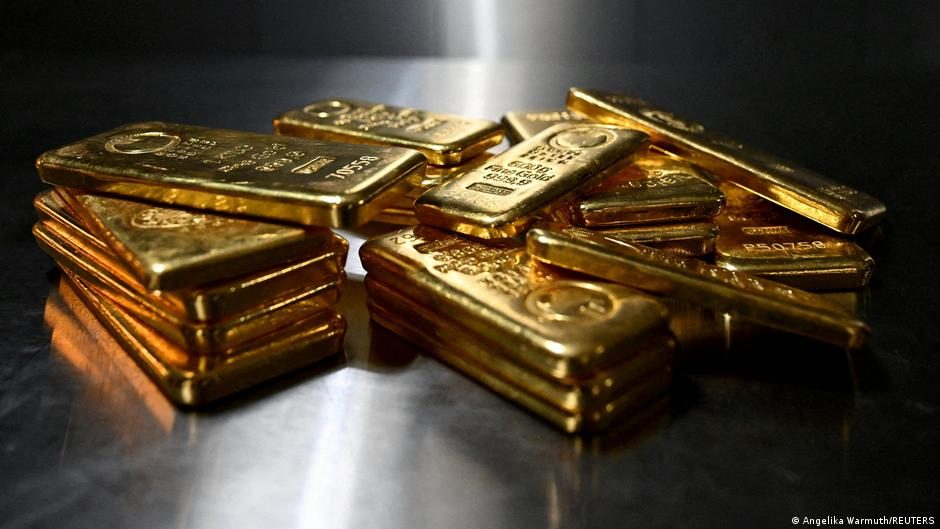
Gold has surged above $4,500 an ounce, driven by aggressive sovereign buying, sparking a deep divide among analysts over whether the metal will double to $8,000 by 2031 or face near-term consolidation.
Gold prices have climbed past $4,500 per ounce, up significantly from $1,585 in 2020. The rally is no longer driven by traditional retail demand but by massive accumulation from central banks in emerging markets, alongside a new wave of institutional buyers.
The market dynamics have fundamentally changed. Michael Hsueh of Deutsche Bank Research notes that stable, inelastic buyers like central banks have pushed out more price-sensitive elastic customers such as jewelry purchasers. This shift has been a "key factor behind gold's strength between 2021 and 2025."
Deutsche Bank projects this sovereign shift will push gold to $8,000 per ounce by 2031. Hsueh bases this on what he calls the "return of history," where rising geopolitical tensions mirror the Cold War. "Assuming emerging market foreign exchange reserves decline from $8 trillion to $5 trillion, this could correspond to a nominal gold price of $8,000 per ounce," he said.
Sovereign demand is not the only catalyst. Frank Schallenberger of Landesbank Baden-Württemberg points to "expectations of interest rate cuts and a weaker US dollar, strong purchases by central banks, as well as high demand for coins and bars." He also highlights that cryptocurrencies are "an increasingly important new source of demand, as they are also diversifying their assets, including buying gold. If this continues, it could provide further momentum for gold prices."
Schallenberger disagrees with the $8,000 forecast, arguing that ETF and central bank momentum has faded. "At current price levels, I don't see sufficiently strong drivers that would allow gold prices to double over the next five years," he said.
Thomas Kulp of DZ Bank notes that the "main driver of the gold price rally in recent years has been the accumulation of geopolitical uncertainty." He states that "Gold is and remains the ultimate safe haven. In uncertain periods or times of crisis, the precious metal is usually in demand." However, he forecasts a return to $5,000 within 12 months and warns of "sometimes significant fluctuations."
For investors, the takeaway depends on risk tolerance. "A share of five or 10% gold in a portfolio is certainly not a bad idea because it can reduce a portfolio's volatility," Schallenberger advises. "We believe it makes sense to hold gold on a large scale as a store of value. The main reasons for reserve managers (at central banks, ed.) to add gold to their portfolios are diversification, protection against geopolitical risks and a hedge against inflation," Hsueh counters.