Nigeria Security Risks Persist as Borno Abductions Reach 100 Days
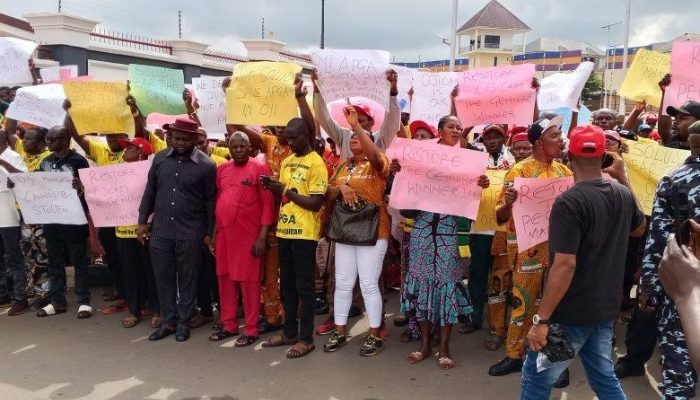
Families in northeastern Nigeria are protesting the ongoing captivity of dozens of students, highlighting persistent security vulnerabilities that complicate the country’s economic stability and investment climate.
Families in Uba town, Nigeria, protested on Thursday to demand the release of children abducted nearly 100 days ago in Borno State. The demonstration underscores mounting public frustration over the federal government’s inability to secure the hostages.
The children were seized from their classrooms on May 15 in Mussa, a community bordering the Sambisa Forest. Orbet Lawan Yakubu, representing the traditional ruler of Mussa, stated that approximately 45 children remain unaccounted for from that incident.
This abduction is part of a broader pattern of instability in the region. On June 29, gunmen attacked nearby Lassa, taking 36 students and a teacher who also remain captive. While authorities recently secured the release of schoolchildren in southwest Oyo state after two months, the northeastern security situation remains volatile.
Islamist militant groups, including Boko Haram and its Islamic State West Africa Province (ISWAP) offshoot, continue to stage attacks on civilians, schools, and security forces. Although the insurgency has weakened since its peak, these persistent operations disrupt local communities and strain regional stability.
A police spokesperson stated the military is “on top of the situation” but directed further inquiries to the armed forces, who did not respond to requests for comment. Meanwhile, families describe severe ongoing distress.
“We still have not seen them,” said Chinda Buba, a parent of an abducted child. “We do not know where our children are. We don’t know whether they are healthy or going through difficult conditions.”
Peace Nicolos, whose children aged 3-1/2 and 8-1/2 are among the missing, emphasized the daily anxiety and financial strain on households. “We worry every day and struggle to eat,” she said, pleading for government intervention.
For international investors and market professionals monitoring West Africa, such recurring security failures represent a tangible structural risk. Persistent instability in northeastern Nigeria complicates regional economic recovery, threatens local supply chains, and deters foreign direct investment by highlighting the fragility of the operating environment.