Southeast Asia's AI boom faces structural limits and geopolitical risks
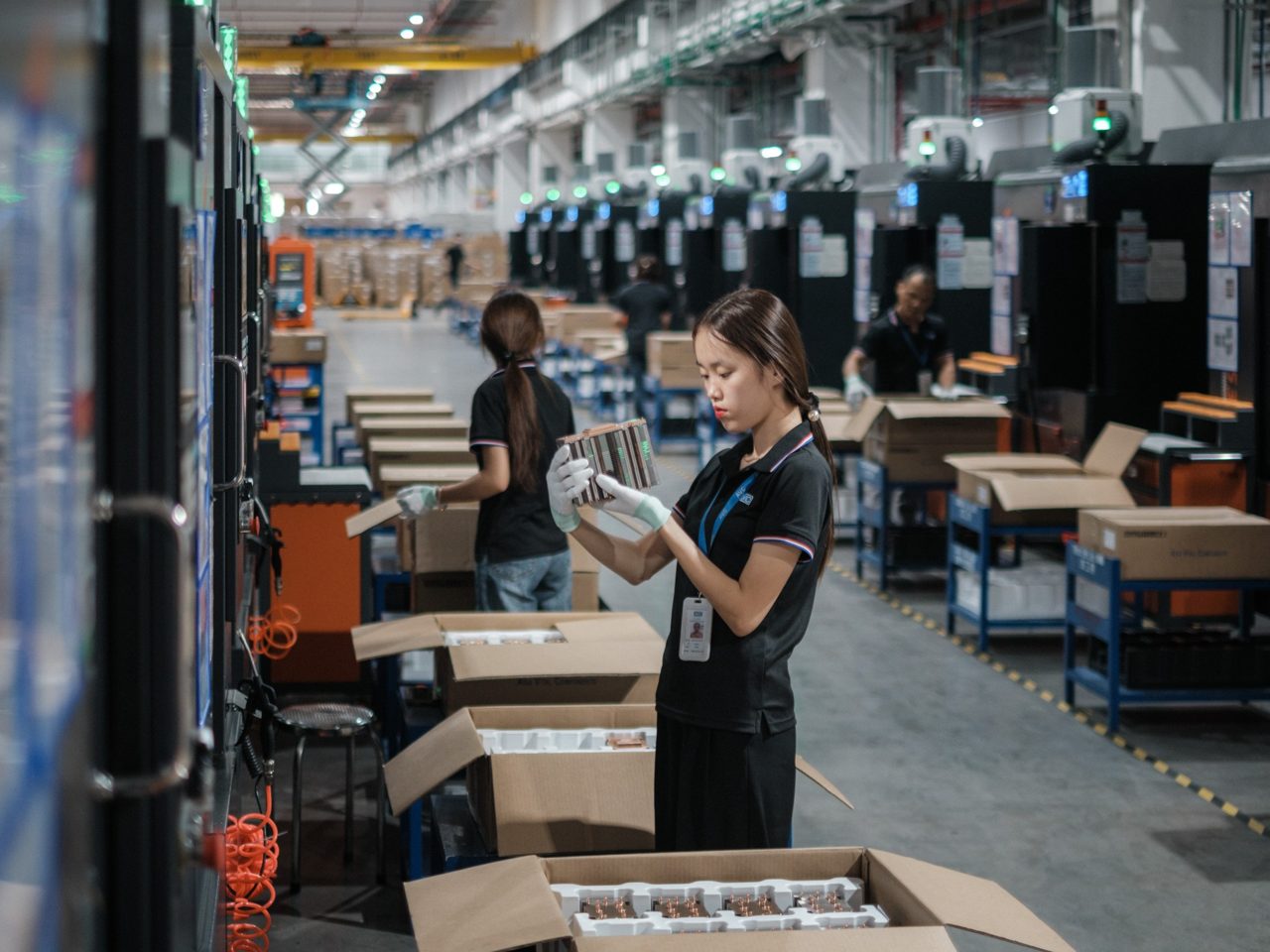
While surging AI hardware exports drive record growth across Asia, structural constraints and escalating US-China tech rivalry threaten to limit Southeast Asia's long-term gains.
Surging demand for AI hardware is driving record export growth and equity gains across Asia, with South Korea reporting a 60 percent export surge in July and Taiwan on track for its first double-digit GDP growth since 2010. However, economists warn that Southeast Asia’s reliance on lower-value supply chain segments means this boom could be a short-term blip rather than a structural transformation.
Equity markets have priced in the momentum, with shares in ChangXin Memory Technologies and Unitree surging over 450 percent on their respective debut trading days in July and August. Broader indices are also rallying, as Japan’s Nikkei 225 and Thailand’s SET index are up roughly 25 percent year-to-date, while South Korea’s KOSPI has gained nearly 60 percent.
Singapore recently raised its annual economic growth forecast to as much as 5.5 percent, citing AI-related exports and its semiconductor talent pool. Yet Danny Quah of the Lee Kuan Yew School of Public Policy argues the region is experiencing a "sugar rush" from commodifiable supporting resources that offer no sustained comparative advantage.
Malaysia is attempting to move up the value chain through a new National AI plan, but it remains heavily reliant on cheap labor for back-end semiconductor manufacturing. Guanie Lim of the National Graduate Institute for Policy Studies notes this dynamic contributes to the country's middle-income trap, a problem exacerbated by an aging population and ongoing brain drain.
Physical infrastructure also presents a bottleneck for data center expansion across the region. Ramkishen Rajan of the Lee Kuan Yew School of Public Policy highlights that congested grids and energy constraints could limit capacity, especially as Middle East supply disruptions impact regional oil and gas imports.
Beyond domestic constraints, escalating geopolitical rivalry threatens the region's traditional model of strategic hedging. The U.S. is reportedly pressuring nations to choose between its Pax Silica framework and China’s World Artificial Intelligence Cooperation Organization, warning that membership in conflicting initiatives is untenable.
Beijing is simultaneously building a full-stack AI ecosystem to reduce reliance on American technology. Denis Hew of the Lee Kuan Yew School of Public Policy warns that smaller economies may be forced to pick a side, which would constrain their economic diplomacy and access to technology.
To navigate this fragmentation, Southeast Asian nations are turning to the ASEAN Digital Economy Framework Agreement, set for signing in November. Tan Kong Yam of Nanyang Technological University argues this treaty is vital for maintaining economic interoperability as member states adopt differing technological alignments.