Uber agrees $14.8bn takeover of Delivery Hero to build global food network
Uber’s $14.8bn acquisition of Delivery Hero consolidates the global food delivery market, even as UK investors weigh the nationalisation of British Steel against resilient economic growth.
Uber has agreed to acquire German food delivery company Delivery Hero in a $14.8bn deal, creating a consolidated global powerhouse in the sector. The US tech firm offered €41.50 per share, valuing the business at $14.8bn. After accounting for its existing quarter stake, Uber will pay $13.7bn for the remaining shares.
The merger combines Uber Eats with Delivery Hero’s portfolio across 99 countries, including foodpanda in Asia and talabat in the Middle East. Together, the entities booked $236bn in orders in 2025.
To satisfy competition regulators, Uber will not acquire Delivery Hero’s operations in 14 markets where it already holds strong positions. Instead, New York-based private equity firm SSW Partners will purchase those excluded assets, including Glovo, foodora and Yemeksepeti, for $1.6bn. This structural carve-out is designed to prevent market dominance in specific European and Turkish regions, smoothing the path for regulatory approval.
UK economic resilience and state intervention
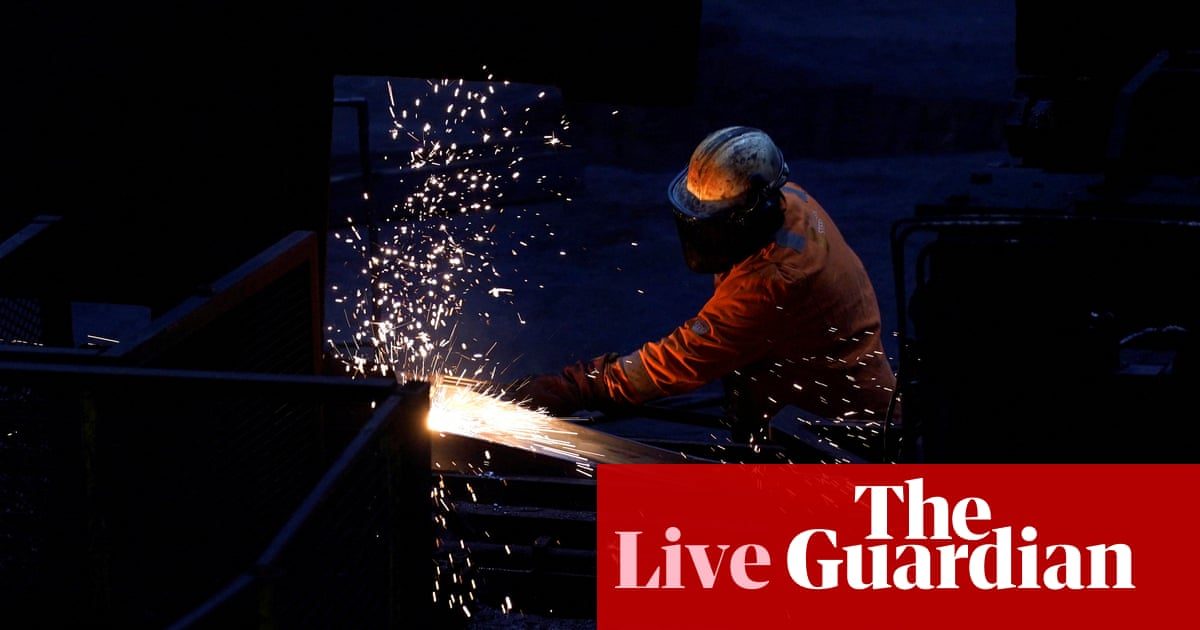
In the United Kingdom, the government has formally taken British Steel into public ownership. The move follows the Steel Industry (Nationalisation) Act receiving royal assent on Wednesday, fifteen months after an emergency parliamentary recall prevented the Scunthorpe plant’s closure. Prime Minister Keir Starmer stated the takeover from Chinese owner Jingye was essential to protect 4,000 jobs and preserve Britain’s last primary steel producer.
This state intervention coincides with official data showing the UK economy returned to growth in May. Gross domestic product rose 0.1%, matching economist forecasts and recovering from a 0.1% contraction in April. The resilience suggests the economy is absorbing rising energy costs linked to Middle East conflicts better than analysts initially feared.
Chancellor Rachel Reeves is expected to view the May GDP figures as validation of her economic strategy ahead of her anticipated departure from the role next week. Meanwhile, markets remain cautious about geopolitical supply shocks. Brent crude rose 1% to $85.85 a barrel amid escalating US-Iran tensions over key Gulf shipping channels.
EU tightens tech regulation
In the technology sector, the European Commission has mandated that Google open its Android operating system to rival artificial intelligence companies. Regulators determined that non-Google AI assistants were previously unable to function on Android at parity with Google’s Gemini.
Under the new rules, Google must enable voice activation for alternative AI assistants and allow them to execute third-party tasks, such as booking taxis. By January 2027, the company must also share anonymised search data with competing search engines. Google’s president of global affairs, Kent Walker, warned the mandate could weaken citizens’ privacy and endanger national security by exposing data to unfamiliar companies without adequate anonymisation.