Crompton Greaves Bets on Premiumisation and Smart Devices for Future Growth
Crompton Greaves Consumer Electricals is pivoting its growth strategy toward smart, connected products and rural premiumisation to capture evolving consumer demand and navigate tightening energy regulations.
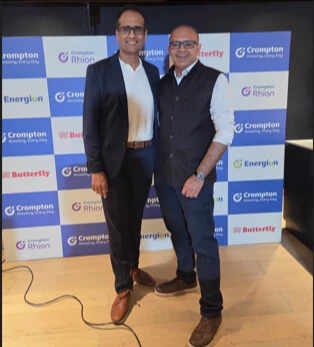
Crompton Greaves Consumer Electricals outlined a strategic shift toward premiumisation and smart home technology at a recent launch event in Mumbai. Group CFO and Head of Strategy Kaleeswaran Arunachalam detailed how the company is restructuring its portfolio to capture demand across diverse consumer tiers.
This pivot matters for investors as the Indian consumer electricals market continues to fragment. Arunachalam noted that 70 percent of consumers currently spend less than 300 rupees in average revenue per user, requiring distinct value propositions compared to the discerning buyers in higher income tiers.
To address this divide, the company is introducing connected devices that merge health, wellness, and aesthetics. A prime example is the newly introduced Biofier water purifier, which monitors total dissolved solids and alerts users to preventive maintenance needs without requiring customer service intervention.
Regulatory pressures are also actively reshaping the company’s product roadmap. Arunachalam highlighted that ceiling fans remain the single largest electricity-consuming equipment in Indian households due to their near-universal penetration and 15-hour daily usage.
In response, Crompton has developed India’s first five-star induction fan and a five-star cooktop, recently recognized with a Golden Peacock award. The company is now targeting Scope 3 carbon emissions, embedding sustainability directly into product design by appointing its Chief Technology Officer as the head of sustainability.
The growth strategy extends beyond urban centers, targeting rural premiumisation driven by improved electrification, the Jal Jeevan Mission, and solar rooftop initiatives. Arunachalam argued that data democracy has aligned rural aspirations with urban markets, making affordability the primary barrier rather than a lack of demand.
To bridge this affordability gap, the company is exploring microfinance partnerships as a key enabler. It is also evaluating smaller, low-unit packaging models similar to those that have historically succeeded in the fast-moving consumer goods sector.
At the top end of the market, Crompton is launching Rhion, a new premium brand designed for consumers seeking disruptive, aesthetically superior technology. This marks a deliberate departure from the industry’s traditional focus on basic functionality, aiming instead to deliver smart, connected experiences that actively adapt to user requirements.