Japan 10-year bond yield approaches 3 percent amid fiscal and inflation risks
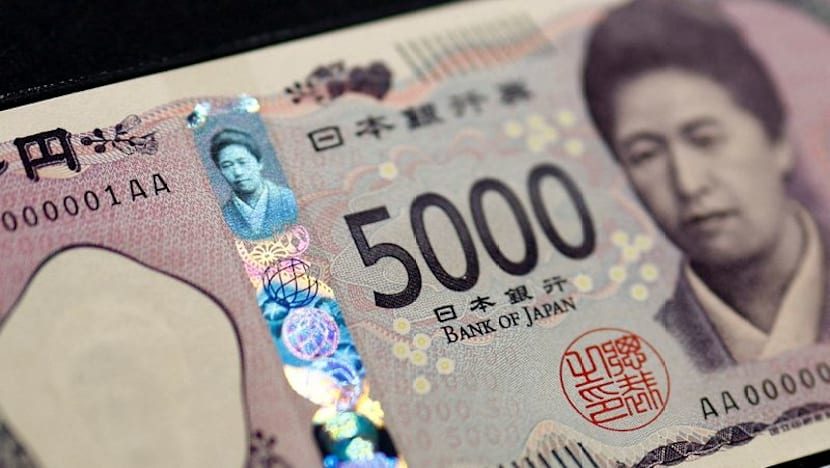
Japan's 10-year government bond yield has reached its highest level since 1996, testing the 3 percent threshold as inflation, currency weakness, and mounting fiscal deficits force a repricing of the country's debt.
Japan's 10-year government bond yield advanced for a seventh consecutive session on Tuesday, reaching 2.945 percent. This marks the highest level since September 1996 and brings the benchmark to the brink of the 3 percent threshold. The broader curve is also shifting, with the five-year rate hitting a record high and the two-year yield reaching a 31-year peak.
The surge reflects a confluence of rising domestic inflation, expectations for imminent Bank of Japan rate hikes, and deepening concerns over the nation's fiscal trajectory. Prime Minister Sanae Takaichi’s push for investment-led growth and tax cuts has alarmed investors, especially with national debt already exceeding 200 percent of gross domestic product. Demand at a recent 10-year auction fell to its weakest point in a year.
Market professionals are debating whether this represents a structural break or a natural adjustment. Shoki Omori, chief fixed income strategist at Deutsche Bank, described the move as a reflection of rising wages and heavy government spending. "Yields that embed a fiscal risk premium are themselves a form of market discipline on future spending," Omori said, characterizing the shift as "normalisation with a warning label, not a crisis."
The bond market stress is closely tied to the yen, which is languishing near a four-decade low against major currencies. Tsuyoshi Ueno, chief economist at NLI Research Institute, warned that the interplay between currency weakness and borrowing costs could escalate. "Breaking above 3 per cent is symbolic," Ueno said, cautioning that a shift in focus toward underlying fiscal risks could intensify yen-selling pressure.
This domestic repricing carries significant implications for global capital flows. For decades, Japanese investors have been a foundational pillar for United States and European debt markets. A sustained push toward 3 percent in domestic yields could eventually lure that capital back home, tightening financial conditions abroad.
Despite the symbolic weight of the 3 percent level, some analysts see further upside as Naoya Hasegawa at Okasan Securities noted that high policy uncertainty makes an early recovery in investor demand unlikely. "There is a reasonably strong possibility that 3 per cent could prove to be merely a stepping stone," Hasegawa wrote. Conversely, Takuji Okubo of Japan Macro Advisor pointed out that the effective interest rate remains low at roughly 1.07 percent, giving the government time to stabilize its finances.
The pressure on Japanese debt is occurring against a backdrop of global bond market stress. Elevated oil prices driven by the ongoing U.S.-Iran conflict have pushed yields in the United States, Germany, and France to multi-year highs.