Competing Billion-Litre Sustainable Aviation Fuel Plants Planned in Paulínia
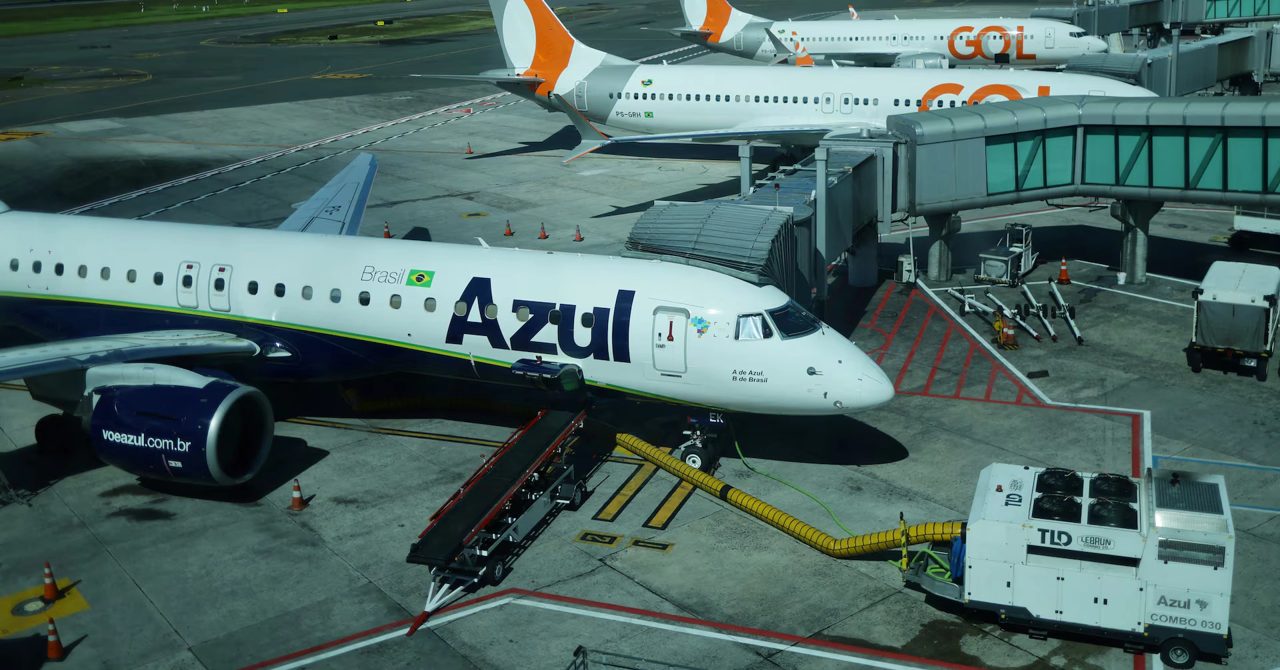
Two companies are planning separate billion-litre sustainable aviation fuel facilities in the same Brazilian town, highlighting both the aggressive scaling of biofuel capacity and the looming feedstock constraints in a regulated market.
Two competing projects are planning to build separate billion-litre sustainable aviation fuel (SAF) plants in the Brazilian town of Paulínia. The overlapping proposals underscore a rapid scaling of renewable fuel capacity in a market where global output remains a fraction of total demand.
Energis8 expects to produce approximately one billion litres of SAF annually, with chief executive Marcos Guerra stating that key planning should conclude by December. The project requires an estimated $1.3 billion in capital expenditure and targets a 2031 operational start.
Funding is structured with 40 percent from equity and the remainder from debt, while Guerra retains an 85 percent stake. The company will utilize a tolling model, where customers supply their own ethanol and pay a conversion fee per litre.
This approach removes the company's exposure to volatile spreads between ethanol costs and SAF prices. Guerra noted that this service-based model offers cheaper rates for clients than spot prices and secures more favourable lending terms.
The facility would require 1.7 billion litres of ethanol annually to yield one billion litres of fuel, representing a volumetric yield near 59 percent. Securing this volume presents a challenge, as feedstock availability is the primary constraint facing the sector amid competition from existing fuel and export markets.
Rival Timelines and Market Constraints
Energis8 is not the only entity eyeing Paulínia. JetBio, controlled by the American group Summit Agricultural Group, is also planning a billion-litre ethanol-to-SAF plant at the same location.
JetBio aims to break ground in the second half of 2027 and intends to export roughly 90 percent of its output. This contrasts with Energis8, which targets a later 2031 launch and focuses on a tolling model designed for nearby airports.
The scale of these proposals is substantial relative to current production. Global SAF output reached roughly 2.7 billion litres last year, accounting for just 0.3 percent of total jet fuel demand.
Brazil’s mines and energy ministry estimates the country will produce around 1.6 billion litres of SAF starting in 2027, meaning a single one of these plants could nearly satisfy that entire national projection. This capacity is being driven by the Fuel of the Future law, which mandates domestic airlines to begin reducing flight emissions through SAF blending from 2027.
Brazil currently represents about 75 percent of South America’s planned SAF capacity, hosting four of the region’s seven projects. However, with Energis8’s timetable placing it last to market, the race to secure ethanol feedstock will likely determine which facilities ultimately reach production.