Modern Mining plans US e-waste plant rollout under new export curbs
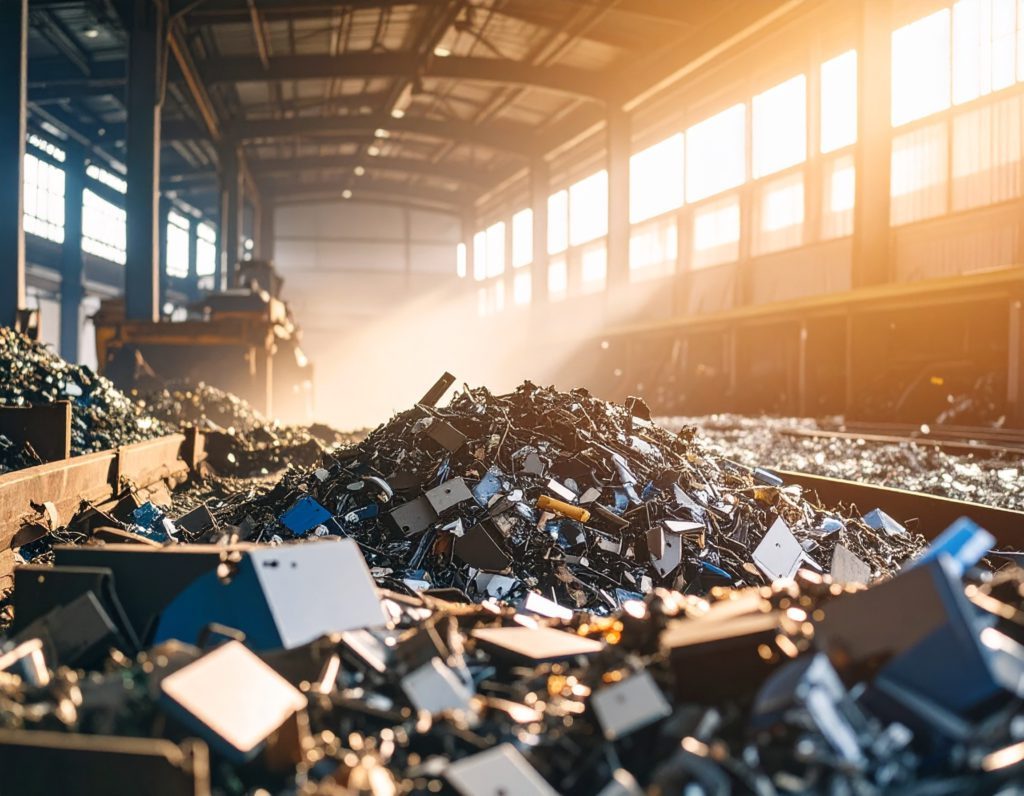
Privately held Modern Mining is raising capital to build a network of modular electronic waste processing plants in the US, capitalizing on new federal export restrictions aimed at retaining critical minerals domestically.
Modern Mining is raising capital to construct its first commercial electronic waste processing facility following an industrial-scale demonstration in Greenville, North Carolina. The privately held company plans to build roughly one modular plant per year over an initial five-year expansion period.
The commercial rollout coincides with shifting federal trade policies designed to secure domestic supply chains. The federal government moved to secure these materials in July when President Trump signed a measure granting officials authority under the Defense Production Act to restrict exports of specific industrial waste.
Instead of operating as a traditional waste management firm, Modern Mining approaches discarded electronics with the mindset of a mining company. The firm uses gravity separation and selective chemistry to isolate gold, silver, palladium and copper without relying on the large-scale incineration common in conventional e-waste processing.
Chief executive Jeet Basi views the sector as the start of a new supply chain, treating discarded electronics as an "above-ground mineral resource." He noted that keeping feedstock on US soil must be matched by expanded downstream processing infrastructure to economically convert materials into tradable commodities.
The economic implications for broader commodity markets are substantial. According to the International Energy Agency, scaling this type of recycling could lower the requirement for new mine development by 25 to 40 per cent by 2050, with reductions of roughly 40 per cent for copper and cobalt alongside 25 per cent for lithium and nickel.
Supply volumes are also poised to increase as artificial intelligence accelerates the turnover of electronic equipment. Basi pointed out that advanced AI deployments demand new physical infrastructure, a trend that will likely render recently installed hardware obsolete faster and swell the volume of available feedstock.
Despite the growth potential, Basi does not expect recycled electronics to replace conventional mining entirely. He sees the two sources as complementary, with urban mining keeping extracted materials in circulation while traditional mines satisfy expanding global demand.
Realizing this potential will require cooperation between government and the private sector. Basi stated that the industry needs stable policies to ensure reliable feedstock, investment incentives to expand processing capacity, and measures encouraging original equipment manufacturers to use domestically recovered metals.