OCC Grants Conditional Trust Charter to Trump-Backed World Liberty Financial
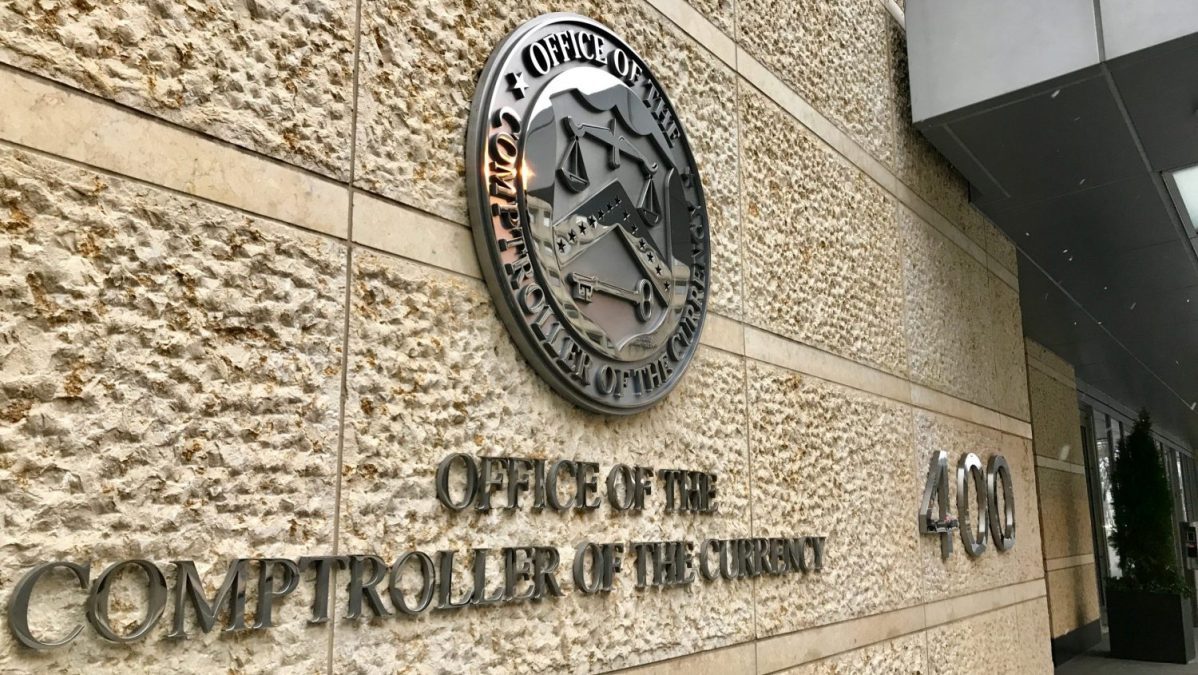
The preliminary approval clears a key regulatory hurdle for the $4 billion USD1 stablecoin issuer to operate as a federally supervised bank, while sharpening questions about conflicts of interest at the highest levels of government.
The Office of the Comptroller of the Currency on Friday granted World Liberty Trust Company, National Association conditional approval to operate as a national trust bank, moving the Trump-backed crypto venture a step closer to a full federal charter.
The OCC stated in its letter that the application "meets certain regulatory and policy requirements." The approval remains provisional: the regulator can still rescind it, and final sign-off has not been given.
What the charter unlocks
World Liberty Financial created the trust entity earlier this year specifically to pursue the banking license. The charter would permit the company to issue and redeem its USD1 stablecoin, provide fiat on-ramp and off-ramp services, and offer custody and conversion to clients.
WLF has said it intends to serve institutional customers including market makers, exchanges and investment firms, positioning the trust company as infrastructure for professional crypto participants rather than a retail product.
USD1 currently carries a market capitalization of roughly $4 billion, making it the fourth-largest stablecoin behind Tether and USDC. A federal banking charter would give the token a regulatory imprimatur that few competitors possess, a distinction likely to matter to institutional allocators weighing counterparty risk.
A broader regulatory shift
The conditional approval is part of a wider pattern. Over the past year the OCC has extended similar preliminary charters to Coinbase, Paxos, BitGo, Ripple and Circle. Comptroller Jonathan Gould, formerly chief legal officer at Bitfury, has publicly argued that crypto-linked entities "should have a pathway to become federally supervised banks."
For the stablecoin sector, the trend signals that Washington is building a supervised lane for dollar-pegged tokens rather than leaving issuance entirely offshore or in state-regulated hands.
Political entanglement
WLF's ties to the White House make this approval unusually contentious. CEO Zack Witkoff is the son of Steve Witkoff, President Trump's Middle East special envoy. Financial disclosures released in June showed the president received millions of dollars connected to World Liberty Financial.
Sen. Elizabeth Warren wrote to Gould in January demanding the OCC halt its review until Trump divests, warning that approval would mean the regulator "promulgate[s] rules that influence the profitability of the President's company" while also supervising and enforcing law against that same company and its rivals.
Those objections have not slowed the process. For investors and compliance teams, the governance questions add a layer of political risk to any counterparty relationship with the new trust entity.
What comes next
Witkoff said on X that the company aims to "build the most trusted and widely used digital dollar in the world while strengthening the role of the U.S. dollar across the global economy." Final OCC approval, however, remains outstanding, and the conditional status means the charter can be withdrawn if the company fails to satisfy remaining supervisory requirements.
Market participants will be watching whether USD1's institutional flows accelerate on the news and whether further stablecoin charters follow, reshaping the competitive hierarchy of the $200-plus billion dollar-token market.