The British finance minister choice that's worrying big business
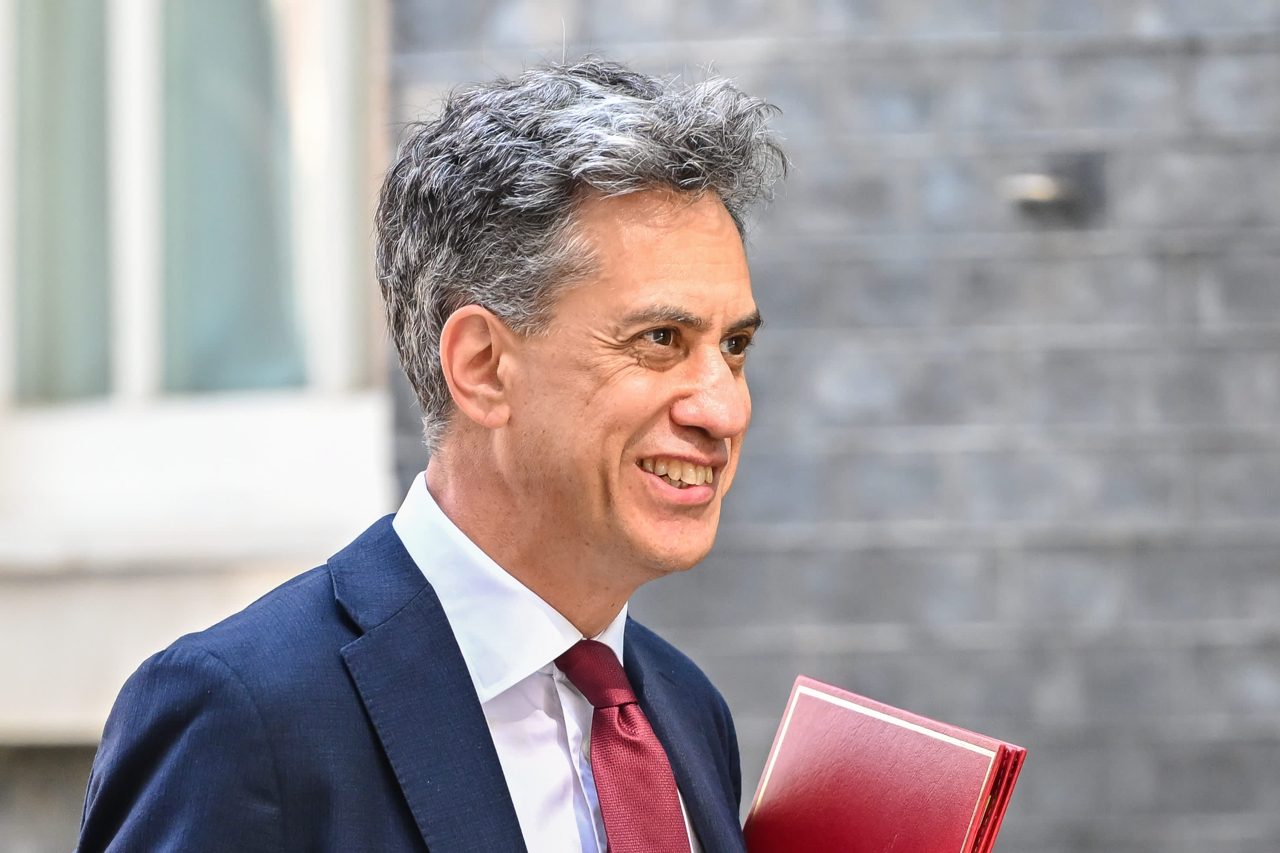
The front-runner for U.K. finance minister is Ed Miliband, who's seen as deeply anti-business. Will Andy Burnham, the incoming prime minister, dare appoint him?
By this time next week, barring the unexpected, Andy Burnham will have become the U.K.'s seventh prime minister in just over a decade.
Burnham, who did not even stand for parliament at the last general election, has revealed little so far of his policy aims.
But one early decision, being watched more than any other, will indicate how he intends to govern: his choice for chancellor of the Exchequer (or finance minister).
Few expect the incumbent, Rachel Reeves , to remain despite indications she would like to. As the minister most closely associated with Keir Starmer, the deeply unpopular outgoing prime minister , it would be odd for her to stay in post, not least because Burnham must reward his supporters with plum appointments.
An early favorite in betting markets was Ed Miliband, currently energy secretary, a key player in the coup that forced Starmer to resign. An old friend of Burnham, who he beat to become Labour leader in 2010, he is to the left of the party and popular with members.
He is seen as anti-business, FTSE-100 chairs and chief executives privately express horror at the idea of him as chancellor, and as market-unfriendly because he is viewed as less committed than Reeves to fiscal discipline.
That anti-business reputation reflects not only his perceived unworldliness, apart from a year working as a TV researcher after graduation, his entire career has been in politics, but also his refusal to issue new oil and gas exploration licences (a Labour policy at the last election), and his feet-dragging in approving the proposed Jackdaw gas field and Rosebank oil field in the British North Sea.
Miliband argues these would not improve Britain's energy self-sufficiency, but critics say it makes little sense to rule out expanding domestic production when the alternative is importing oil and gas, not to mention the many thousands of well-paid jobs it would support.
Scottish Labour MPs, in particular, are nervous after the Conservatives won a recent by-election in Aberdeen South after effectively turning it into a referendum on North Sea oil and gas.
Crucially, Miliband is also mistrusted by the trade unions, Labour's biggest paymasters. Sharon Graham, the influential general secretary of Unite, Britain's second-largest union by membership, told The Observer last month that making Miliband chancellor would put " a noose around the neck " of job creation.
Apart from his stance on oil and gas, she has also criticised his refusal to dilute targets on electric vehicle sales, despite carmakers warning they may have to close factories and cut jobs in the absence of change.
So, if not Miliband, who? Wes Streeting, the former health secretary, has been linked with the role after declining to run against Burnham for the leadership, raising speculation of a backroom deal. OId Westminster hands, though, question why Burnham would hand his closest leadership rival the second-most powerful job in government.
The experienced Yvette Cooper, currently foreign secretary (secretary of state), is a credible candidate but is not especially close to Burnham and is viewed by some in his circle as undynamic.
Another contender is Shabana Mahmood, the highly rated home secretary (interior minister), but she is thought to want to remain in her current role.
Apart from outside bets like Chief Whip Jonathan Reynolds and Scottish Secretary Douglas Alexander, that leaves Pat McFadden, currently work and pensions secretary, a hugely experienced former Treasury minister. At 61, unaligned to any party faction and with no pretensions to the highest office, the Scot would represent little threat to Burnham.
Seen as hawkish on reducing Britain's spiralling benefits bill, in a recent leaked message, he complained Labour MPs constantly asked him, " Who can we tax in order to pay benefits to others? ", McFadden is the most market-friendly contender.
Such reports speak to the tensions within Burnham's camp which, it appears, is completely divided over who should be chancellor.
Those on the left favour Miliband and argue that passing him over would anger party members. Those on the right, who are thought to be behind the latest briefings, have highlighted the dangers inherent in unnecessarily antagonising both business and the financial markets.
Betting markets, and political betting markets may be more vulnerable to insider trading than many others, now have Cooper as favorite to become chancellor.
At the same time, it is being reported that none of those who supported Burnham's rise to the highest office in the land, Miliband included, have received any confirmation that they will be rewarded with jobs, either in the cabinet or 10 Downing Street.
That Burnham looks unable, just days before he assumes office, to pick a chancellor points to the same indecision of which Starmer was frequently accused.
EasyJet pops 13% as airline weighs $7.7 billion rival takeover bid from Apollo EasyJet stock soared last week after the budget carrier said it is considering a $7.7 billion takeover bid from Apollo Global Management , putting the airline at the center of a private equity bidding war.
UK strikes landmark trade deal with Switzerland for crucial services sector The U.K. and Switzerland announced a services free trade agreement on Monday, in a deal that is expected to lend a multi-billion-dollar boost to British exports and ease travel between the two nations.
Major UCL report ‘Prosperity 2030’ calls for overhaul of UK economy Andrew Percy, co-chair of UCL's Social Prosperity Network, discusses a radical 5-year plan for the U.K. economy that promises to raise more than £100 billion a year in revenue, while reducing the cost of living by more than £50 billion a year across all households.