SBI Funds IPO tests India's weak record on mega listings
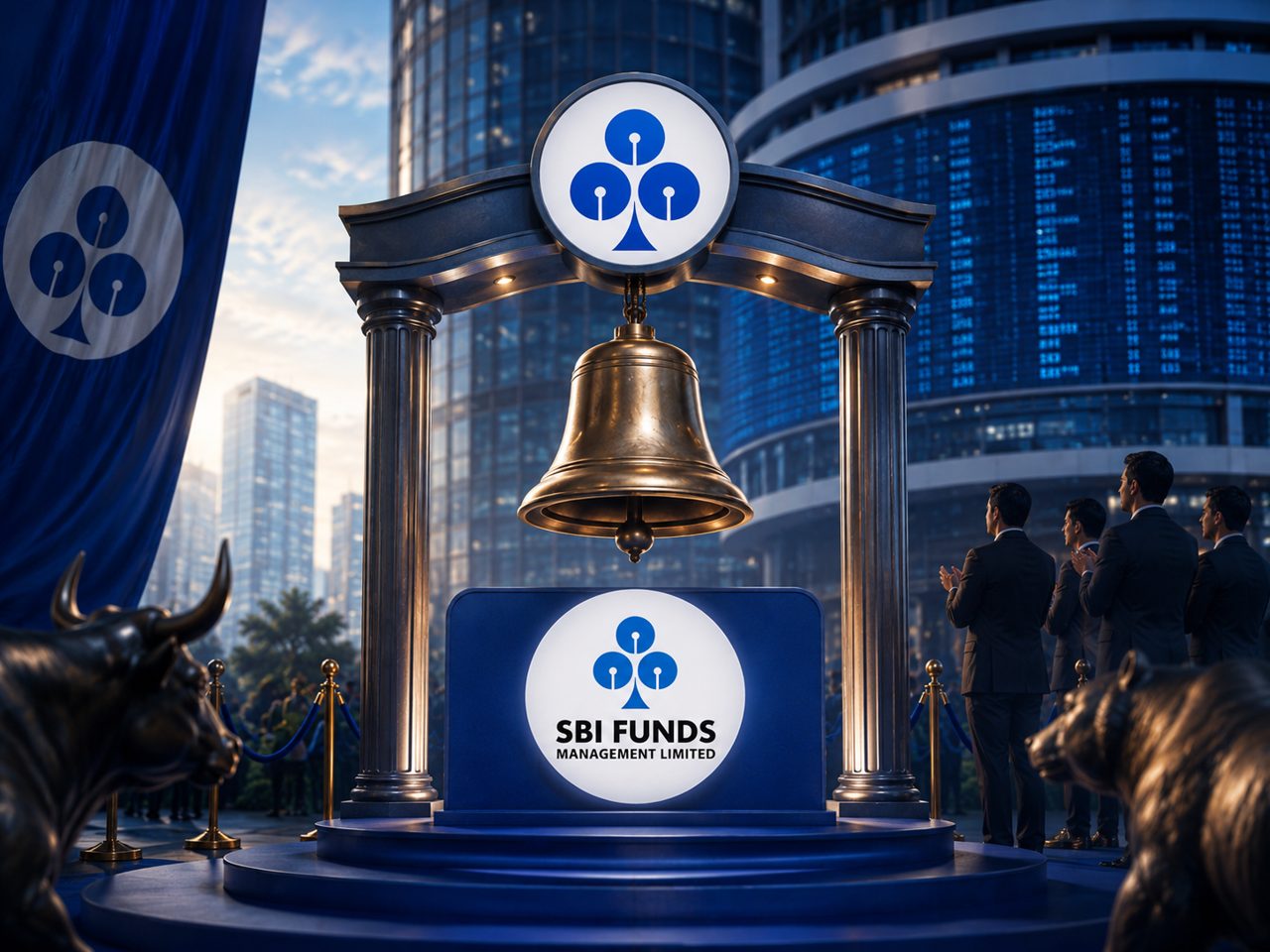
SBI Funds Management is seeking a valuation of 1.17 lakh crore in an entirely secondary offering, testing whether robust profitability can finally break the curse of India's underperforming mega-IPOs.
SBI Funds Management has set a price band of 545 to 574 rupees per share for its initial public offering, targeting a valuation of roughly 1.17 lakh crore at the upper end. The offering is entirely an offer for sale by parent State Bank of India and partner Amundi, meaning the company will not receive any proceeds.
The flotation arrives when India's track record for large listings remains deeply unconvincing. An analysis of 13 large IPOs shows that while eight trade above their adjusted issue prices as of July 13, the median return is just over 2%, with gains concentrated in a few stocks.
Size and brand recognition have historically offered little protection. Eternal has surged 275%, while Tata Capital has gained 11%. Conversely, New India Assurance has plummeted 77% and NMDC is down 72%, with General Insurance Corporation, Life Insurance Corporation of India and One97 Communications also trading well below their offer prices.
SBI Funds enters the market with considerably stronger financials than several previous large, loss-making debutantes. As of March 2026, it managed 12.5 lakh crore in assets, holding a 15.3% market share. Revenue rose 22% to 4,389 crore in fiscal 2026, driving profit to 3,067 crore on an EBITDA margin of 79% and a return on equity of about 51%.
Valuation questions
The challenge for subscribers lies in the pricing. At the upper band, the IPO is priced at 38.1 times fiscal 2026 earnings and 33.6 times enterprise value to EBITDA. Nirmal Bang noted this was lower than some listed peers, including HDFC Asset Management and ICICI Prudential Asset Management, pointing to the firm's market leadership, distribution network and profitability as key strengths.
Anand Rathi highlighted the company's scale, asset-light model and retail franchise as combined strengths, but described the issue as "fully priced". The brokerage warned that even high-quality businesses can produce weak shareholder returns when the entry valuation is too demanding.
Future performance will depend on whether earnings growth can justify the multiple. The asset manager faces risks from market declines, investor redemptions, management fee compression and the ongoing shift towards lower-fee passive products, with its earnings remaining tightly linked to capital-market conditions.