Nigeria June inflation seen stabilising near 15.9% ahead of central bank meeting
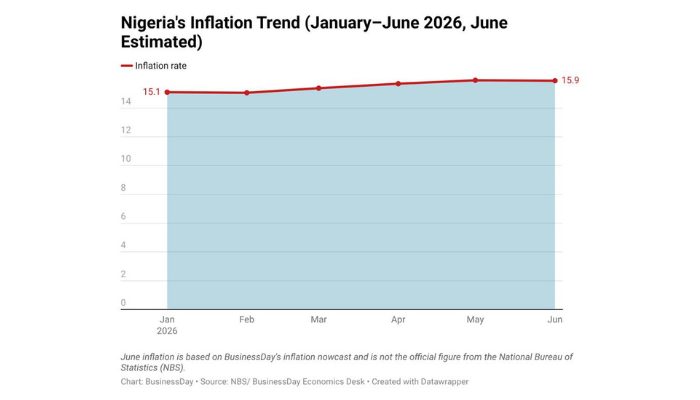
Nigeria’s inflation is projected to stabilise around 15.9% in June, signalling that aggressive monetary tightening has curbed price surges but leaving structural economic challenges unresolved for businesses and households.
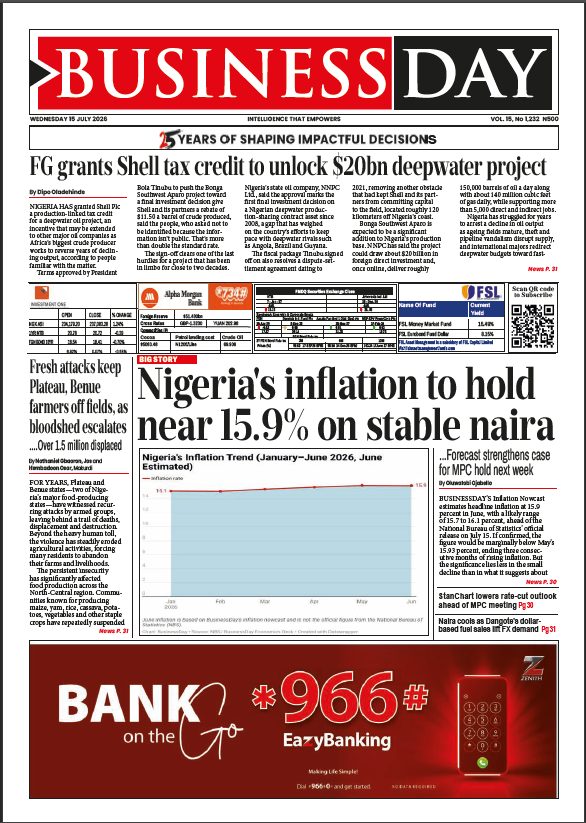
Nigeria’s headline inflation is estimated to have held steady at 15.9% in June, according to real-time forecasting models. This figure, carrying a likely range of 15.7% to 16.1%, would mark a slight decrease from May’s 15.93% and halt three consecutive months of rising prices. The official National Bureau of Statistics data is scheduled for release on July 15.
This stabilisation suggests that the Central Bank of Nigeria’s aggressive tightening cycle is achieving its primary objective of preventing a renewed inflation surge. The central bank has raised its Monetary Policy Rate from 11.5% in early 2022 to a peak of 27.5%, before recently trimming it to 26.5%.
Policymakers face a delicate balancing act at the Monetary Policy Committee meeting scheduled for July 20 and 21. With inflation neither accelerating enough to warrant a hike nor falling convincingly enough to justify easing, markets anticipate the committee will hold the policy rate at 26.5%.
For fixed-income investors, this environment presents a compelling opportunity. The wide gap between the 26.5% policy rate and the estimated 15.9% inflation rate ensures positive real returns on Nigerian government securities. This dynamic continues to make local Treasury bills and bonds attractive destinations for yield-seeking capital, provided price pressures do not accelerate sharply.
Structural Bottlenecks Persist
However, macroeconomic stability masks severe microeconomic strain. Commercial lending rates remain prohibitively expensive due to the elevated policy rate and structural factors like the Cash Reserve Ratio. Households see no immediate relief, as a stable inflation rate merely indicates prices are rising more slowly, not that they are falling.
The nature of Nigeria’s inflation has fundamentally shifted. While macroeconomic shocks from foreign exchange reforms and fuel subsidy removals are fading, persistent structural bottlenecks remain. Insecurity disrupting agricultural output, costly transport logistics, unreliable electricity, and supply chain inefficiencies now drive price pressures.
Central Bank Governor Olayemi Cardoso has previously characterised recent price pressures as transitory rather than structural. Yet, further disinflation will increasingly depend on broader economic reforms to improve food production and distribution, a challenge that interest rate adjustments alone cannot solve.