AI-Camouflage Threatens Flock Surveillance Expansion Plans
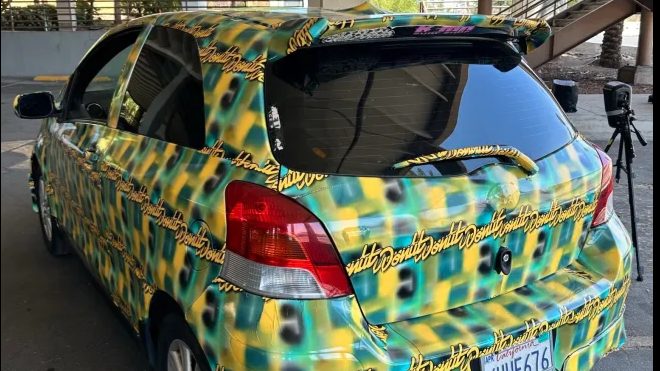
A new adversarial machine-learning technique successfully evaded Flock surveillance cameras in a public demonstration, raising fresh commercial and regulatory risks for the rapidly expanding automated-tracking sector.
Following roughly 31 million tests from his home in Kansas City, security researcher Bill Swearingen has publicly demonstrated AI-generated patterns that defeat the object-detection software powering major surveillance networks. Swearingen tested his "noRecognition" project on Friday at Def Con in Las Vegas by driving a pattern-covered 2009 Toyota Yaris past a Flock camera. “We proved it was effective,” Swearingen said, though he noted the car's wheels remained a challenge to obscure.
The technology relies on adversarial machine learning to exploit how computer vision classifiers process images. The patterns do not physically blind cameras or prevent normal video recording; a human watching the footage still sees a car. However, the engineered visual noise prevents the AI layer from identifying the object, meaning the vehicle is not logged.
For investors and executives in the surveillance sector, the demonstration exposes a fundamental vulnerability in widely deployed products. Swearingen reported that the patterns defeated all 11 open-source detection algorithms he tested, including the software stacks used by Flock, Axon body cameras, and Clearview AI.
The development arrives at a critical juncture for Flock, which is facing a growing backlash on Capitol Hill. According to internal documents, the company had pitched a plan to turn 350,000 Uber and Lyft dashcams into a rolling plate-scanning fleet. Adversarial camouflage directly threatens the commercial viability and reliability of such mass-scale tracking networks.
Regulatory pressures are also mounting across the automated tracking industry. Lawmakers are pressing Meta over facial recognition in its smart glasses, while false matches from automated readers have already resulted in innocent drivers being pulled over at gunpoint. As legal scrutiny intensifies, the emergence of accessible counter-measures adds operational risk to companies betting on computer vision infrastructure.
Swearingen is now attempting to commercialize the technology through a crowdfunding campaign for clothing like T-shirts and hoodies, with vehicle wraps planned for the future. He is keeping the strongest patterns offline to prevent camera vendors from training their systems against them. “Every failure improves my model, and so [the patterns] keep getting better and better,” Swearingen said.