Record $33.5bn African BRI pipeline signals China investment pivot
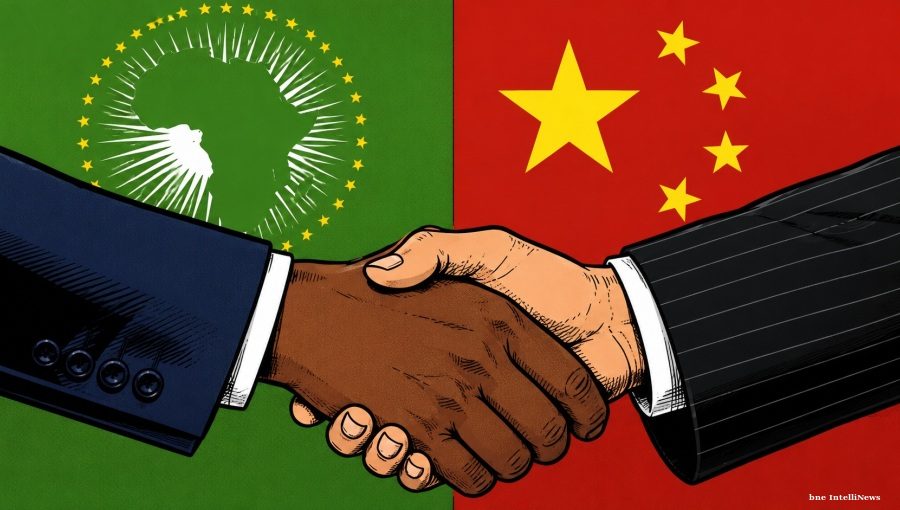
A record $33.5bn Chinese investment pipeline in Africa during the first half of 2026 highlights a structural shift away from sovereign lending toward direct corporate ownership of manufacturing and energy assets.
Chinese Belt and Road Initiative investment announcements in Africa surged 254% year on year to $33.5bn in the first half of 2026, according to the Green Finance & Development Center. Africa accounted for roughly 67% of all global BRI investment announcements during the period. However, this figure represents a project pipeline rather than deployed capital, contrasting with China's Ministry of Commerce data showing a 7.4% drop in actual non-financial direct investment across all BRI partner countries to $17.52bn.
The record tally is overwhelmingly concentrated in two megaprojects. Ming Yang Smart Energy Group's renewable energy programme in Ethiopia accounts for $14.17bn, while XinFeng Steel's planned complex in Egypt represents roughly $10bn. Excluding these two proposals would reduce Africa's H1 total to approximately $9.3bn.
The financial structure of these specific projects marks a decisive break from the past. During the BRI's first decade, Chinese policy banks lent to African governments to hire state-owned contractors, with annual commitments peaking around $28bn in 2016. That lending model collapsed to just $2.1bn by 2024.
The emerging model instead features Chinese companies taking direct exposure to commercial performance, owning and operating assets like Ethiopia's 8.4GW power programme without adding to sovereign debt. Private Chinese firms are driving this transition, accounting for 47.7% of global BRI engagement by value in H1 2026, up from 12.5% in 2020. For Chinese manufacturers, this strategy offers an escape from weaker domestic demand and rising Western trade barriers by relocating production. Global metals and mining engagement hit a record $21.8bn in H1, with 80% directed at processing facilities rather than raw extraction.
For African governments facing fiscal constraints, this model keeps new debt off sovereign balance sheets while advancing industrial strategies like Egypt's export-focused Suez Canal Economic Zone. For investors, the shift changes the risk profile of Chinese-African deals from state-backed credit risk to project-level corporate risk. It also ensures a permanent Chinese industrial footprint, as asset owners remain long after a contractor would have departed.
Beijing is reinforcing this pivot with trade policy, extending zero-tariff treatment to all 53 African countries with diplomatic ties on May 1. Bilateral trade reached CNY1.41 trillion ($209bn) in H1 2026. However, the ultimate economic test for African economies remains technology transfer, determining whether these factories create local expertise or merely anchor Chinese-owned supply chains dependent on imported components.