ACA Enrollment Drops 12% as Subsidy Expiration Triggers Premium Hikes
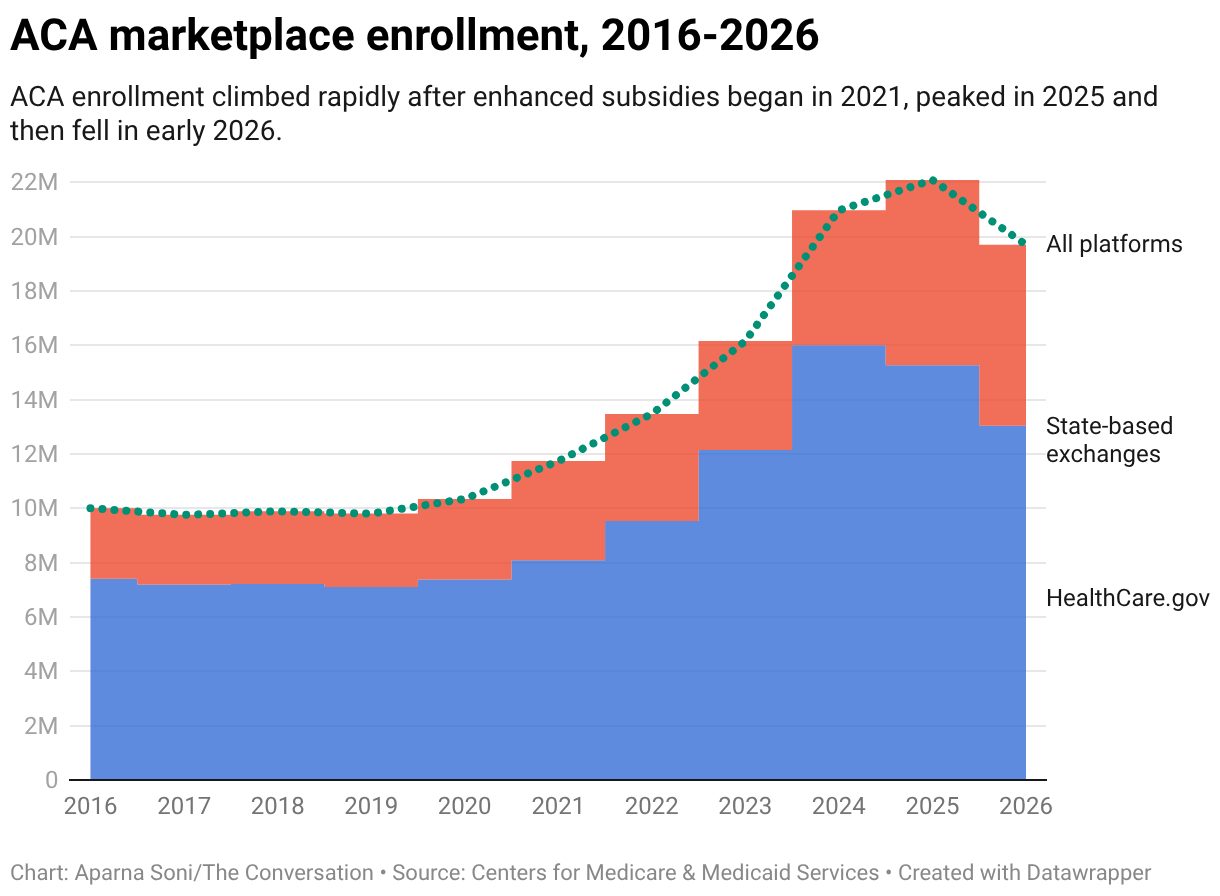
The expiration of pandemic-era subsidies triggered a 12% drop in Affordable Care Act enrollment, forcing insurers to seek double-digit premium increases that threaten to shrink the market further.
Enrollment in the Affordable Care Act marketplaces fell by 2.6 million people between February 2025 and February 2026, dropping to 19.2 million. This 12% decline represents the steepest single-year contraction since the exchanges launched in 2014. Only 83% of those who selected a plan ultimately paid their first premium to keep their coverage, down from 91% the prior year.
The primary driver was the January 2026 expiration of enhanced premium tax credits that had been in place since 2021. Without them, the average subsidized enrollee saw their cost to maintain the exact same plan surge by roughly 114%. While many consumers downgraded to cheaper, higher-deductible policies, average out-of-pocket premiums still climbed 58% and deductibles rose by over $1,000 per person.
Federal authorities also contributed to the drop through a cleanup effort targeting alleged fraud. The Centers for Medicare and Medicaid Services canceled 250,000 unauthorized enrollments and flagged 200,000 improper plan switches in 2025. A June 2026 government brief argued that when previous subsidies made some plans free, brokers improperly signed people up for coverage they did not know they had.
For health insurers, this combination of a shrinking risk pool and rising costs creates a classic adverse selection problem. As healthier individuals drop coverage due to price sensitivity, the remaining enrolled population becomes disproportionately older and sicker. To offset the higher medical claims this generates, insurers are requesting average premium increases of 14% for 2027, which would mark the second consecutive year of double-digit hikes.
The dislocation has not been uniform across the country. States relying on the federal HealthCare.gov platform experienced an 18.7% average decline in enrollment. In contrast, states operating their own exchanges limited the drop to an average of 6.3%, suggesting local outreach and supplemental financial assistance helped retain consumers.
Health policy analysts project the downward trajectory will continue, potentially bringing total enrollment down to between 16.5 million and 17.5 million by the end of 2026. If regulators approve the requested 14% rate hikes for 2027, further disenrollment is likely. Beyond the direct impact on insurer revenues, economic research indicates this growing uninsured population will ultimately generate higher systemic costs through delayed care, increased emergency room utilization, and unpaid medical debt.