Nvidia targets $1T revenue from Blackwell and Rubin chips
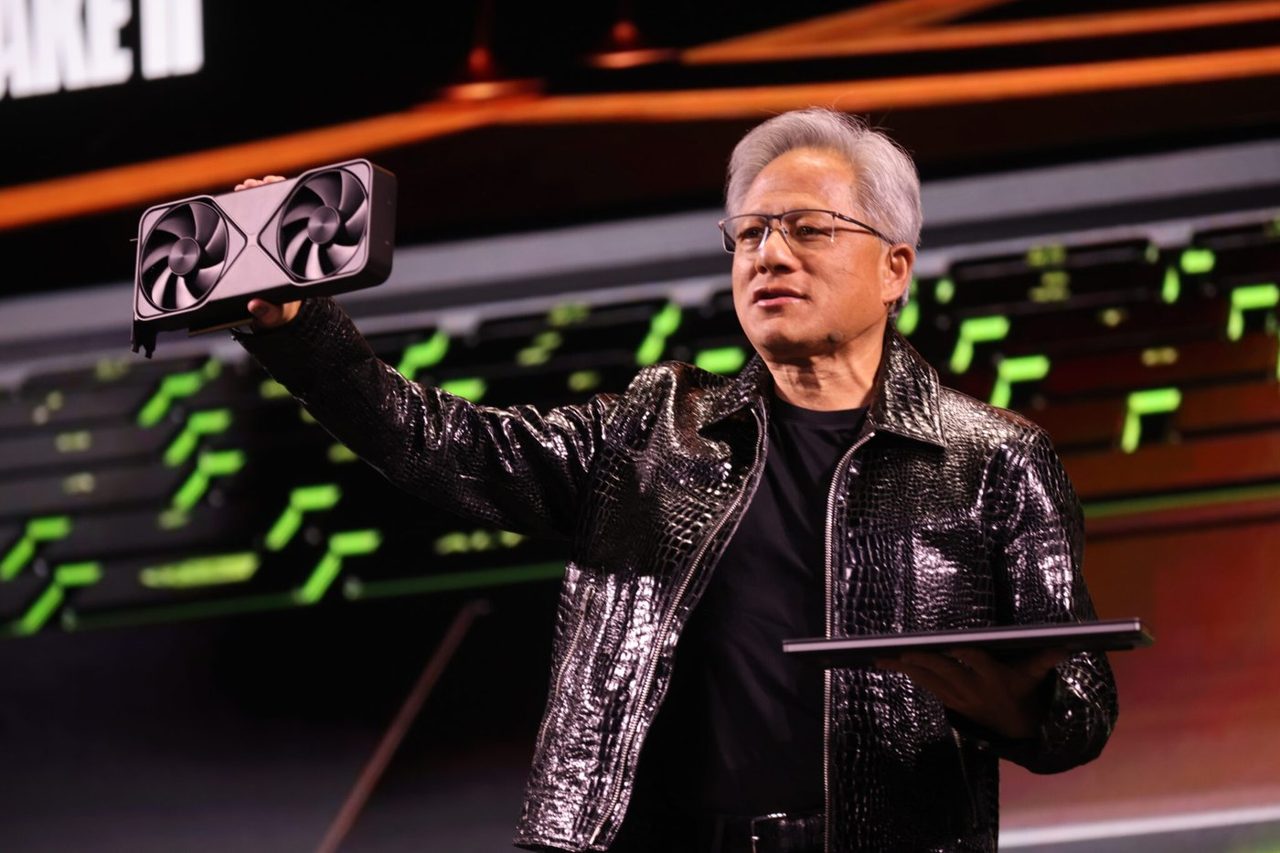
Wall Street analysts expect Nvidia's revenue to double to $555 billion by early 2028, driven by sustained hyperscaler spending and the upcoming Vera Rubin chip platform.
Nvidia is projected to roughly double its revenue within two years, with analysts targeting $555 billion for the fiscal year ending January 2028. This forecast, up from a trailing 12-month revenue of $253 billion, reflects a high rate of growth for a company already holding a $5.1 trillion market capitalization. The anticipated surge counters market assumptions that the artificial intelligence infrastructure buildout is approaching a near-term peak.
The primary driver for this growth is sustained capital expenditure from the world's largest cloud computing firms. Hyperscalers including Meta Platforms, Microsoft, Alphabet, and Amazon are all planning higher capital expenditures specifically for 2026. These companies are racing to build the massive data centers required to support broad AI adoption, ensuring a steady demand pipeline for Nvidia's data center hardware.
Broader macroeconomic estimates from Goldman Sachs reinforce this outlook. The bank projects that global AI compute spending will grow from approximately $494 billion this year to $1.13 trillion by 2031. This long-term trajectory provides a structural backdrop for Nvidia's hardware sales, suggesting the current investment cycle has years left to run rather than months.
On a company-specific level, Chief Executive Jensen Huang has outlined highly ambitious targets. Huang stated he sees at least $1 trillion in revenue generated from Nvidia's Blackwell and next-generation Vera Rubin chip platforms through the end of 2027. Capturing this revenue will depend on the successful rollout of Vera Rubin, which is tailored for an evolving technological landscape.
The AI industry is broadening its computational focus from the initial phase of training models to the subsequent phase of inference. While training involves developing an AI model, inference is the process by which that trained model generates outputs for end users.
This transition carries significant implications for chip architecture and data center economics. Inference places a much greater emphasis on token efficiency. For AI to be commercially viable at scale, the process cannot be prohibitively slow or expensive for customers to use effectively. Nvidia's ability to dominate the inference market will be a key metric for investors monitoring the company's growth trajectory beyond 2026.