Wall Street shrugs off Big Beautiful Boycott targeting US consumer giants
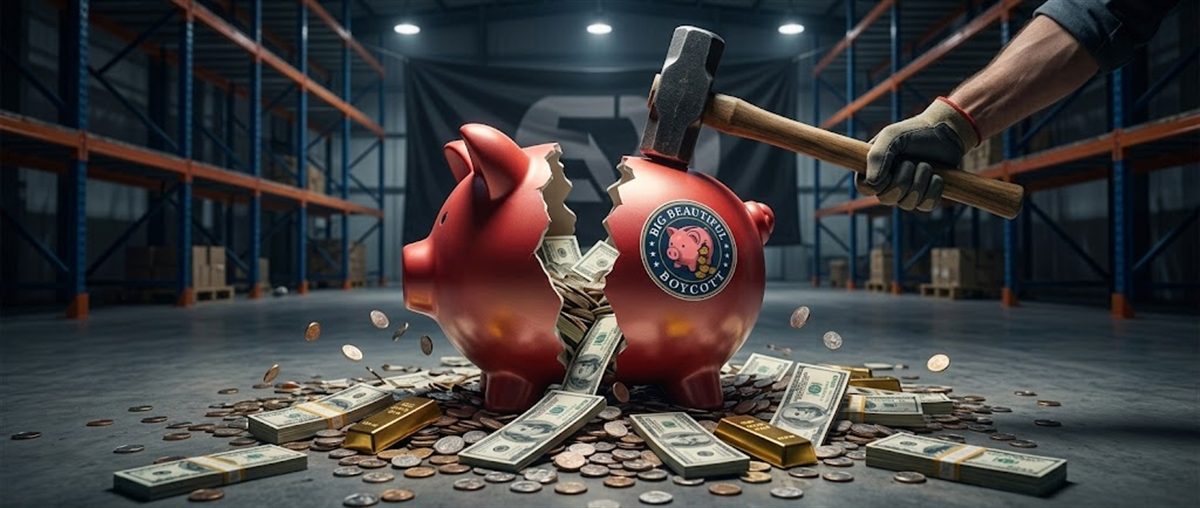
A consumer campaign targeting major US brands over political ties has failed to move markets, reinforcing that investors prioritize fundamentals over culture-war noise.
A consumer campaign called the Big Beautiful Boycott is targeting major American brands over alleged ties to political actors, but financial markets have barely registered the effort. The movement emerged in late 2025 to push back against the One Big Beautiful Bill Act, yet the stock prices of targeted companies show little sign of distress.
History suggests this investor apathy is rational. In 2023, a culture-war backlash helped erase $15 billion from Target’s market value and cost Anheuser-Busch InBev $1.4 billion in North American organic revenue. Target shareholders even sued over the lack of risk disclosure. Both companies eventually saw their stocks recover as the market shifted its focus back to underlying cash flows, margins, and valuations.
Coca-Cola illustrates this dynamic perfectly. While the parent company avoided the boycott list, its Dasani and Minute Maid brands were targeted over the CEO's ties to the Trump administration. The stock has climbed nearly 19% in 2026, supported by a 3% rise in first-quarter unit case volume and its status as a Dividend King with 64 consecutive years of payout growth.
Amazon faces similar boycott calls directed at its Prime Video and Whole Foods divisions following a $1 million inaugural donation and labor disputes. Instead of consumer backlash, the dominant concern for the market is Amazon's forecasted capital expenditures, which could reach $200 billion for artificial intelligence infrastructure, even as its subscription revenue grew 15% year-over-year to surpass $13.4 billion. Furthermore, U.S. online spending reached $26.4 billion during Amazon's recent Prime Day event, up 9.3% from last year.
Kraft Heinz presents a more nuanced picture, as it arguably has the least margin for error despite the boycott targeting brands like Ore-Ida and Jell-O over a planned $3 billion U.S. factory investment. Shares are up 9% over the past month, but that rally stems from management abandoning a planned corporate split in favor of a $600 million turnaround investment. The actual threat to Kraft Heinz is macroeconomic, as the company has warned that lower-income consumers face persistent pressure through the rest of 2026.
For market professionals, the Big Beautiful Boycott serves as a reminder that political consumer campaigns rarely override fundamental analysis. Kraft Heinz trades at roughly 12 times forward earnings with a 6.4% yield, Amazon is valued at 29 times earnings, and Coca-Cola sits at 26 times. Ultimately, it is these metrics, alongside volume growth and capital allocation, that will dictate the trajectory of these stocks.