Automated ice reservoirs secure Ladakh water supply
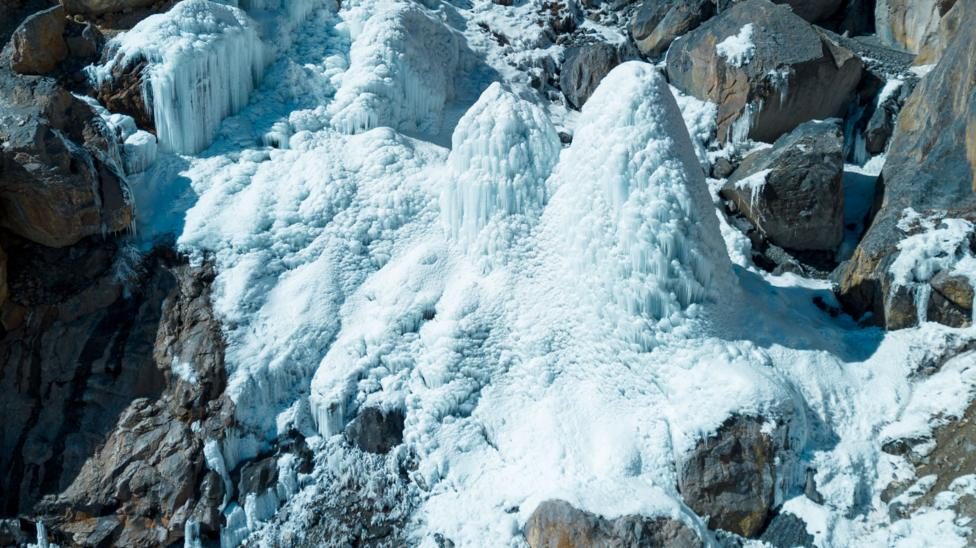
A private climate-tech firm has automated artificial glacier construction in India's Ladakh region, offering a scalable model for climate-adaptation infrastructure.
Acres of Ice, an Indian climate technology company, has successfully deployed an automated system to build artificial glaciers in the Ladakh region. The technology addresses critical agricultural water shortages caused by vanishing natural ice.
Global warming has destroyed the low-altitude glaciers that historically acted as frozen water towers for the 4,000m-altitude desert. Without spring meltwater, farmers face total crop loss, threatening to drive younger residents out of the rural economy and into cities. "That would have been a disaster," said local farmer Gelak Gutme.
Previous attempts to manufacture ice involved piping water and spraying it into the air to form towers, known as ice stupas. However, this continuous flow was inefficient, as warmer days would melt existing ice, and the pipes were prone to bursting in temperatures dropping to minus 30C.
Preventing bursts required teams of four or five farmers to camp at high altitudes overnight, rushing to clear blockages with boiling water. This made the infrastructure operationally unviable. "Leh-Ladakh has become a hub for innovative, grassroots hydraulic engineering," said Murtaza Ali, an executive engineer in the region's Irrigation and Flood Control Division.
Acres of Ice's Automated Ice Reservoir (AIR) system eliminates this dangerous manual labor. Water piped from higher elevations shoots from a vertical nozzle like a "massive fountain," but the flow is managed by a solar-powered computer system linked to a weather station.
"The system waits precisely long enough for that layer of water droplets to freeze solid based on current wind and humidity, then fires the spray again," explains Dr Suryanarayanan Balasubramanian, the founder of Acres of Ice. By firing targeted bursts, the system converts almost all diverted water into ice.
If sensors detect dangerous temperature drops, the system automatically drains the pipes to prevent cracking. The entire network operates via a local wireless connection, though villagers retain a manual override.
During the winter of 2025, Acres of Ice partnered with the local government to operate 10 AIR projects. The company’s immediate focus is scaling this infrastructure. "With the same system that previously used to build only one ice reservoir, can we build a dozen?" Balasubramanian said.
For infrastructure investors and climate-tech developers, the AIR system represents a tested, low-maintenance model for securing water access in remote, climate-stressed regions. Local engineers report that the artificial glaciers are already recharging groundwater and reviving spring sources.