Rivian gains California subsidy edge as Tesla faces premium price cap
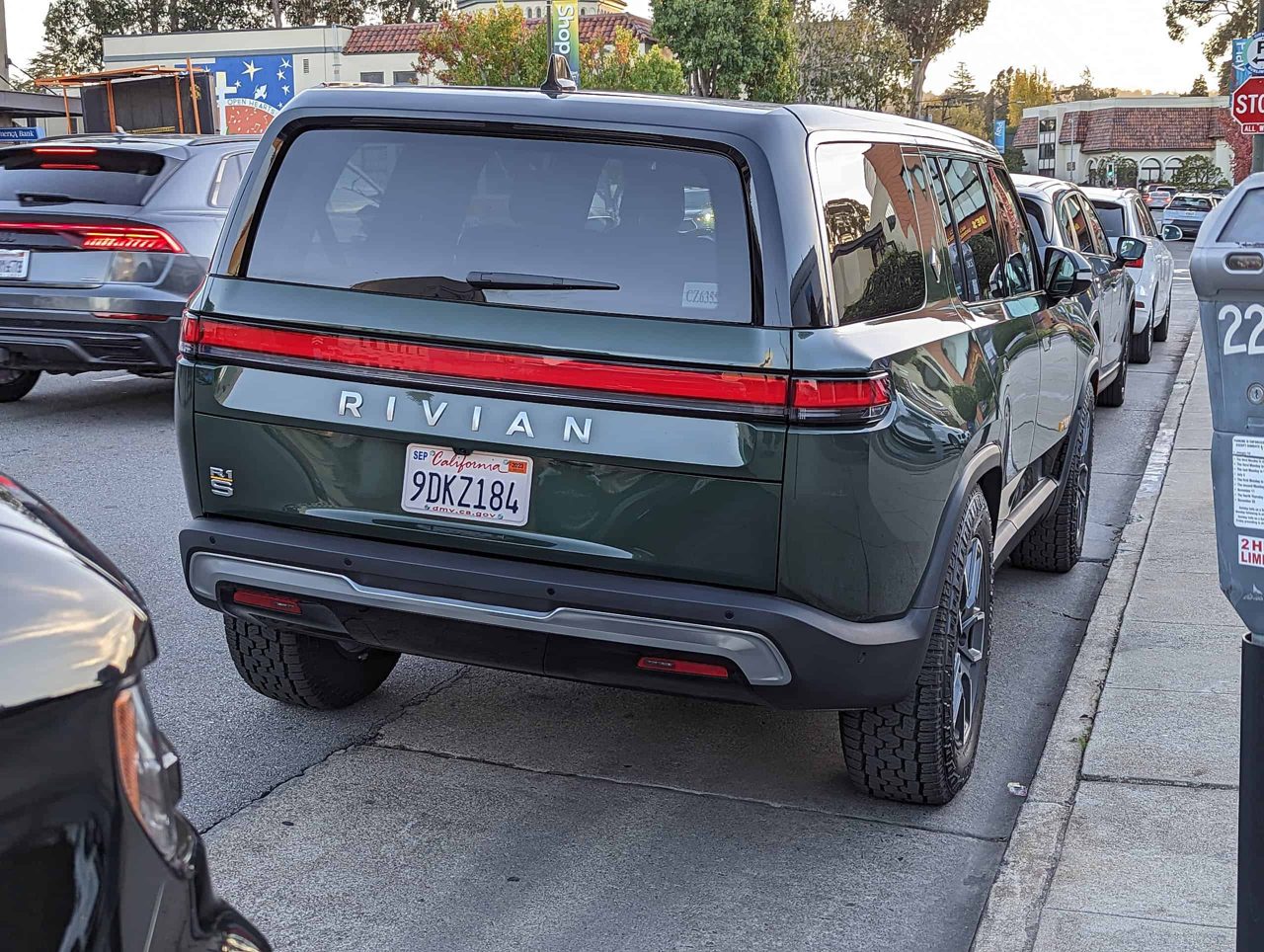
California's new $135 million EV incentive program exempts in-state manufacturer Rivian from a $50,000 price cap, giving the smaller automaker a distinct sales advantage over Tesla's premium models.
California has structured a new $135 million first-time EV buyer incentive to explicitly favor its homegrown automakers, creating a price-cap loophole that excludes Tesla from subsidizing its premium vehicles. The program imposes a standard $50,000 MSRP ceiling but exempts pure-play EV manufacturers headquartered in the state. Because Rivian is based in Irvine, it qualifies for the exemption on higher-priced trims, while Tesla, now headquartered in Austin, is shut out of the subsidy for vehicles exceeding the cap.
The policy landed just as Rivian prepares to begin external deliveries of its R2 Performance trim, a 656-horsepower vehicle with a 330-mile range. Shares of Rivian surged 25 percent over the past week as investors bet the subsidy will translate directly into higher volume. The company has guided for 62,000 to 67,000 total deliveries this year, and the California incentive represents a tangible demand lever at a critical juncture.
However, the subsidy advantage contrasts sharply with the underlying operational realities of the two automakers. Rivian posted $1.38 billion in first-quarter revenue alongside a widening EBITDA loss. While its Software & Services segment grew 49 percent year over year to $473 million on the back of its Volkswagen joint venture, the core automotive business slipped into a $62 million gross loss.
That automotive loss was partly driven by a $100 million drop in regulatory credit sales. CEO RJ Scaringe has positioned the R2 as the company's pivot point, pointing to a $4.5 billion Department of Energy loan for its Georgia manufacturing plant. Yet the company still carries an 8.5 percent bankruptcy probability, underscoring the high stakes of the upcoming R2 rollout.
Tesla, by comparison, demonstrated significant margin recovery in the first quarter. The company generated $22.39 billion in revenue and $941 million in GAAP operating income. Automotive gross margins expanded to 21.1 percent, up from 16.2 percent, while free cash flow surged 117 percent to $1.44 billion.
The company also grew its Full Self-Driving active subscriptions by 51 percent to 1.28 million and launched its Unsupervised Robotaxi service in Dallas and Houston. Tesla is trading at a trailing price-to-earnings ratio of 358 and a forward P/E of 200, valuations that leave little room for error. Investors are now monitoring whether Rivian can convert its regulatory advantage into real volume, while tracking Tesla's Cybercab pilot and Optimus robot deployments, which prediction markets assign just a 12.5 percent probability of launching by the end of 2026.