$70m Coldcard theft breaks core premise of cold storage
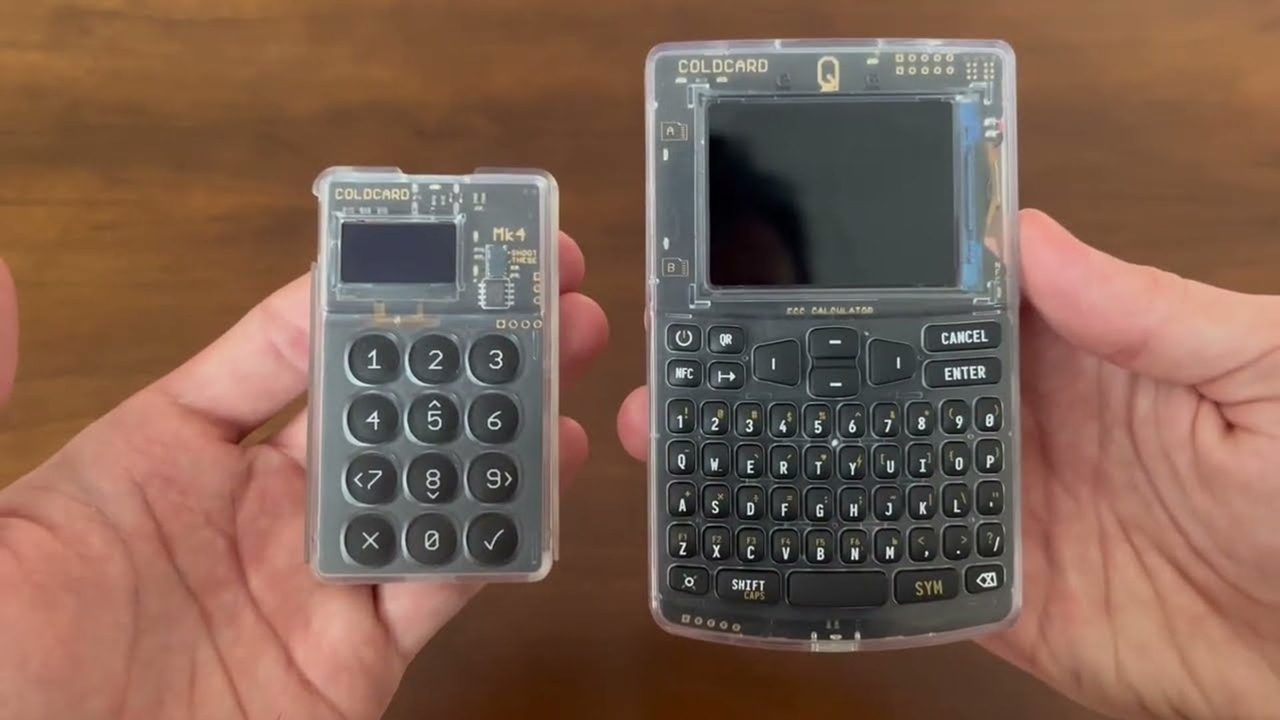
A firmware flaw allowed an attacker to mathematically recreate private keys and steal $70 million in bitcoin without ever touching the hardware devices, undermining the foundational security promise of offline custody.
On July 30, an attacker drained 1,082.65 bitcoin, worth roughly $70 million, from 1,196 Coldcard hardware wallets in just 41 minutes. The stolen funds currently sit untouched across four blockchain addresses. Galaxy Research mapped the full extent of the theft on Friday, revealing a figure nearly double initial estimates because early reporting captured only one of the destination addresses.
The attack did not breach an exchange or trick a smart contract. Instead, a firmware flaw allowed the attacker to mathematically recreate private keys on their own hardware, completely bypassing the physical devices. Coldcard’s firmware was supposed to use a dedicated hardware randomness generator to create unguessable seed phrases, but an internal build setting disabled it.
A supporting library only checked if the setting existed, not if it was active. Key generation fell back to a basic software substitute relying on the chip's factory serial number and clock registers. This reduced the pool of possible seeds from an unguessable magnitude to roughly four billion combinations on models including the Mk4, Q and Mk5.
Four billion combinations is trivial for a computer. The attacker generated candidate seeds, derived the corresponding public addresses, and checked them against the public blockchain. The systematic nature of the sweep, hitting 1,183 native segwit addresses alongside older formats simultaneously, confirms offline enumeration rather than targeted phishing. The victim's device was never involved.
This mechanism strikes at the core value proposition of cold storage. Institutional and retail investors use hardware wallets on the assumption that keeping a key physically offline makes it unreachable. This incident proves that physical isolation is irrelevant if the initial key generation is computationally enumerable.
The threat is not over. Security teams warn that further waves of theft are highly likely because users have no way to test whether their seed was generated on vulnerable firmware. Coinkite, Coldcard’s maker, claims only the Mk3 is affected, but Block’s investigation places the Mk2, Mk4, Q and Mk5 in scope as well.
The attacker did leave a digital footprint. Clay Garrett of Block said the operator used a paid account at a blockchain data provider to query the source addresses during the sweeps. The provider’s logs matched the attack workflow with "extraordinary specificity," and Block has passed the information to law enforcement.
For markets, the incident signals a shift in digital asset security. Storing a key safely is becoming the easier half of the custody problem, as the cost of finding flaws in key generation algorithms continues to fall.