Abqaiq Attack Tests Saudi Export Redundancy as Markets Stay Calm
An attack on Saudi Aramco’s Abqaiq processing facility has left markets calm, but simultaneous strikes on the kingdom's export network are quietly eroding the supply redundancy that underpins global oil stability.
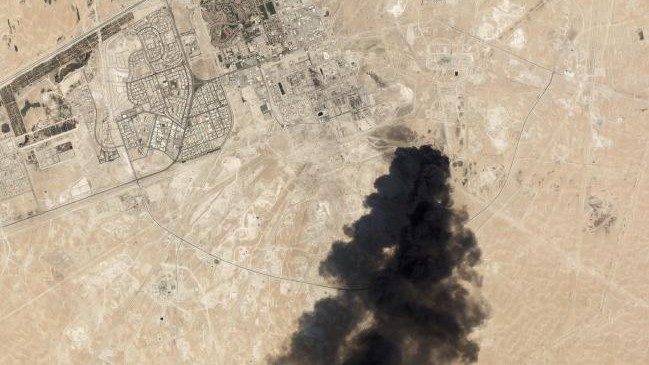
A recent attack on Saudi Aramco’s Abqaiq oil-processing complex appears to have struck the facility's core infrastructure, yet the Saudi government has remained strikingly silent on the extent of the damage. Satellite imagery from the past few days shows burn scars around large stabilization vessels, suggesting the incident reached well beyond peripheral storage tanks. Days after the complex was visibly on fire, authorities have offered no official confirmation of its operational status, capacity losses, or repair timelines.
The lack of transparency is unsettling market observers. "It's really bizarre that we don't have official (or even firm) confirmation of the current operating status of Abqaiq," noted commodity analyst Rory Johnston on July 30. "Most important single oil facility on planet earth, was very obviously on fire earlier this week, and we know... very little atm."
Despite this, oil prices have barely moved. Traders are apparently comforted by the absence of immediate production cuts, but this represents a fundamental misreading of the physical risk. Abqaiq is the heart of the Saudi export system, stabilizing more than seven million barrels per day from the Ghawar, Khurais, and Shaybah fields before the crude enters pipelines and terminals. Damage to processing infrastructure is fundamentally different from isolated storage tank fires; an integrated chain means even minor physical damage can force extensive, prolonged shutdowns for inspections and safety certifications.
The true danger lies in a coordinated pressure campaign against the kingdom's entire export architecture. Regional actors, including Iranian forces, Houthi rebels, and Iraqi Shi’a militias, are simultaneously targeting the East-West Pipeline, the Jizan refinery, and export terminals at Yanbu. Historically, Saudi Arabia's unmatched value to global markets has been its operational redundancy: if tensions closed the Strait of Hormuz, crude could simply flow west to Yanbu. That strategic buffer is now under multi-front assault.
For investors and corporate buyers, the commercial fallout will likely precede any outright supply crash. Disruptions will first surface in delayed cargo nominations, altered tanker loading schedules, and crude quality adjustments. Furthermore, the strategic targeting of downstream processing and refining nodes—rather than upstream wells—is already squeezing product margins in Europe and Asia. Markets betting on continued crude price calm are ignoring the structural lag between physical infrastructure damage and its eventual translation into benchmark prices.