Syria opens lira account at Turkey central bank as it pulls currency from Idlib
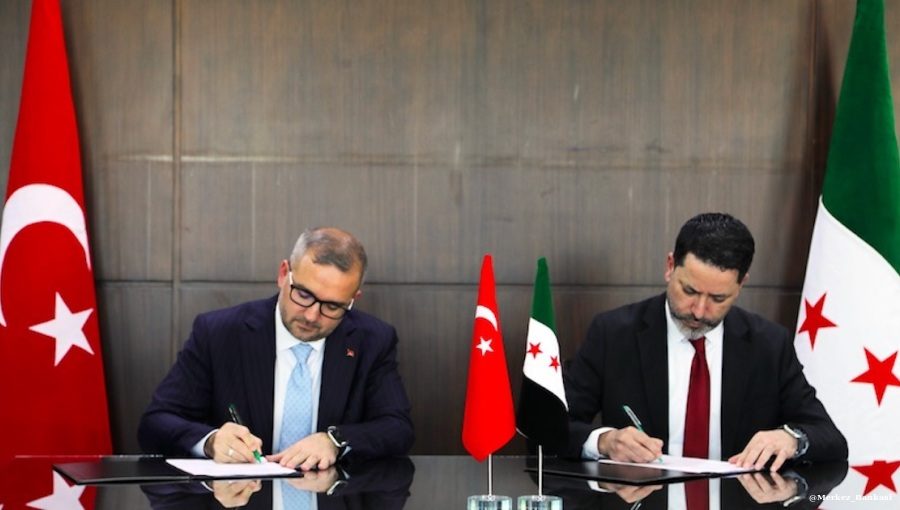
Damascus has secured a lira-denominated deposit facility at Turkey’s central bank, a move that coincides with Syria’s push to phase out the Turkish currency from its border regions and stabilise its newly issued pound.
Turkey’s central bank has established a lira-denominated deposit account for Syria’s monetary authority under a bilateral agreement signed on July 29 by governors Fatih Karahan and Mohammad Safwat Raslan. The facility provides Damascus with a direct channel to hold and manage Turkish currency reserves.
The agreement marks a formal step in recalibrating the complex financial relationship between the two neighbours. For years, the Turkish lira served as the de facto currency in parts of northern Syria due to the collapse of Syrian state institutions. However, the new arrangement signals a shift away from that unofficial use of foreign cash in the border economy.
Damascus is now actively moving to re-establish the dominance of its own sovereign currency. Raslan said the central bank plans to “gradually withdraw the Turkish lira from circulation in Idlib” and halt further injections of the Turkish currency into the Syrian economy. He urged residents to transition back to the “Syrian pound” for all financial transactions.
This tightening of currency controls follows the July 1 reopening of Syria’s central bank branch in Idlib, a western border city, after a decade-long closure. Having a physical presence on the border is a logistical prerequisite for executing a large-scale withdrawal of foreign cash and enforcing local monetary policy.
The push to consolidate the new regime’s monetary sovereignty coincides with the conclusion of a nationwide currency replacement programme. On July 27, Syria’s central bank announced that the deadline to exchange old banknotes from the Assad era for the new regime’s currency would close on July 30. The bank cited a high completion rate, effectively retiring the previous government's physical money supply.
For Turkish financial institutions, the normalisation of diplomatic ties presents a strategic opening. Ziraat Bank, Turkey’s largest lender and a wholly-owned subsidiary of the Turkey Wealth Fund (TWF/TVF), applied in 2025 to establish a physical presence in Syria. State ownership means any cross-border expansion will be closely aligned with Ankara’s regional economic policies.
Ziraat Bank is currently awaiting a response from Syrian authorities regarding its application. It remains unclear whether regulators will approve the expansion as a full subsidiary or a more restricted branch operation. The structure of the licence will dictate the scale of capital Ziraat must commit and the extent of its lending capabilities in the recovering market.
From a market perspective, the phasing out of the lira in northern Syria removes a historical, albeit unofficial, source of offshore demand for the Turkish currency. While the volumes circulating in Idlib are unlikely to move the lira in global forex markets, the formalisation of central bank ties provides a clearer framework for bilateral trade settlements as Syria attempts to rebuild its economy.