Hormuz Tanker Traffic Plunges to Five-Week Low After US-Iran Strikes
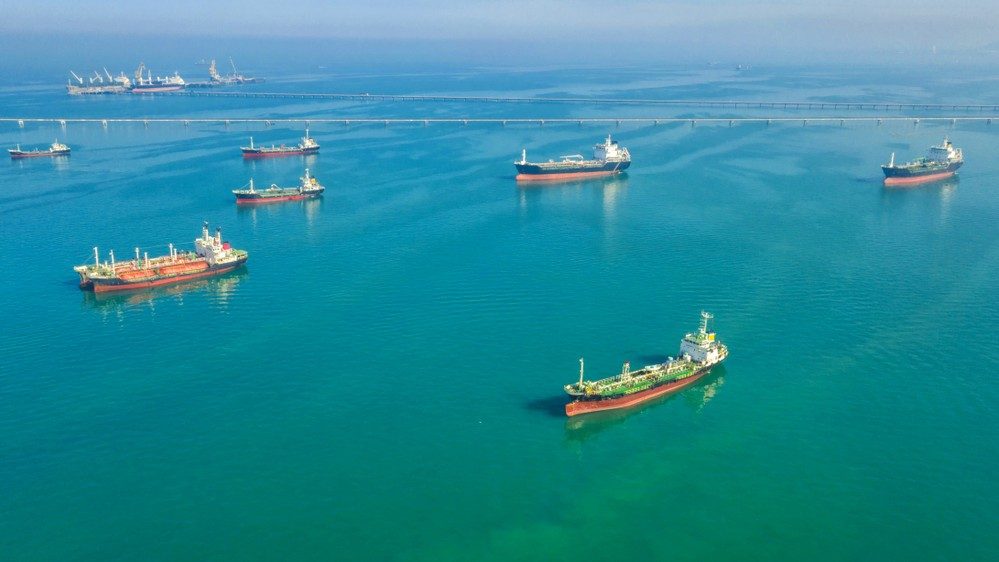
Military escalation between the U.S. and Iran has driven tanker transits through the critical Strait of Hormuz to a five-week low and forced vessels to switch off tracking systems, creating fresh opacity for global energy markets.
Only six tankers transited the Strait of Hormuz on Sunday, pushing traffic to a five-week low after the U.S. carried out a third wave of strikes on Iran. Iran retaliated by targeting U.S. military bases in Kuwait, Bahrain, Qatar, Oman, and Jordan. By early Monday, no vessels were visible on tracking systems attempting the critical oil and LNG chokepoint.
The limited Sunday traffic, tracked by commodity analytics firm Kpler, included a supertanker carrying Iranian crude and a tanker shipping oil products from Kuwait. Three empty tankers heading into the Persian Gulf to load at export ports completed the visible crossings.
The disruption extended directly into the liquefied natural gas sector. Kpler data indicated that zero LNG tankers transited the strait over the weekend. The complete absence of visible LNG carriers highlights how quickly commercial shipping operators are reassessing the physical risks of navigating the waterway.
Operators are not just avoiding the route; they are also reverting to deceptive shipping practices. Tankers are once again switching off their AIS transponders to transit the strait unobserved. This marks a sharp reversal from the weeks between the signing of the U.S.-Iran memorandum of understanding and early last week, when a rising flow of oil and LNG carriers kept their positioning systems active.
Maritime intelligence firm Windward confirmed the return of dark-mode transit on July 12. “Multi-source analysis of the eastern approaches to the Strait of Hormuz shows 8 dark vessels active in the area on July 12, none transmitting AIS,” Windward said on Sunday. “Among them, two vessels appear engaged in a ship-to-ship transfer off the UAE/Oman coast. Four additional dark vessels were tracked moving inbound, and one vessel appeared stationary in the area for the first time.”
For commodities investors and physical traders, the combination of halted visible traffic and returning dark fleets creates a dual problem. Physical supply constraints are colliding with a sudden loss of market transparency. The inability to accurately track vessel movements through the world's most vital oil chokepoint will complicate risk assessments for both crude and LNG markets.