UAC profit triples on C.H.I. buyout as debt maturities loom
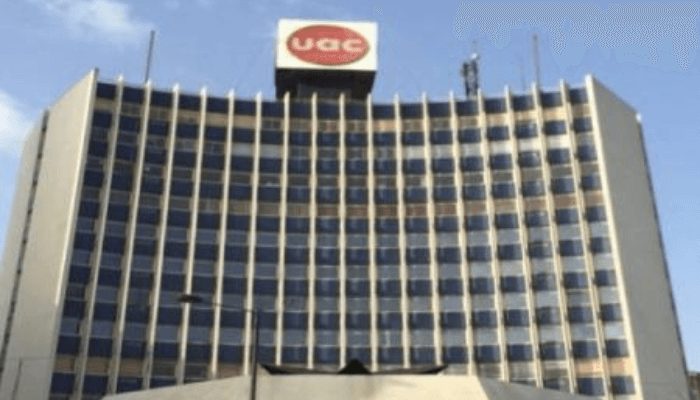
UAC of Nigeria’s acquisition of a Coca-Cola unit drove a 172% profit surge, but expensive borrowings and a looming N149 billion refinancing wall now define the conglomerate’s outlook.
UAC of Nigeria Plc posted a 172% jump in first-half 2026 profit to N20 billion, driven entirely by its N182.5 billion cash acquisition of juice and dairy maker C.H.I. Limited. Group revenue surged 3.3 times to N365 billion, while operating profit nearly quadrupled to N49 billion.
The deal, completed in October 2025, folded the Chivita and Hollandia brands into UAC’s packaged food division, sending segment revenue seven times higher to N307 billion. “Our results for the first half of 2026 reflect progress against the objectives to deliver scale, integrate C.H.I. under UAC’s ownership, drive margin expansion, and optimise working capital,” said group managing director Fola Aiyesimoju.
However, the purchase loaded the balance sheet with N307 billion in gross borrowings. Net finance costs rocketed 338% to N15.9 billion as the company paid N25 billion in cash interest during the period. The financing carries a steep price, including a N69.5 billion term loan at 24.5% and a N25 billion loan note at 15%.
Additionally, roughly N98 billion is drawn under a dollar-linked import facility priced at SOFR plus 5%. While this structure hedges against local interest rate risk, it exposes the group to further naira depreciation.
The most immediate pressure is on the liability side. Just under half of total borrowings—N149 billion—falls due within a year. This includes a N39.8 billion commercial paper tranche maturing in July 2026, meaning the company’s ability to execute refinancings will dictate its trajectory over the coming quarters.
UAC touted an improvement in net debt-to-EBITDA to 2.7 times from 5.9 times, aided by a one-off N30 billion release of acquisition-related inventory that pushed free cash flow to N71 billion. Yet liquidity remains razor-thin, with a quick ratio of just 0.3 times and a current ratio of exactly 1.0 times.
Return on invested capital fell sharply from 39.6% to 25.2%, indicating the enlarged capital base is generating lower returns per naira. Annualised return on equity more than doubled to 52%, but this was partly engineered by a N10.8 billion share purchase for a long-term incentive plan that shrunk the equity base. The packaged food division specifically carries negative net assets of N72.3 billion due to the debt loaded onto it.
Legacy businesses offered little relief. The quick-service restaurant network lost N589 million before tax on shrinking revenue, and the edibles and feed unit posted a N326 million loss amid falling agricultural commodity prices. Only the paints segment, growing revenue by 11.5%, provided a stable offset.