Guyana oil output nears 1m bpd as Exxon expands
Guyana is poised to overtake Venezuela as South America's second-largest crude producer, providing a geopolitically secure supply alternative for US and European markets amid escalating Middle East shipping risks.
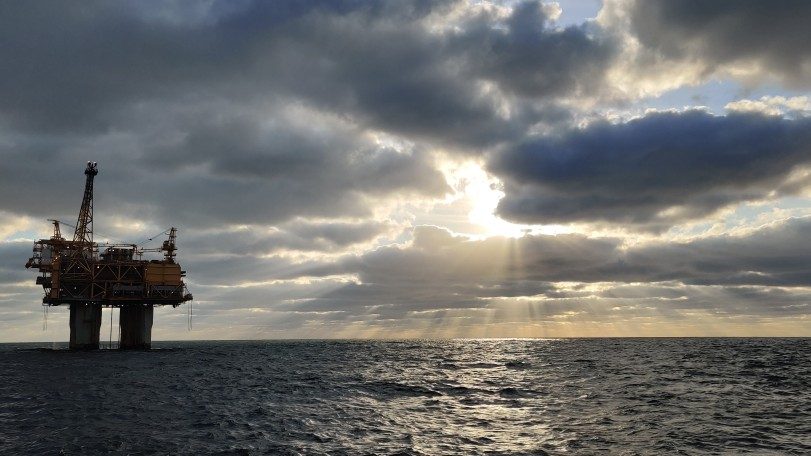
Guyana lifted 888,000 barrels of crude oil per day at the end of May 2026, down 4% from 924,000 barrels at the start of the month but enough to maintain its rank as South America's third-largest producer. Production is set to cross the one million barrel threshold when the Errea Wittu floating production, storage, and offloading vessel starts up later this year as part of ExxonMobil’s $12.7 billion Uaru project. Uaru will add 250,000 barrels of daily capacity, pushing Guyana past Venezuela to become the region's second-largest producer behind Brazil.
The rapid expansion offers a critical hedge for global supply chains currently strained by Middle East conflicts. Because Guyana can export to Asia, Europe and the Americas without routing through the Strait of Hormuz or the Red Sea, its crude is attracting heavy demand from buyers seeking to avoid geopolitical chokepoints. This strategic advantage is underpinned by Washington's intervention in Venezuela at the start of 2026, which neutralized a territorial threat to the Essequibo region, home to the 6.6-million-acre Stabroek Block and its estimated 11 billion barrels of oil reserves.
Exxon is accelerating its capital deployment to capture this demand. Following Uaru, the company will bring the $12.5 billion Whiptail project online in late 2027, adding another 250,000 barrels per day. The $6.8 billion Hammerhead facility, slated for 2029, will contribute 150,000 daily barrels. A final investment decision for the $12.5 billion Longtail project is expected by early 2027. Longtail marks a strategic pivot toward natural gas, with plans to produce 1.2 billion cubic feet daily alongside 250,000 barrels of condensate by 2030.
These projects are expected to lift total hydrocarbon output to 1.9 million barrels per day by 2030. US import data already reflects this shifting trade dynamic. According to the US Energy Information Administration, the United States imported an average of 261,000 barrels per day from Guyana in April 2026. That figure is up 51% from two years prior and nearly seven times the 38,000 barrels imported in April 2022, with the Netherlands, Italy and Panama also ranking as top buyers.
For energy markets, Guyana’s ascent solidifies a broader non-OPEC production surge led by Brazil and Argentina. As Hormuz disruptions force Asian and European nations to diversify their crude sources, Guyana’s deepwater barrels are fundamentally rewriting global supply routes away from volatile Middle Eastern corridors.