Foreign printers supply 65% of Nigeria banknotes as domestic mint fails
Nigeria's central bank relied on foreign printers for 65% of its record 5.71 billion banknote order in 2025 as the state-owned mint missed over a third of its allocation, highlighting persistent sovereign capacity constraints amid surging cash demand.
Foreign high-security printers produced the vast majority of Nigeria's banknotes in 2025, shouldering 65% of a record 5.71 billion-piece order. The domestic producer, Nigerian Security Printing and Minting Plc (NSPM), failed to keep pace, delivering just 1.24 billion of its 2.0 billion-piece allocation.
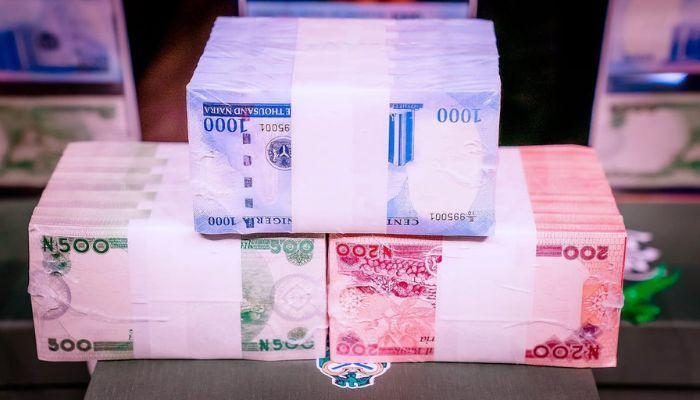
This left NSPM with a 760.76 million-piece shortfall, representing 38% of its target, by the end of December. Foreign firms filled the gap, delivering 2.21 billion pieces in the N1,000, N500, and N200 denominations, with a further 1.5 billion pieces still in transit following a November award.
The surge in printing orders reflects a broader acceleration in physical cash demand, a critical metric for investors tracking the pace of Nigeria's informal economy. Total approved production rose 20.5% from 4.74 billion pieces in 2024, pushing currency in circulation up to N5.73 trillion from N5.44 trillion. The Central Bank of Nigeria (CBN) linked this directly to rising economic activity, underscoring that cash remains the dominant transaction medium despite digital finance initiatives.
For market participants, the domestic mint's underperformance represents a structural bottleneck with balance sheet implications. Relying on overseas high-security printers inevitably requires significant foreign exchange outflows. This occurs at a time when Nigeria is actively trying to stabilise its currency reserves and manage dollar liquidity, making the NSPM's failure a notable operational drag.
In response to these volumes, the CBN is attempting to modernise its downstream currency infrastructure. It expanded its processing footprint by operating 22 Banknote Processing System 1000 machines across 11 branches, while installing 24 newer BPS M7 machines in 12 processing branches. A pilot programme for real-time online reporting of currency processing commenced in December to strengthen oversight.
The central bank is also refining the lifecycle of the naira. A nationwide evaluation of lower-denomination polymer notes was conducted across the country's six geopolitical zones to assess durability and guide future issuance. Furthermore, the CBN established a technical committee with banking executives and the Office of the National Security Adviser to improve cash-in-transit logistics.
Compliance enforcement has tightened accordingly. The CBN utilized mystery shopping exercises to penalise deposit money banks that violated currency management guidelines. To manage vault capacity, the bank approved the disposal of demonetised coins and engaged recyclers to convert banknote waste into consumer goods like manure, egg crates, and charcoal briquettes.