Nigerian oil trusts deploy N373 billion in community projects despite compliance gaps
Nigeria’s legally binding oil community trusts have deployed over N373 billion in local projects, but widespread non-compliance and governance deficits pose significant operational and reputational risks for energy investors.
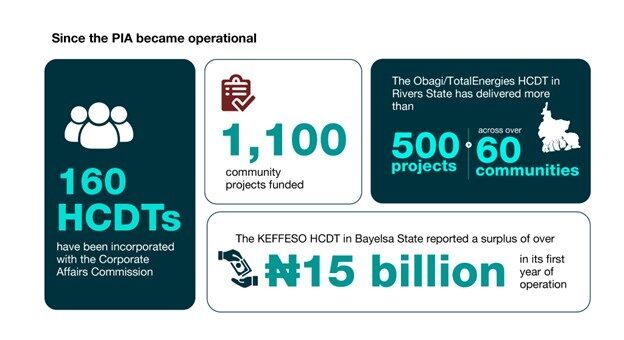
Five years after the Petroleum Industry Act mandated a three percent operating expenditure levy for host communities, more than 160 Host Community Development Trusts have been incorporated in Nigeria. Cumulative contributions surpassed N373 billion by October 2025, financing over 1,100 local infrastructure and social projects.
The Obagi and TotalEnergies trust in Rivers State has executed more than 500 projects across 60 communities. Meanwhile, the KEFFESO trust in Bayelsa State reported a first-year operational surplus exceeding N15 billion. These funds are visibly upgrading regional electricity, water, and educational infrastructure.
However, severe implementation gaps threaten the model's stability and expose energy companies to regulatory and operational friction. An estimated 30 percent of license holders still lack an incorporated trust, and 97 established entities remained unfunded as of mid-2024.
Furthermore, no operating company met the statutory nine-month deadline to establish these entities. Despite the National Upstream Petroleum Regulatory Commission possessing the authority to fine or revoke licenses for default, no sanctions have been enforced against the 125-plus non-compliant settlors.
Governance structures also present material environmental, social, and governance risks for corporate stakeholders. Research by Policy Alert, supported by BudgIT and Oxfam Nigeria, reveals that trustee boards are frequently dominated by former company employees and political elites rather than genuine community representatives.
Women, youths, and persons with disabilities remain largely excluded from these structures. Additionally, host communities lack formal mechanisms to verify the three percent expenditure calculations or mandate the public disclosure of trust budgets and audited accounts.
Deep offshore operators have largely bypassed trust establishment entirely, citing regulatory delays in assigning littoral host communities. Concurrently, ongoing litigation between communities and operators over trust boundaries and board composition continues to stall project execution.
Civil society groups are pushing for stricter oversight to protect corporate investments from community backlash. Enebi Opaluwa, head of natural resource and climate governance at the BudgIT Foundation, highlighted the need for mandatory annual town halls and public financial disclosures through the regulator's HOSTCOMPLY portal.
For international energy investors, the divergence between the law's design and its execution represents a critical jurisdictional risk. Closing these compliance and transparency gaps will determine whether the framework stabilizes host community relations or perpetuates historical extractive sector conflicts.