Nigeria risks $296 billion blue economy opportunity due to funding shortfalls
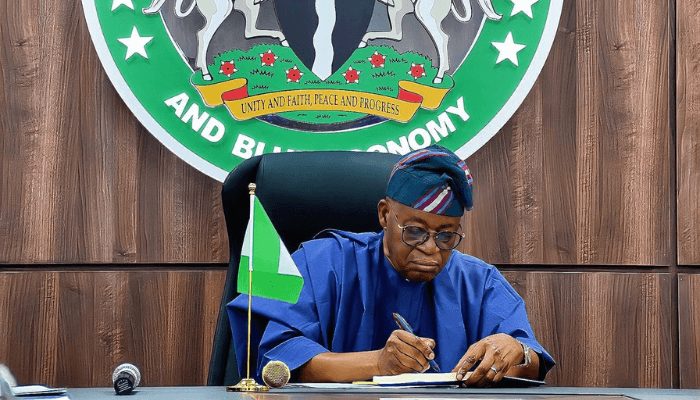
Industry experts warn that inadequate capital and fragmented oversight threaten to stall Nigeria’s $296 billion maritime expansion, undermining its broader goal of building a $1 trillion diversified economy.
Nigeria risks forfeiting an estimated $296 billion in blue economy value due to severe underinvestment and fragmented maritime policies, according to a new industry report. Dele Kelvin Oye, chairman of the Alliance for Economic Research and Ethics, warned that the sector lacks the coordinated capital required to support the country's broader ambition of reaching a $1 trillion economy.
The West African nation possesses an 850-kilometre Atlantic coastline, 10,000 kilometres of navigable inland waterways and some of the region’s busiest seaports. Fully harnessing these assets across fisheries, offshore renewables, shipbuilding and marine biotechnology could generate millions of jobs and significantly boost non-oil exports.
Oye noted that the core challenge is not a lack of natural endowment but a failure to mobilise capital and execute policy. He pointed to Singapore, Norway and Indonesia as examples of nations that transformed their maritime sectors into global economic engines through disciplined investment.
Operational data from the Nigerian Ports Authority for the first quarter of 2026 shows early reform dividends. Gross registered tonnage of ocean-going vessels climbed 19.5 per cent to 46.75 million, while container trans-shipment traffic surged 83.1 per cent.
Maritime security has also improved, with the Deep Blue Project helping the country record more than four consecutive years without piracy incidents. Additionally, the government recently launched a digital disbursement portal for the Cabotage Vessel Financing Fund, which has accumulated over $700 million.
Despite these operational gains, capital allocation remains drastically misaligned with sector needs. The Federal Ministry of Marine and Blue Economy proposed a budget of just N10.5 billion for 2026, a fraction of the N72 trillion annually required by the National Institute for Policy and Strategic Studies to unlock full value.
Overlapping mandates among agencies like the Nigerian Maritime Administration and Safety Agency and the Nigerian Ports Authority continue to deter private investment through duplicated regulations. This underinvestment is starkly visible in the fisheries sector, where a domestic production of 1.4 million metric tonnes against a 3.6 million metric tonne demand forces over $1 billion in annual imports.
Oye urged the government to establish a National Blue Economy Coordination Council to harmonise agency mandates and issue a sovereign Blue Bond for marine infrastructure. "The AfCFTA is intensifying regional competition, and the global blue economy, valued at $4.5 trillion, is being captured by nations that move faster and invest more," he said.
To secure its position under the African Continental Free Trade Area, the expert recommended increasing the ministry's annual budget to at least N500 billion and adopting a National Marine Spatial Plan. Such structural adjustments are deemed essential to transition the country from an oil-dependent past to a diversified maritime powerhouse.