Korean stocks enter bear market as chip giants slump
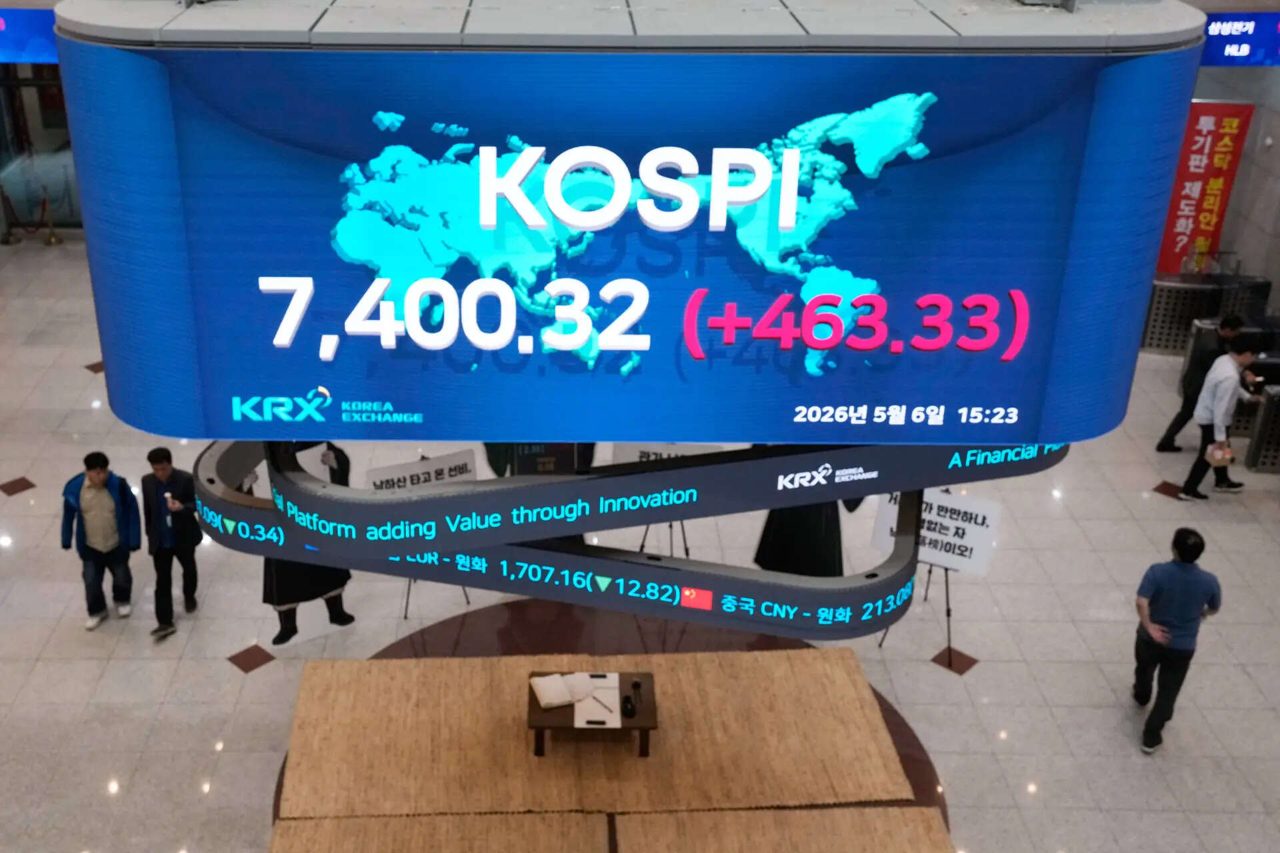
South Korea's Kospi index fell into a bear market after a 6% drop driven by heavyweight semiconductor stocks, signaling a sharp shift in investor sentiment toward AI spending amid rising US rate expectations.
The Kospi crashed 6% on Monday, pushing the benchmark index more than 25% below its June peak and firmly into technical bear market territory. The selloff was led by SK Hynix, which plummeted 10%, and Samsung Electronics, which lost more than 6%. Because these two semiconductor manufacturers account for nearly half of the Korean stock market's total weight, their losses effectively dragged the entire index down.
The equities plunge coincided with a macroeconomic risk-off move that saw the US dollar and Treasury yields strengthen simultaneously. Investors are actively pricing in a higher probability of another Federal Reserve interest rate hike, a significant shift that arrives just a day before Fed Chair Kevin Warsh is scheduled to deliver his first congressional testimony since taking office.
Monday's session deepened an 8% decline from the previous week. That initial drop was triggered by the forced unwinding of leveraged positions concentrated in semiconductor stocks. The extreme concentration of the Korean market in just a few AI-linked chipmakers has structurally amplified its vulnerability to sudden changes in risk appetite.
Earnings strength tested by AI doubts
The violent correction has revived a critical debate among portfolio managers: whether the massive rally in AI hardware equities has finally detached from underlying corporate fundamentals. Investors are increasingly questioning how long global technology companies can sustain the astronomical capital expenditures required to build out AI infrastructure.
However, the fundamental earnings backdrop for these Korean chipmakers has not deteriorated. Consensus earnings estimates for Kospi-listed companies have been revised upward for 17 consecutive months. That represents the longest streak of positive analyst revisions in more than nine years, directly fueled by soaring prices for the high-bandwidth memory chips essential to AI data centers.
This creates a challenging disconnect for market participants. Even after entering a bear market, the Kospi remains the world's best-performing major stock index in 2026, retaining a 63% year-to-date gain. The immediate trajectory of the index now depends heavily on whether Warsh can temper rate hike expectations on Tuesday, and whether leveraged funds have finished liquidating their chip positions.