Nigeria must upskill workforce to offset AI disruption, experts warn
Nigerian businesses face a threat to their competitiveness unless they abandon outdated HR practices and urgently reskill workers for an AI-driven, gig-based economy.
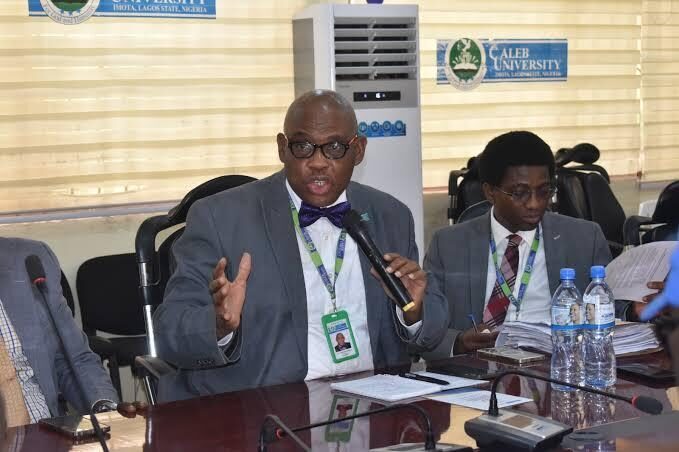
Senior executives and academics have warned that Nigerian companies must urgently overhaul their human resources functions or risk falling behind as artificial intelligence and the gig economy reshape the labour market. Speaking at the Caleb University HR Space conference 2026, experts said traditional HR models are failing to protect businesses from economic volatility, talent scarcity and technological disruption.
The shift from administrative HR to strategic workforce management is no longer optional for companies operating in Nigeria. Olalekan Asikhia, vice-chancellor of Caleb University, told corporate leaders that the old playbook is obsolete. “The world has changed, the workforce has changed, and if we do not change, we will be left behind,” Asikhia said.
The cost of inaction is quantified by poor management engagement in staff development. Christian Harrison, a professor at the University of Greater Manchester, cited Deloitte research showing 94 percent of employees would stay at a company that invests in their learning. However, only 26 percent of Nigerian managers actively develop their teams. “If you want to keep people, invest in them; train them,” Harrison said.
Structural changes in the labour market further complicate traditional corporate strategies. Ahmed Ladan, president of the Chartered Institute of Personnel Management of Nigeria, highlighted World Bank data showing between 154 million and 435 million people globally now participate in online gig work. “The traditional model of stable wage employment is no longer the reality for most working Nigerians,” Ladan stated.
Ladan argued that corporate workforce strategies must accommodate freelancers, platform workers and outsourced teams. He called for modernized labour regulations and portable social protection to support this fragmented labour pool, noting that leadership must ensure accountability across an entire ecosystem rather than just supervising permanent staff.
For companies, executing this transition requires a fundamental shift in internal accountability. Jens Jenssen, a senior researcher at the University of Cambridge, said leading organisations no longer treat people management as the exclusive domain of HR departments. “Accountability for people management rests with line managers, while HR provides the expertise, guidance and challenge needed to achieve organisational success,” Jenssen said.
For investors and executives, the implications are clear. Nigerian firms that fail to integrate HR into their core business strategy and invest in continuous upskilling will struggle to retain talent and maintain margins in an increasingly automated economy.