Figma Revenue Surges 46 Percent as IBM Shares Hit 52-Week Low on Weak Sales
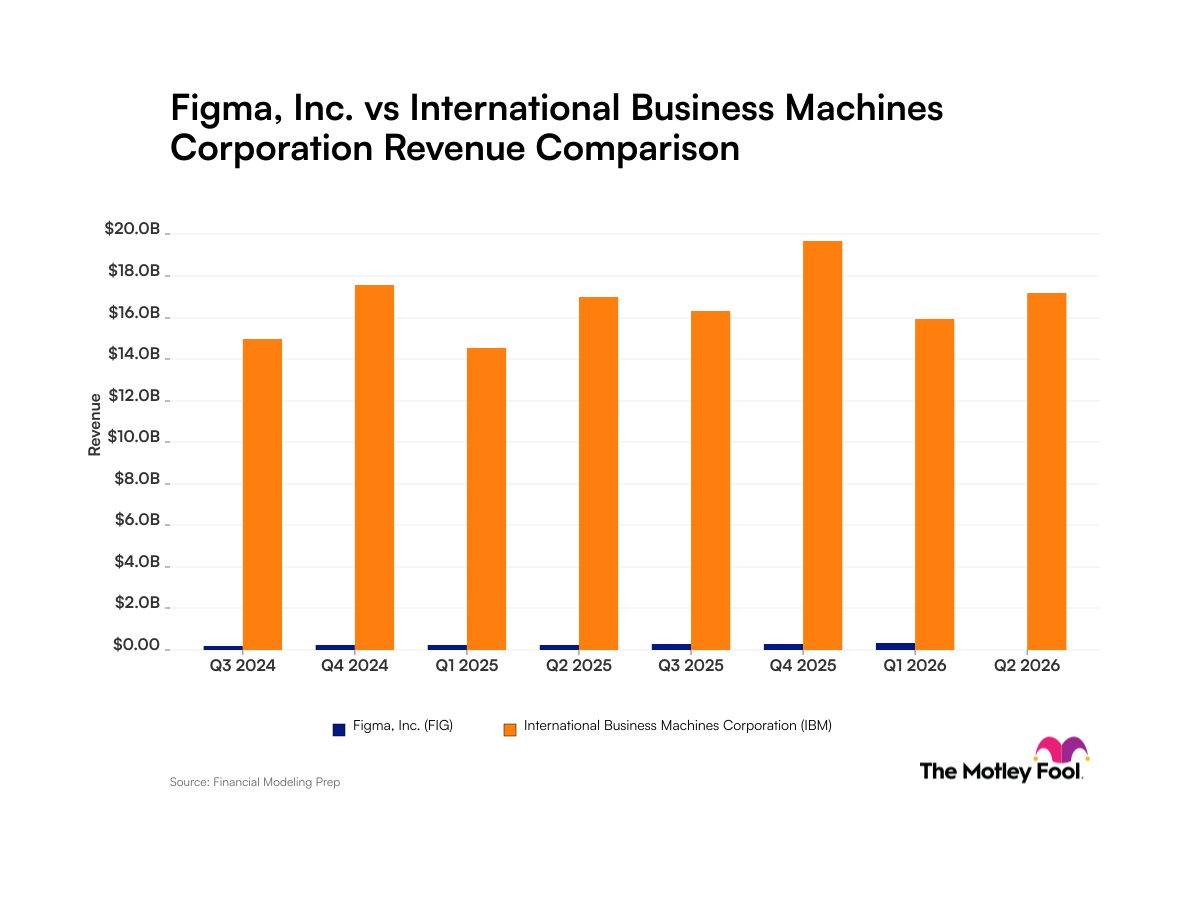
Diverging second-quarter results highlight the contrasting market realities for high-growth software newcomers and legacy technology giants navigating artificial intelligence transitions.
International Business Machines shares fell to a 52-week low of $199.19 on July 23 after the company missed Wall Street revenue expectations for the second quarter. The legacy technology giant disclosed a shortfall in preliminary results on July 14, highlighting immediate investor concerns over its top-line trajectory.
IBM recorded a 15 percent EBIT margin for the quarter ended June 30, 2026, but underlying sales volatility remains a distinct challenge for the business. Sales of its zSystems line of computer mainframes incorporating artificial intelligence dropped 42 percent year over year in the second quarter. This sharp decline reverses the strong momentum seen when the AI-focused hardware launched last year.
In stark contrast, software design company Figma continues to demonstrate robust top-line expansion in the same period. The company reported first-quarter sales of $333.4 million, representing a 46 percent year-over-year increase. Management expects this growth trajectory to extend into the current period, forecasting second-quarter revenue between $348 million and $350 million.
Figma generates this revenue through subscriptions to its browser-based collaborative design and prototyping software. To sustain product momentum, the company introduced new timeline-based animation tools at its annual conference in June 2026. However, this aggressive expansion comes at a financial cost, with the company reporting an approximate -43 percent net income margin for the quarter ended March 31, 2026.
These diverging financial paths illustrate a critical dynamic for equity investors evaluating the broader technology sector. While IBM leverages over a century of institutional history to sell hybrid cloud infrastructure and AI consulting services, its hardware and consulting sales remain inherently choppy.
Conversely, Figma’s consistent quarterly revenue increases prove strong market demand for its specialized software, even as it sacrifices near-term profitability for scale. Market participants will closely watch whether IBM can stabilize its artificial intelligence hardware sales and if Figma can eventually translate its rapid top-line growth into positive net income margins.