Microsoft Prepares for Earnings as $627B Backlog Eases AI Capex Fears
Microsoft reports fiscal Q4 earnings on July 29 with shares trading at a multi-year low valuation, offering investors a rare entry point backed by a $627 billion contracted backlog that justifies its massive AI infrastructure spending.
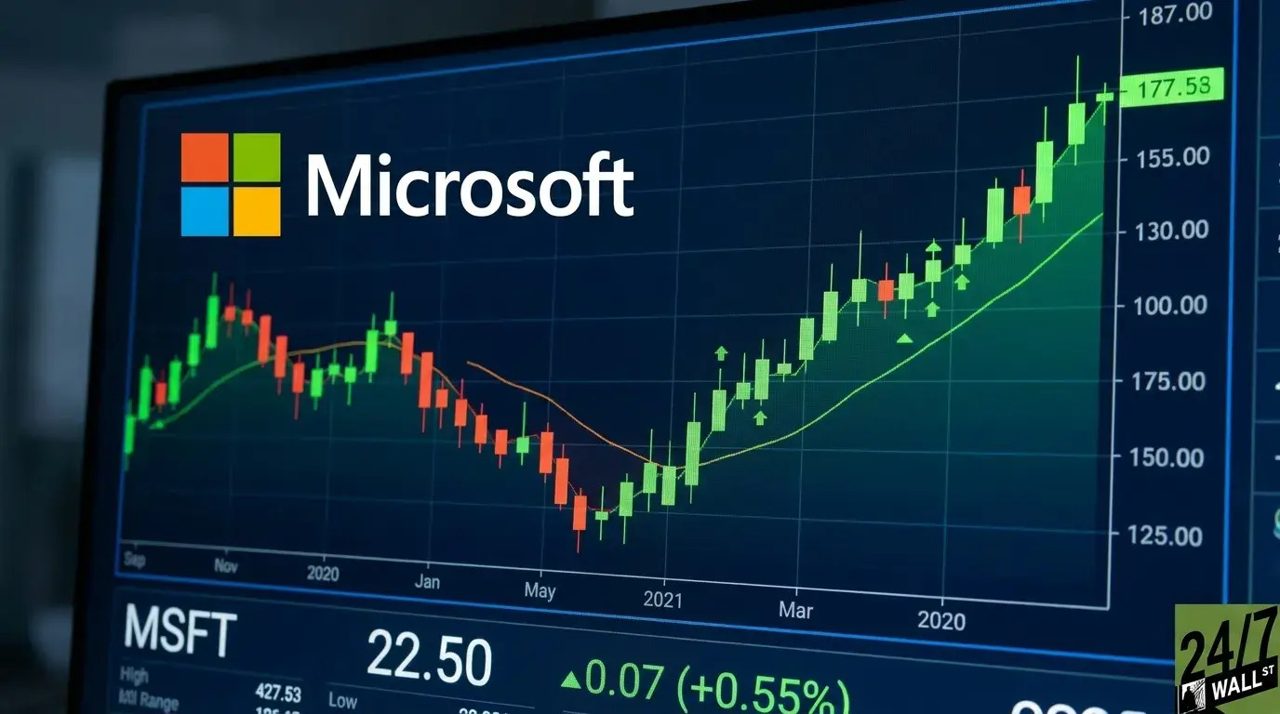
Microsoft will report fiscal Q4 2026 earnings on July 29 against a backdrop of stark divergence between its operational momentum and its stock price. Shares have fallen 24.7% over the past year to $381.70, trading at a forward price-to-earnings ratio of just 20. The stock sits far below its 52-week high of $551.05.
The primary focus for market professionals will be whether the company's surging capital expenditures are generating adequate returns. Microsoft spent $30.88 billion on capex last quarter, an 84.4% year-over-year increase that has fueled a bearish narrative around hyperscaler spending. However, the company's commercial remaining performance obligations nearly doubled to $627 billion, with roughly 25% scheduled for recognition over the next 12 months, up 39% year over year.
This contracted revenue indicates customers are already committed to paying for the AI buildout. Demand is clearly reflected in the underlying business metrics, as Azure cloud growth accelerated to 40% last quarter, easily outpacing Amazon Web Services at 28%. Furthermore, Microsoft's AI business reached a $37 billion annual revenue run rate, representing a 123% surge from the previous year.
Despite these growth rates, the market is pricing Microsoft at a PEG ratio of 1.18, a significant discount to its historical AI-cycle multiples. The consensus price target of $556.75, supported by 54 buy ratings and zero sells, suggests substantial upside from current levels.
The company's balance sheet also provides a cushion that peers lack. With a debt-to-equity ratio of 0.18 and interest coverage of 53.89 times, Microsoft returned $12.7 billion to shareholders in the second quarter, up 32% year over year. This capital return, driven by a $3.56 annual dividend, outpaces Alphabet's 0.54% yield and contrasts with Amazon's lack of a dividend, while the business maintains a 33.28% return on equity.
For institutional investors, the upcoming report represents a test of whether contracted revenue can successfully bridge the gap between heavy infrastructure investment and near-term profitability. If Microsoft confirms that its massive backlog is converting efficiently, the current valuation discount may prove unsustainable.