2026 World Cup Drives 275% Streaming Surge for Music Catalogs
The 2026 World Cup drove a 275% increase in soccer-related music streams compared to 2022, signaling to record labels and investors that sports-linked short-form video can activate massive, zero-cost revenue from existing catalog tracks.
Soccer-related playlists generated 172 million global streams on Spotify between June 12 and July 14 during the 2026 World Cup. That represents a 275% increase from the 46 million streams recorded during the 2022 tournament, averaging 5.2 million daily streams.
The surge was driven primarily by short-form video platforms like TikTok, where fan edits converted stadium atmospheres into immediate streaming spikes. For record labels, this represents a favorable shift in marketing economics: massive global exposure was generated not by promotional budgets, but by organic fan behavior and real-time social media content from teams, players, and FIFA.
Unofficial anthems, songs adopted organically by supporters rather than pushed through corporate sponsorships, delivered the most significant returns. This underscores a critical financial dynamic for the music industry: decades-old catalog assets can outperform new releases without any incremental marketing spend, offering high-margin revenue.
England’s tournament run highlighted this catalog value. Oasis’s "Wonderwall," released in 1995, hit number one on Spotify’s Global Chart on July 16, driven by a 306% surge in the UK after a July 6 win over Mexico. The Beatles' "Hey Jude" saw a 282% UK spike following a July 12 victory over Norway. In the US, John Denver's "Take Me Home, Country Roads" rose 100% after a July 1 win.
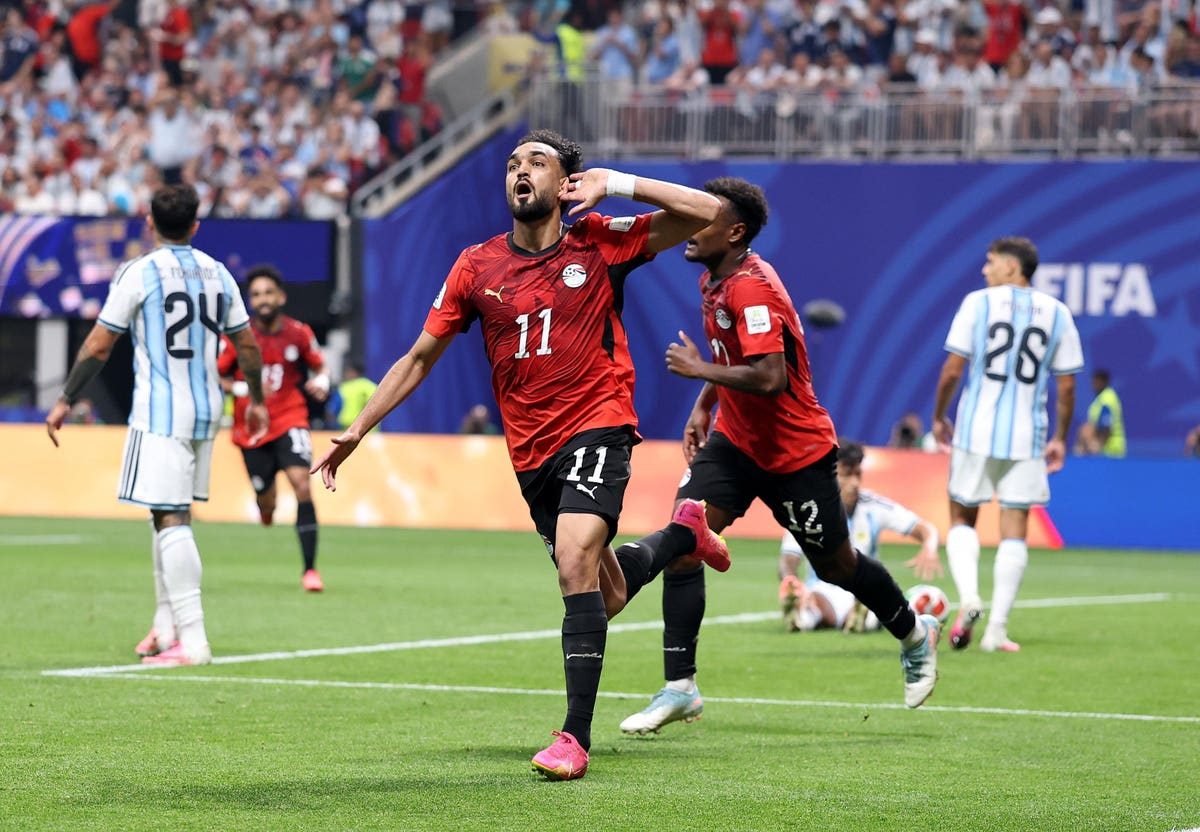
Other markets demonstrated even steeper, localized growth curves. Following Egypt's win over New Zealand, Hamada Helal's "Amalouha El Regala" surged 4,300%, while Mohamed Hamaki's "Om El Donia" rose 1,500%. Paraguay's "Soy Albirrojo" posted a 1,170% global lift against its baseline, and Norway's "Alt For Norge" increased 1,005%.
Norway's chart data also revealed that both raw, crowd-originated chants and polished, artist-driven remixes can co-exist and profit simultaneously. Erling Haaland and Kygo's remix reached number one on Norway's Daily Top Songs chart on July 9, while the crowd chant "Vikingblod" held the number two spot.
FIFA further monetized this intersection by introducing its first-ever World Cup halftime show, mirroring the Super Bowl's broadcasting model. The official FIFA anthem by Robbie Williams and Laura Pausini spiked 945% following the performance. Tracks from Justin Bieber, IShowSpeed, Madonna, Shakira and Burna Boy, and BTS saw jumps ranging from 105% to 240%.
For investors and rights holders, the 2026 tournament demonstrates that live sports now function as a reliable, high-yield activation engine for music catalogs. As federations deepen in-broadcast music integration and short-form video continues to scale, the traditional boundaries between sports media and music marketing are dissolving into a single revenue pipeline.