AI Boom Fuels $10B H1 Auction Surge as Wealth Seeks Store of Value
Record first-half auction sales of nearly $10 billion signal that massive wealth creation from the AI boom is flowing into tangible assets as a store of value.
Major auction houses recorded nearly $10 billion in sales during the first half of the year, marking one of the strongest starts on record. Sotheby's posted a record $4.4 billion in sales, a 58% increase for the 282-year-old auction house. Christie's reported $4.5 billion in sales, up 71% and its best first half since 2021.
The explosive rebound from a three-year art market decline is directly tied to the technology sector. Sotheby's CEO Charles Stewart attributed the surge to recent wealth creation. "The wealth being created now is the number one factor in our business right now," he said. "It's obviously very visible when you sit here in New York and talk about the SpaceX IPO and these different tech IPOs coming and the AI fever."
Eight lots sold for over $50 million in the first half, compared with none in 2024 and 2025, according to Artnet. A Jackson Pollock painting previously owned by S.I. Newhouse led the market at $181 million, followed by a Brancusi sculpture from the same collection at $107.6 million.
Christie's CEO Bonnie Brennan noted that these totals reflect renewed market confidence. "The numbers mean there is confidence in the market," she said. "There are people willing to sell great objects and there are people spending great amounts of money to acquire those special one-of-one works."
For market professionals, the bidding patterns suggest newly minted tech wealth is treating collectibles as alternative asset allocations rather than mere luxury goods. Stewart framed the trend as a calculated move by executives evaluating macroeconomic conditions. "I say it's 'SpaceX to T. rex,'" he said. "It's not just that these people have made the money. They're looking at market valuations and they're making a judgment about store of value."
The capital injection is reshaping the broader market, driving record prices in classic cars, watches, diamonds, and whiskey. Christie's reported that 30% of its first-half buyers were new to the platform, with 47% of those being millennials or younger. Furthermore, 85% of all bids were placed online, indicating a digital-first approach from this new buyer class.
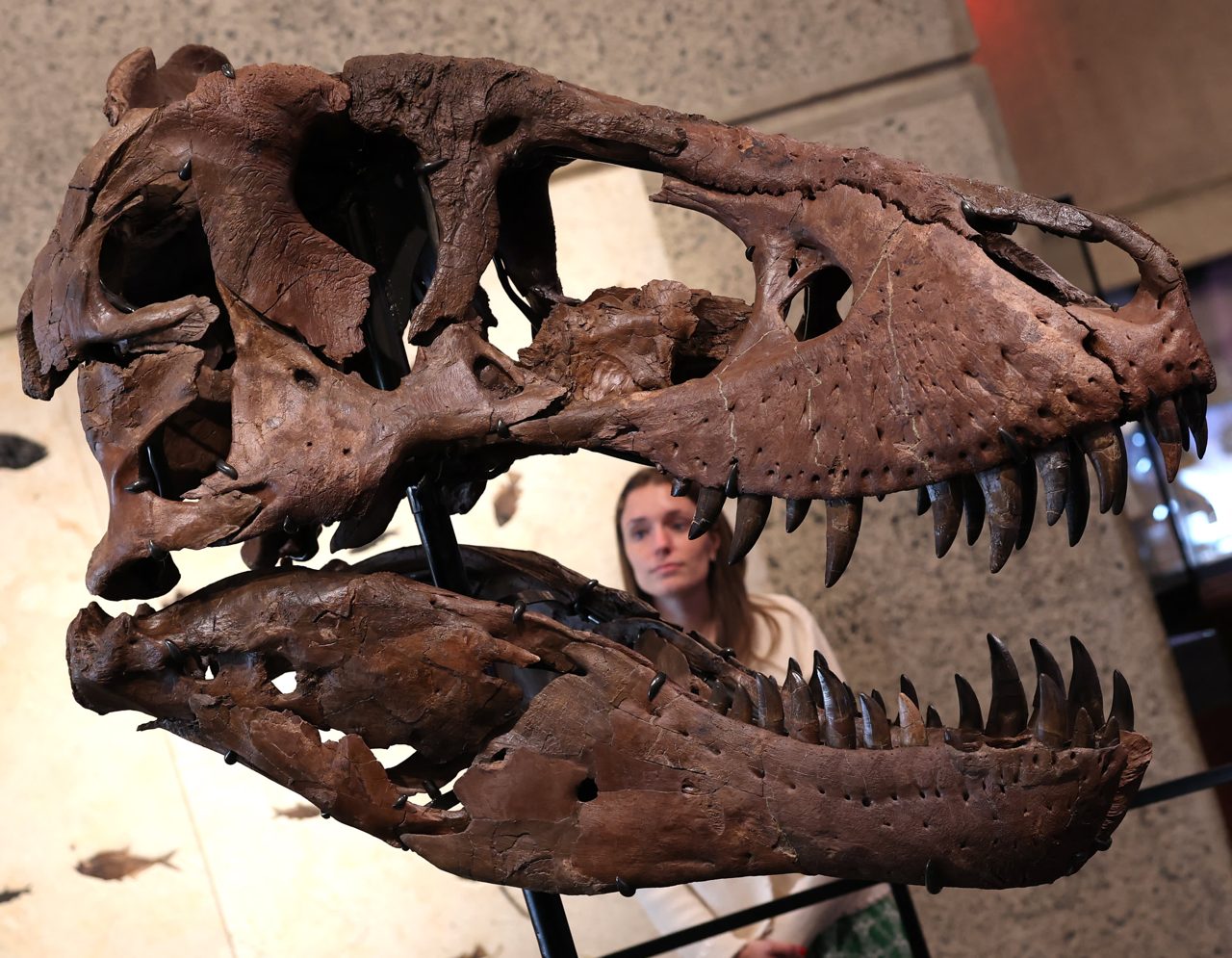
This demographic shift is altering category dynamics. Watch sales at Phillips in Association with Bacs & Russo hit a record $235 million, driven by demand for independent brands like F.P. Journe, whose Souscription Résonance claimed the top lot at $13.9 million. Public figures like Mark Zuckerberg have popularized these independent watchmakers. Sotheby's also sold a Tyrannosaurus rex fossil for $50.1 million, the most expensive ever auctioned, following hedge-fund billionaire Ken Griffin's $44.6 million purchase of a stegosaurus in 2024.
The liquidity is even spilling into pop culture and corporate memorabilia, with a Jensen Huang jacket selling for $960,000 and a Jalen Brunson jersey fetching $1.024 million. "People are spending money on fun, collectible items that they want to have," said Jeffrey Yin, CEO of Artsy and Artnet.